






 Portuguese
  Spanish


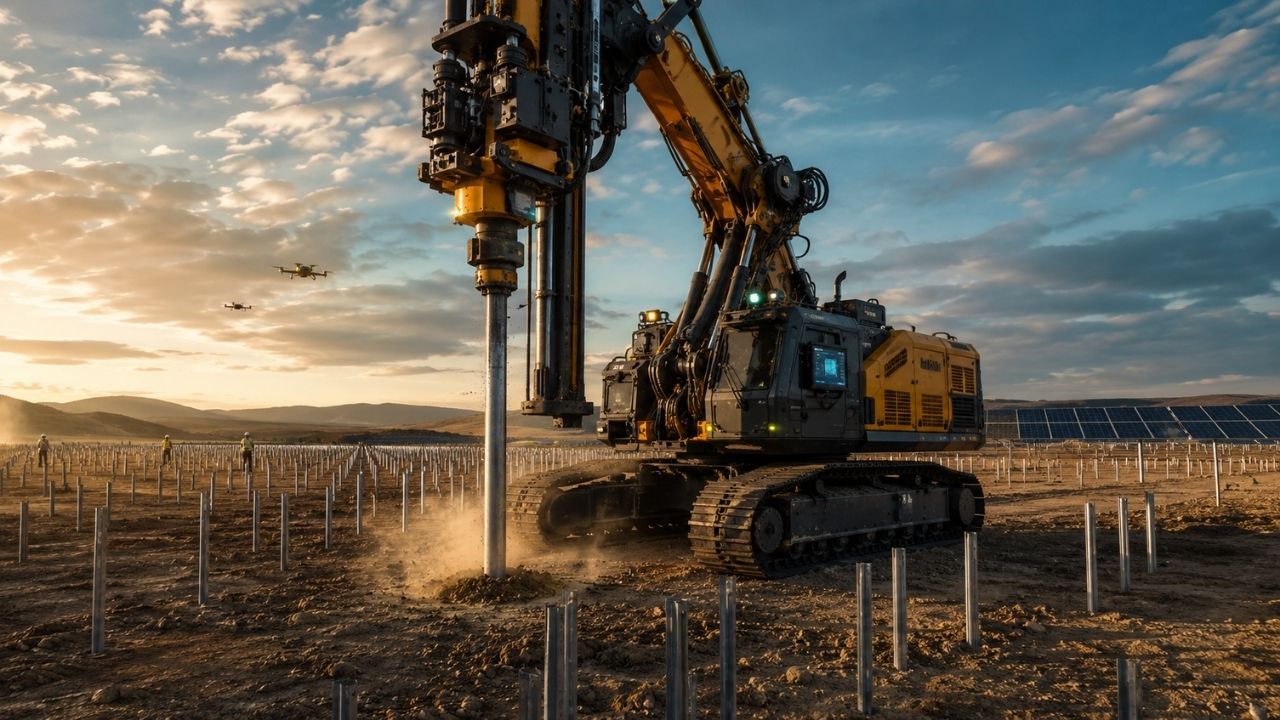

The giant robot RPD 35 combines measurement, transportation, and driving of metal stakes in solar plants, using artificial intelligence, sensors, and project data. Solar construction gains tracked foundations, fewer manual steps, and technical control even before the panels arrive at the site on an industrial scale in the open field.
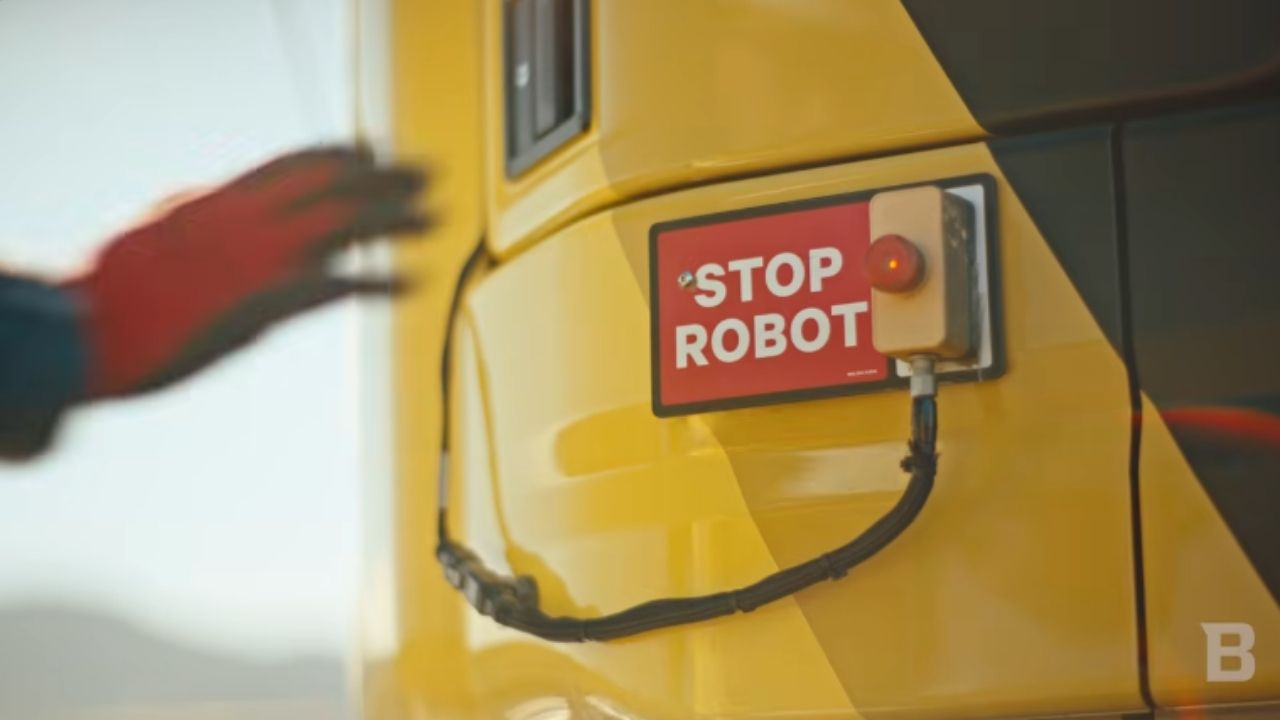
A giant 35-ton robot, called RPD 35, is attracting attention in solar construction for driving metal stakes alone in solar plants and recording foundation data during the process with the support of sensors and artificial intelligence. The equipment was the subject of a report by Monitor do Mercado published on June 30, 2026.
The machine operates in a repetitive and heavy phase of solar works: the installation of stakes that support the panel structures. Instead of separating measurement, transportation, driving, and checking, the system concentrates these functions in a single cycle guided by project data, embedded technology, and field control.
The giant robot looks like an excavator but changes the logic of solar foundation
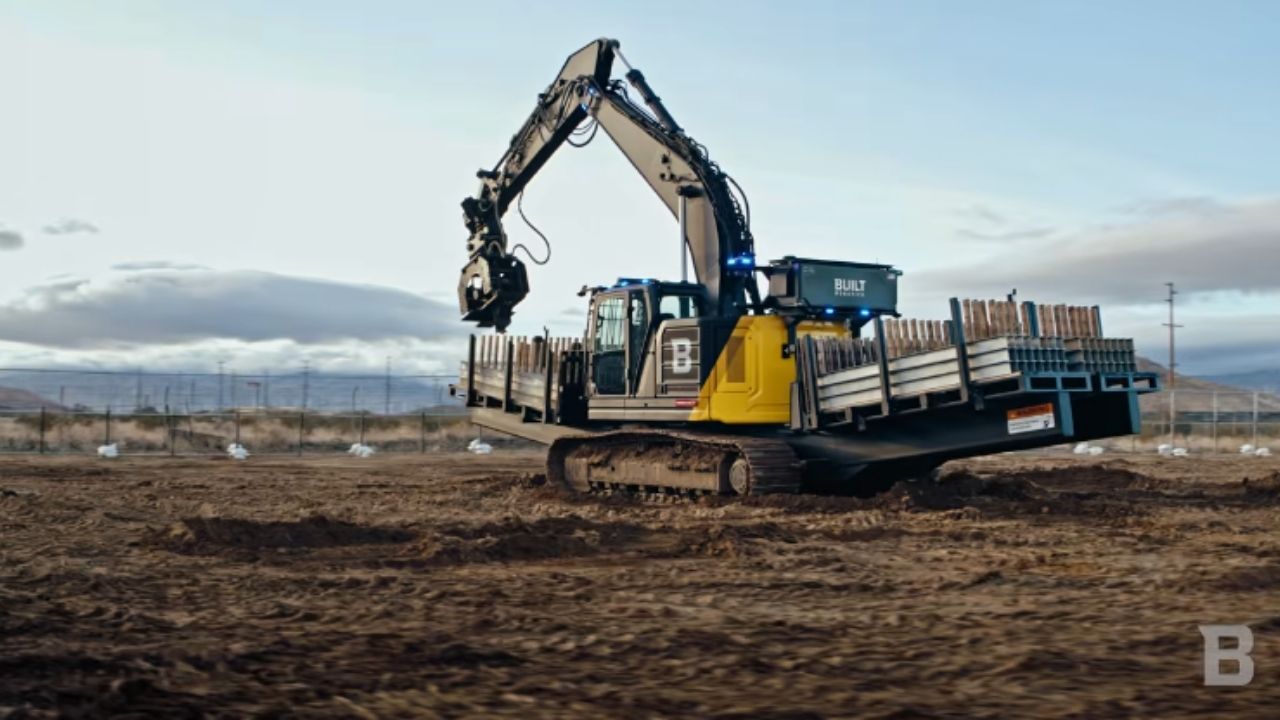
At first glance, the RPD 35 may resemble a common excavator on a construction site. The difference appears when it starts to operate automatically, moving across the terrain, locating points defined in the project, positioning metal stakes, and using a vibrating hammer to drive them into the ground.
-
Japanese Manufacturer Dominates Global Bicycle Gear and Brake Market, Supplying 70% of Mid to High-End Bikes, Including Tour de France Winners

-
German Startup Raises €8 Million to Build Robot for 24/7 Harvesting of Tomatoes, Cucumbers, and Peppers Without Human Labor

-
The Pharmaceutical Glass Invented by a German Chemist in 1884 Was Crucial for 75% of Global COVID Vaccine Projects
-
Dinosaur Bone Found in 1985 on James Ross Island Identified as First Confirmed Titanosaur Fossil from Antarctica, Shedding Light on a Once-Green Continent


This type of giant robot draws attention because it enters a phase of solar construction that usually requires large-scale repetition. In large plants, thousands of foundations need to comply with specific position, height, and alignment, and any error can affect subsequent assembly stages.
The machine gathers tasks that were previously scattered across the site
The RPD 35 was created to concentrate functions that would normally require different work fronts. It uses positioning data to locate where each foundation should be installed, loads stakes into the set itself, performs the metal driving, and records information about what was done.
This integration changes the pace of the site because it reduces repeated movements, dispersed checks, and part of the reliance on manual markings. The construction site stops functioning only as a sequence of physical tasks and starts generating a database about each installed point.
Driving solar stakes requires more precision than it seems
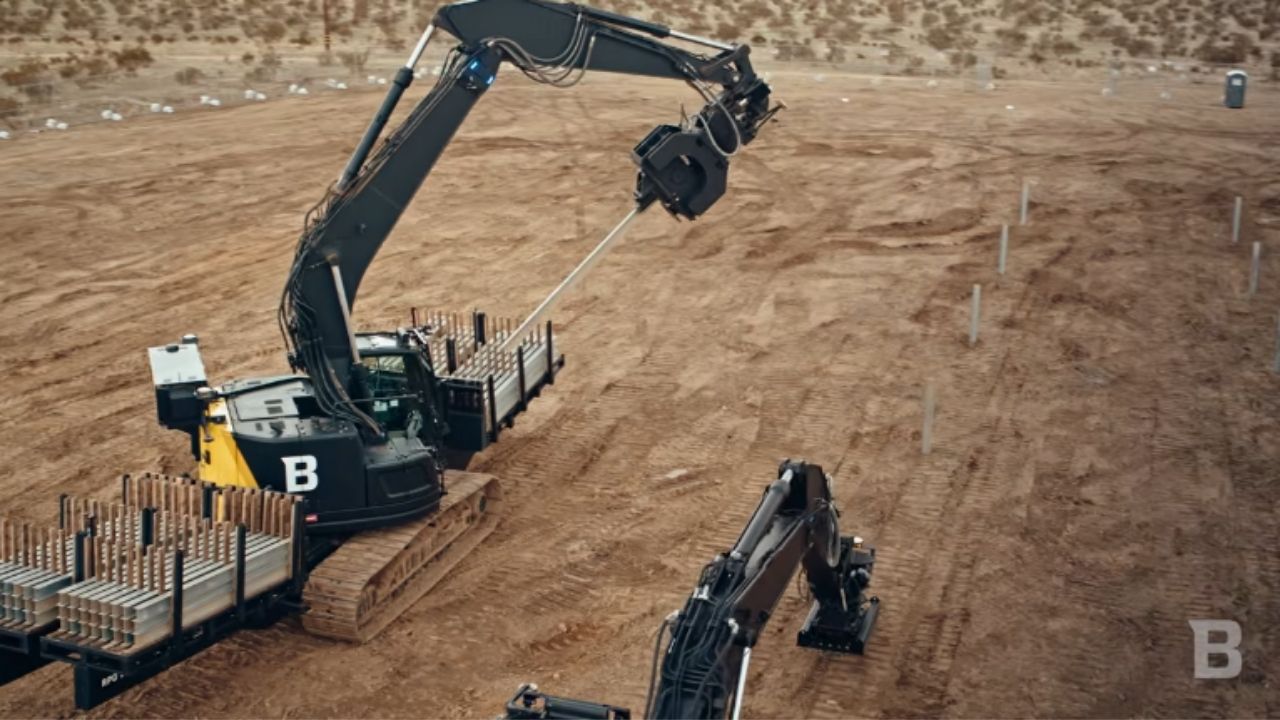
The metal stakes are not just pieces driven into the ground. They define the base of the structures that will receive the solar modules, influencing height, plumb, and alignment of the rows. When a foundation is out of the expected standard, the next assembly may lose pace and require corrections.
In a large plant, small errors multiply quickly. Irregular height can make it difficult to install the trackers, a stake out of position can compromise alignment, harder soil may require a new attempt, and incomplete recording can delay the project’s verification. Therefore, automation acts both in speed and standardization.
Sensors and AI transform foundation into traceable information
The most relevant point of the giant robot is not just in driving stakes. The equipment also records execution data, creating a basis for technical verification, progress monitoring, and control of what has been installed in the field.
This traceability is important because the solar foundation is repeated many times across the terrain. When each installation generates organized information, the team can monitor the project with less reliance on isolated measurements taken afterward. The site becomes readable as a data system, not just as an assembly area.
Automation does not replace the entire solar project
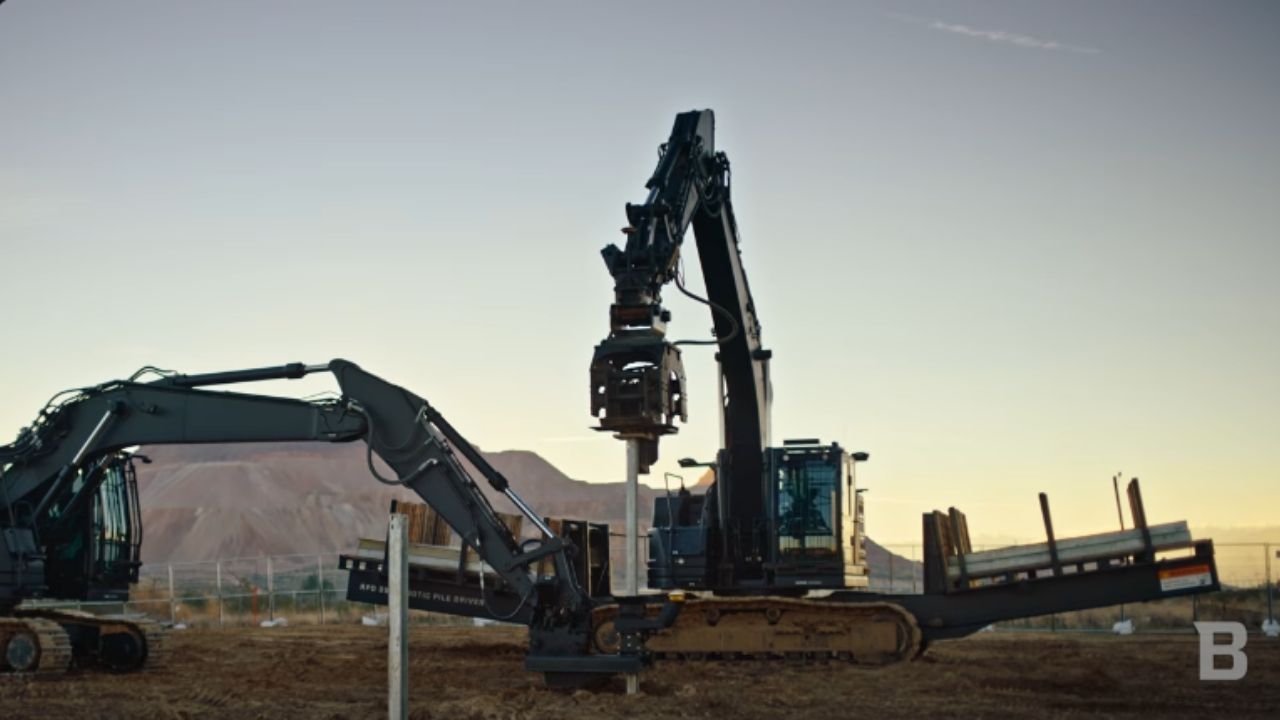
Despite the visual and operational impact, the RPD 35 does not build an entire solar plant by itself. The robot operates in a specific stage: the metallic foundation of solar structures. There are still design, earthworks, logistics, module assembly, cabling, electrical connection, testing, and operation.
What changes is the weight of a repetitive task within the schedule. When the driving of stakes becomes more automated, the construction can gain predictability and reduce part of the physical effort in the field. The human role does not disappear; it shifts to focus more on supervision, monitoring, and intervention when necessary.
The site gains a different rhythm when the machine concentrates the cycle
In traditional logic, one team can measure, another can transport material, another can drive, and another can check. The giant robot attempts to shorten this sequence by gathering several stages in the same equipment, reducing the number of transitions between one phase and another.
This effect is important in extensive terrains, where each movement impacts the execution time. The machine carries stakes, follows coordinates, and executes repeated cycles with parameters monitored by sensors. The greater the repetition, the more valuable it tends to be to standardize the process.
Less rework can mean more control in solar construction
In solar projects, rework can occur when a foundation is out of position, when documentation does not keep up with the installation pace, or when the team needs to return to a point to verify information that was not recorded correctly.
By combining execution and recording, the RPD 35 attempts to reduce this type of bottleneck. The automatic data collection helps form the technical documentation of what was installed, which can facilitate later checks. The promise is not just to do it faster, but to make each stage more verifiable.
Heavy robotics enters the construction site before the panels
The case of the RPD 35 shows that the transformation of solar energy does not happen only in panels, inverters, or batteries. Part of the change also reaches the construction site, even before the modules are assembled, when the support infrastructure is still being prepared.
This detail is relevant because large solar parks depend on scale. If the foundation is repeated thousands of times, any gain in organization, recording, and execution can alter the construction planning. Heavy robotics enters precisely where the work is repetitive, physical, and sensitive to small deviations.
The giant robot puts the construction of plants in a new phase


The RPD 35 combines heavy machinery, sensors, project data, and artificial intelligence in an essential part of solar infrastructure. It does not appear as a laboratory robot but as equipment made for dust, uneven terrain, and industrial repetition in open fields.
Its impact lies in the change of logic: each stake ceases to be a small isolated operation and becomes part of a sequence guided by data. For increasingly larger solar plants, this can open up space for more traceable, less manual, and more automation-dependent construction sites.
The question now is what happens to the work on the construction site
The arrival of a giant robot like the RPD 35 does not eliminate all human functions but changes the distribution of effort. Repetitive activities, heavy and exposed to noise, impact, and fatigue can be shifted to machines, while operators monitor the process and take on supervisory decisions.
This advancement raises an important discussion for solar construction. Should automation be seen as a tool to reduce physical effort and increase control, or as a threat to workers who currently perform manual tasks in the field? Leave your opinion in the comments.


