






 Portuguese
  Spanish


In the interior of Mato Grosso do Sul, Suzano erected a gigantic plant that produces 2.55 million tons per year and still has clean energy left to supply a city
Brazil has just set another world record that is little talked about, but gigantic. Suzano inaugurated in Ribas do Rio Pardo, in the interior of Mato Grosso do Sul, the largest single-line pulp factory on the planet, a colossal structure that cost R$ 22.2 billion and places the country even more at the top of the global paper industry.
The new pulp factory has the capacity to produce 2.55 million tons per year from a single production line, something unprecedented in the world. It is proof that Brazil not only exports raw materials but also operates some of the most advanced and productive industrial plants on the planet.
The pulp factory of 2.55 million tons in a single line
The number that defines the record is the scale of production. According to Suzano, the unit has the capacity for 2.55 million tons of pulp per year, all from a single production line, making it the largest in the world in this format.
-
Pix Processed $35 Trillion in 2025, Becoming Brazil’s Leading Payment Method

-
Nubank Reaches 131 Million Customers and Reports Record Profit of $2.87 Billion in 2025
-
Brazil Holds 95% of the World’s Niobium and Exported $2.1 Billion Worth in 2024

-
Embraer Hits Record $31 Billion in Orders, Largest Backlog in Its History


Producing all this in a single line is an engineering feat, as it concentrates in one flow what would normally require several structures. The more integrated the production, the lower the cost per ton. Having the largest single line in the world means producing pulp cheaper than practically any competitor, and it is this efficiency that keeps Brazil at the forefront of the sector.
R$ 22.2 billion, one of the largest private investments
The financial scale matches the size of the project. According to Suzano, the total investment was R$ 22.2 billion, with R$ 15.9 billion in the construction of the factory and R$ 6.3 billion in the forest base and logistics infrastructure.
This is one of the largest private investments ever made in recent Brazilian industry. Bringing such a plant to the interior of Mato Grosso do Sul mobilized an entire chain of suppliers, construction companies, and labor. When a company bets more than R$ 20 billion on a single factory, it is betting that Brazil will remain competitive for decades, and Suzano made exactly that bet.
The eucalyptus that makes Brazil dominate cellulose
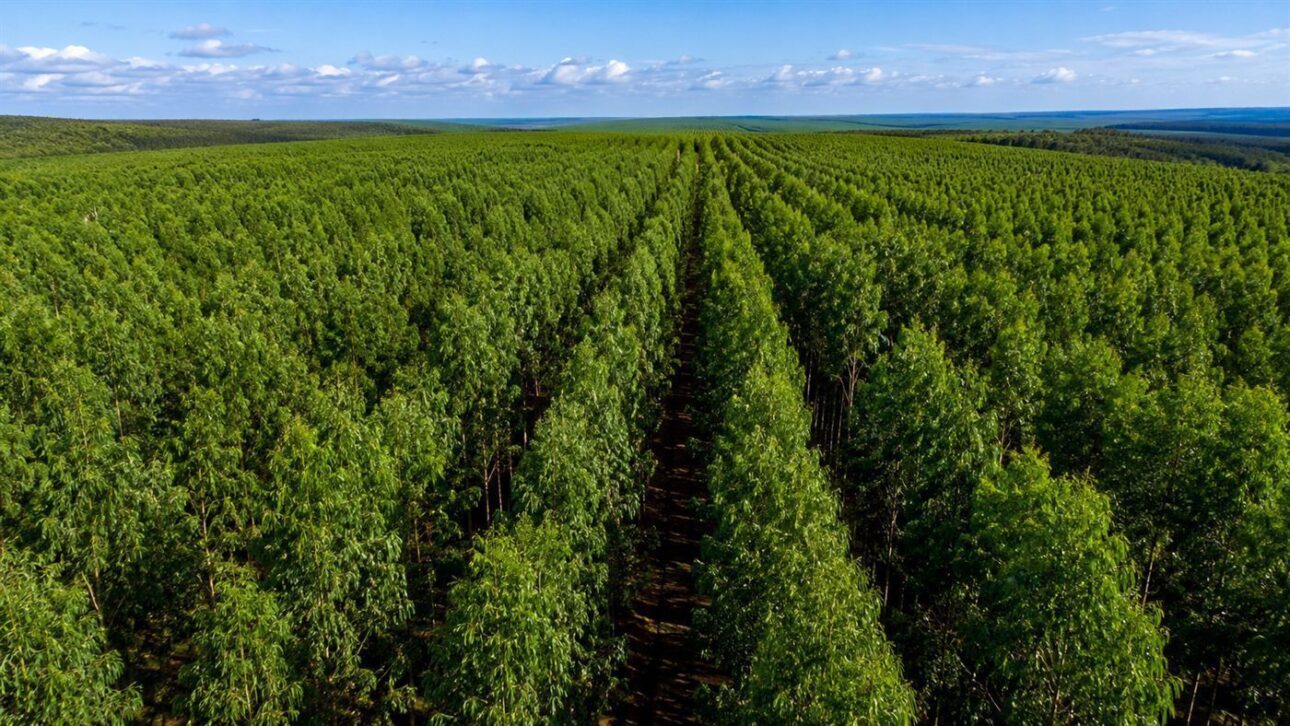
The Brazilian advantage starts in the forest. To supply the factory, Suzano maintains a forest base of 599 thousand hectares in Mato Grosso do Sul, of which 143 thousand are dedicated exclusively to biodiversity conservation, and produces about 75 million seedlings per year.
The secret is the climate. In tropical Brazil, eucalyptus grows much faster than in cold countries, being ready for cutting in a few years, compared to decades elsewhere. A tree that grows quickly is a cheap and abundant raw material, and this is the natural advantage that no competitor in the Northern Hemisphere can replicate, putting the country at the forefront of global cellulose.
Mato Grosso do Sul, the new Cellulose Valley
The arrival of the factory transformed the regional economy. According to the Mato Grosso do Sul News Agency, the state is consolidating as the “Cellulose Valley,” concentrating large investments in the sector.
State Secretary Jaime Verruck summarized the turnaround, stating that Mato Grosso do Sul has become a reference in production, productivity, sustainability, and forest technology. When an entire state reorganizes around a productive chain, the impact goes far beyond a factory, attracting suppliers, services, and new projects to the region.
The factory that generates its own green energy
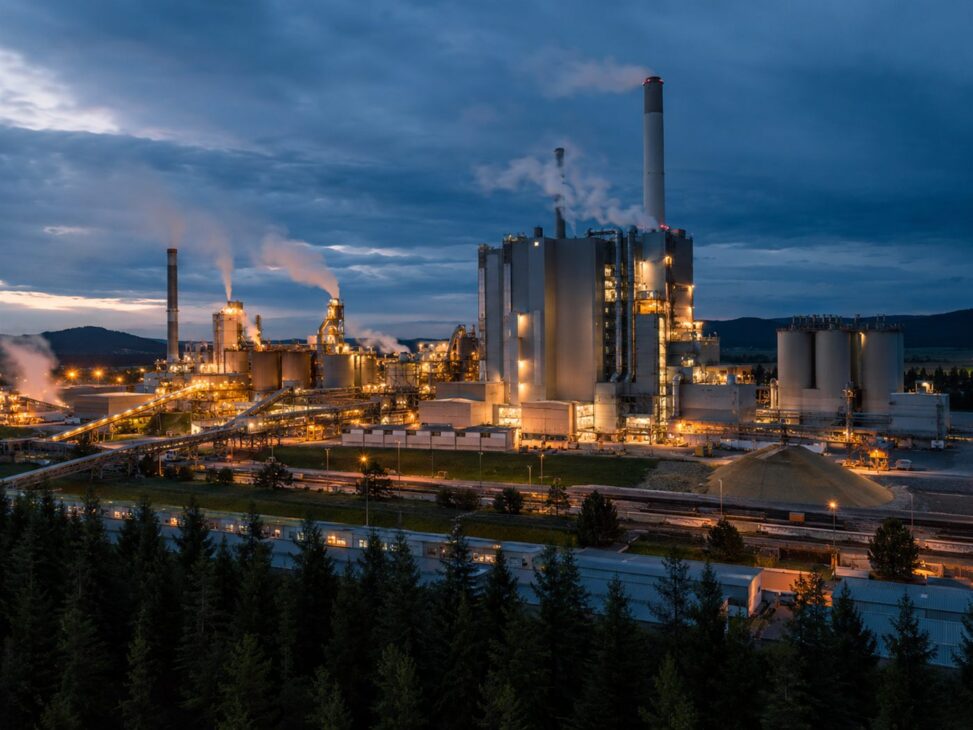
One of the most impressive points is energy. According to Suzano, the unit is self-sufficient in clean energy and still generates a surplus of about 180 megawatts, enough to supply a region with more than 2 million inhabitants monthly.
This achievement comes from utilizing the process’s own biomass, which becomes fuel to generate electricity. Instead of consuming energy from the grid, the factory gives back. A heavy industry that produces more clean energy than it consumes is the opposite of the image of a polluting factory, and shows how the pulp sector has reinvented itself in sustainability.
From 10.9 to 13.5 million tons per year
The impact on Suzano itself is enormous. With the new unit, the company’s total production capacity jumped from 10.9 million to 13.5 million tons per year, an increase of about 20% at once, according to the company.
Growing 20% in capacity with a single factory is rare in any industry. This reinforces Suzano’s position as one of the largest pulp producers in the world. Adding in one go the equivalent of entire smaller companies’ production is what separates global giants from the rest, and the Ribas do Rio Pardo factory did just that.
What Brazilian pulp becomes in the world
It may seem abstract, but pulp is in everyday products all over the planet. It is the base of toilet paper, napkins, cardboard packaging, and countless hygiene and consumer items. Much of what the world uses every day starts from a Brazilian tree.
With the rise in global demand for recyclable packaging and hygiene products, pulp has become a strategic business. The more the world replaces plastic with paper, the more valuable Brazilian pulp becomes, and it is in this scenario that a record-breaking factory like this pays off.
Jobs and social investment
The project also left its mark on the city that hosted it. According to Suzano, the operation generates about 3,000 direct and indirect jobs, and the company invested more than R$ 300 million in social initiatives, including improvements in health, urban infrastructure, and local workforce training.
For an inland municipality, the arrival of a project of this size changes everything, from the hospital network to commerce. A giant factory brings along schools, health centers, and income for the entire city, and it is this chain effect that transforms the economic map of a previously forgotten region.
A record that few Brazilians know
The Ribas do Rio Pardo factory is one of those achievements that puts Brazil at the top of the world without making headlines. The largest single pulp line on the planet, self-sufficient in clean energy and rooted inland, it sums up the silent strength of the national industry.
The question that remains is whether the country will continue investing to maintain this leadership or if it will settle with what it already has. Did you know that a large portion of the paper and packaging the world uses every day starts in a eucalyptus forest in the interior of Brazil?


