Portuguese
  Spanish


Researchers from the interior of São Paulo isolated a microorganism that decomposes PET bottles and, in the same process, manufactures a valuable biodegradable plastic
Brazilian scientists may have found an ingenious answer to one of the planet’s biggest problems. They isolated a bacterium capable of doing what seemed impossible: digesting the most common plastic waste, that of PET bottles, and even transforming this waste into a high-quality bioplastic. It’s waste turning into expensive raw material.
The discovery tackles plastic waste from two sides at once: it eliminates the waste and generates a useful product. Instead of just decomposing the plastic, the bacterium uses the material as food and manufactures, in the process, a biodegradable polymer that can replace fossil plastic in packaging and even in medical uses.
The BR4 bacterium that decomposes PET
The name of the microorganism is technical, but the feat is simple to understand. According to CNN Brasil, the bacterium named Pseudomonas sp BR4 decomposes PET and, at the same time, produces polyhydroxybutyrate, PHB, a high-quality bioplastic.
-
Son’s Journey to Care for Mother with Alzheimer’s: Finding New Ways to Preserve Memories

-
16,000-Liter Backyard Cisterns Transform Lives in Brazil’s Semi-Arid Region, Providing Reliable Water Access for Over 121,000 Families Since 2023

-
Tail of the Dragon: 318 Tight Curves in 18 km Make This Mountain Road a Psychological Challenge for Drivers and Tourists Alike
-
Brazilian Official Proposes Plan to Revive 223 km Railway, Connecting 13 Cities and Transporting 32,000 Passengers and 600 Containers Daily, Plus a Tourist Train in Just 2 Hours 20 Minutes.




The ingenious detail is the simultaneity. The bacterium not only breaks the plastic into pieces, it uses these pieces to build a new valuable material. Transforming waste into product in the same step is the dream of the circular economy, where nothing is lost and everything becomes input, and this is exactly what the researchers achieved in the laboratory.
Plastic waste that turns into high-value raw material
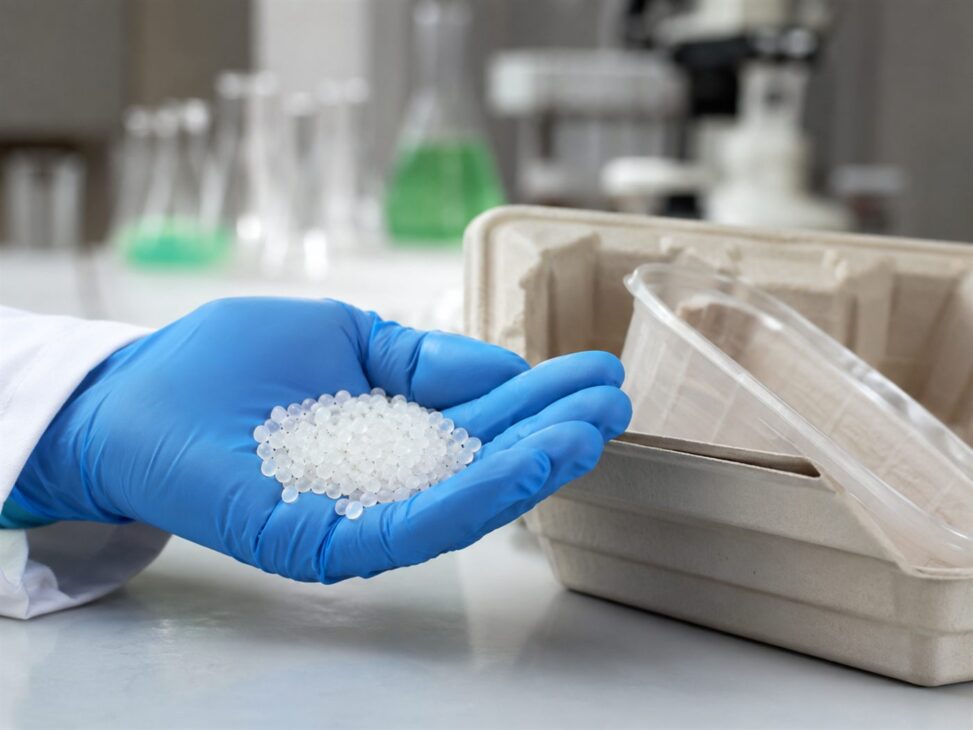
What comes out of the process is not just any material. According to CNN Brasil, the PHB is a biodegradable bioplastic that, when enriched with certain chemical units, gains even more flexibility and resistance, approaching the properties of traditional plastics.
This is what separates a laboratory curiosity from a real solution. A fragile bioplastic would have little use, but one that decomposes in nature and is still resistant can compete in the market. When the recycled product is as good as the original, recycling stops being a sacrifice and becomes a business, and it is at this point that the Brazilian discovery draws attention.
Who discovered it: a university from the interior of São Paulo
The research has an interior accent. According to the FAPESP Memory Center, the work was coordinated by researcher Fábio Squina, from the University of Sorocaba, with collaboration from Unicamp and the Federal University of ABC, and support from FAPESP in thirteen projects.
The scientists isolated communities of microorganisms from soils contaminated by plastic and identified BR4 among dozens of species analyzed. Cutting-edge science emerging from a university in the interior shows that world-impact discoveries are not the privilege of large centers alone, and that investment in basic research, like that of FAPESP, is what makes this possible.
The giant problem that the bacteria attacks
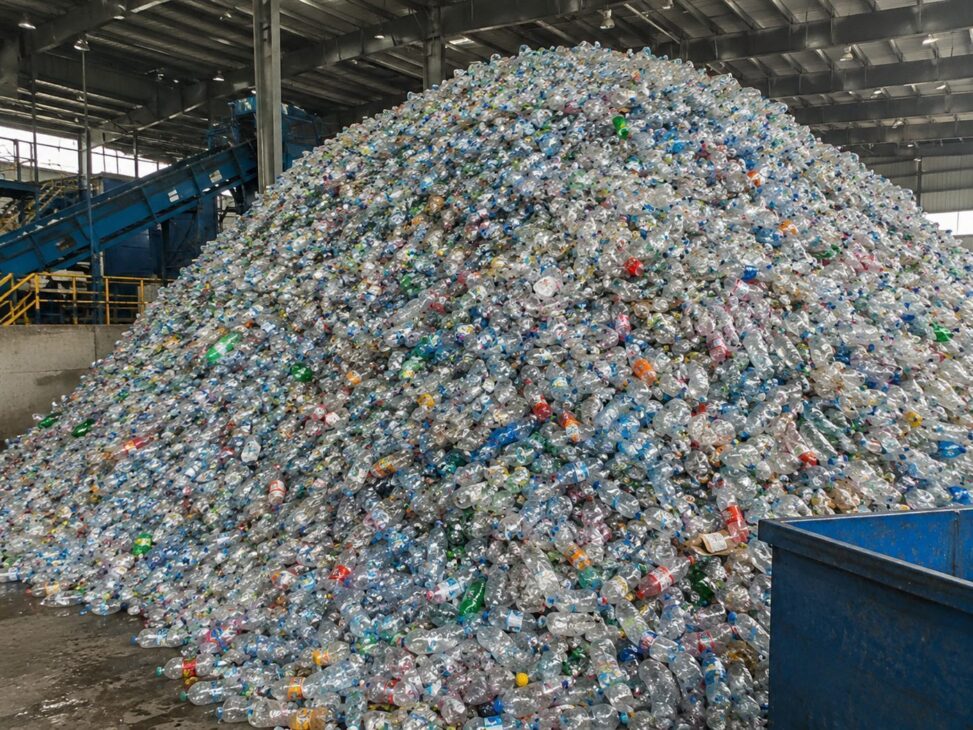
The size of the challenge explains the importance of the discovery. FAPESP points out that about 350 million tons of plastic become waste every year worldwide, and only 15% of this is actually recycled, while 46% ends up in landfills and 17% is incinerated.
The situation in the oceans is even worse, as plastic represents the majority of marine litter. Faced with such numbers, conventional plastic recycling solutions are insufficient. When only 15% of plastic is recycled, any technology that increases this rate has enormous value, and a bacteria that consumes PET and returns bioplastic is precisely the type of leap the sector needs.
Why PHB bioplastic is special
Not all so-called biodegradable plastics fulfill what they promise, but PHB is different. It truly decomposes in nature, without leaving the microplastics that haunt human and environmental health. That is why it is so sought after by the sustainable packaging industry.
The advantage of the Brazilian route is using its own waste as raw material. Instead of planting more sugarcane or corn to make bioplastic, the bacterium starts from discarded PET. Manufacturing good plastic from bad plastic is closing the cycle in the smartest way possible, reducing both waste and the need for new raw materials.
Where this can be used
The applications are concrete. According to CNN Brazil, the bioplastic produced by the bacterium has the potential for manufacturing sustainable packaging and even for biomedical uses, two markets that pay well for materials that degrade without harming the body or the environment.
Packaging is where the impact would be most visible, as almost half of the world’s plastic waste comes from packaging. Replacing part of this with PHB would change the sector’s environmental equation. Targeting precisely the category that pollutes the most, disposable packaging, is the shortest path to a real result, and this is the target that the technology aims at.
From discovery to market: what is still missing
Like any scientific discovery, the path to the shelf is long. Producing bioplastic with bacteria in the laboratory is one thing, doing it on an industrial scale and at a competitive cost is another much more difficult task. It is necessary to refine the process, increase production, and reduce operation costs.
Even so, the starting point is encouraging. Nature offered the tool, and Brazilian scientists knew how to find it. Moving from the test tube to the factory is the challenge that defines whether the discovery becomes a revolution or remains just a scientific article, and this is the next battle for researchers.
Why this matters for the circular economy
Ultimately, the discovery points to a future where plastic waste ceases to be a problem and becomes a resource. Instead of burying or burning plastic, the idea is to feed it to microorganisms that transform it into something new and useful, in a cycle that mimics nature itself.
The question that remains is whether Brazil will be able to transform this laboratory discovery into an industry, or if another good national idea will be exploited abroad. Did you imagine that the solution to the planet’s mountain of PET bottles could lie in a bacterium found in Brazilian soil?