






 Portuguese
  Spanish


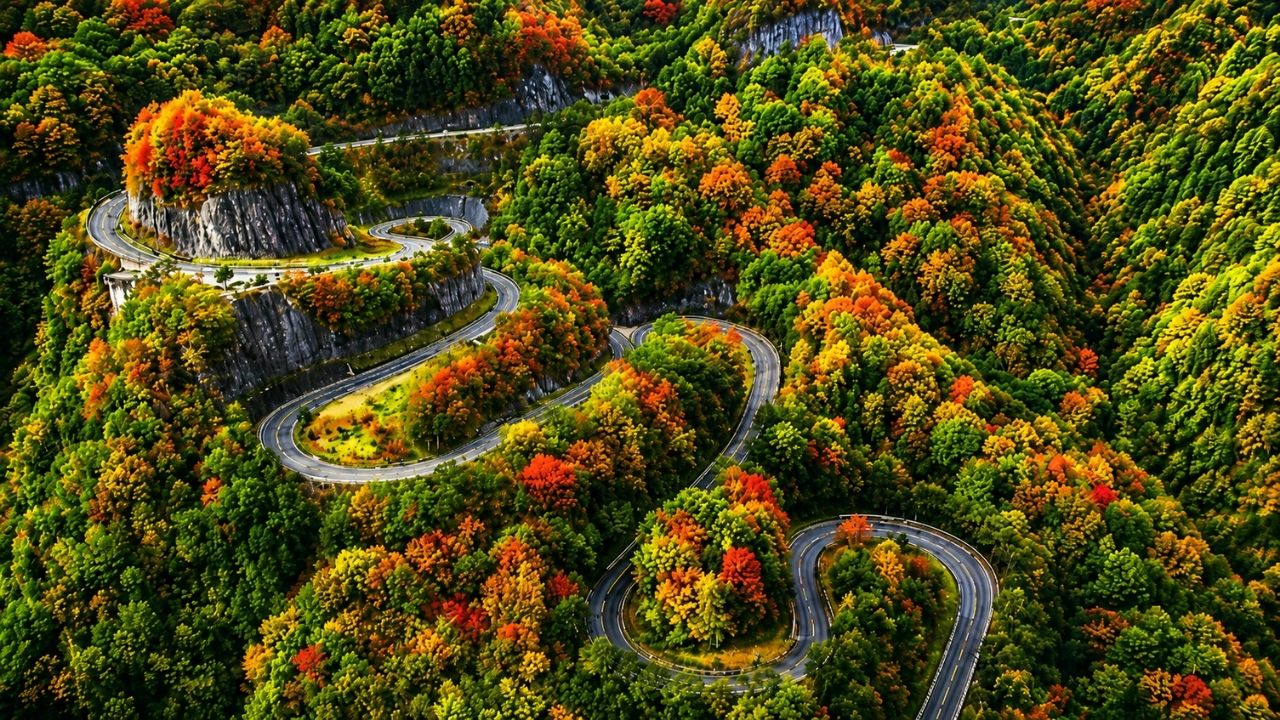

The Tail of the Dragon, between Tennessee and North Carolina, features 318 curves in 18 km, has no intersections, and restricts heavy trucks. The route has become an example of how paving, signage, speed limits, and traffic management shape safety on mountain roads.
The Tail of the Dragon, a road located on the border between Tennessee and North Carolina, USA, concentrates 318 sharp curves in just 18 km and draws attention for how it transforms a short mountain stretch into a challenge of road engineering, transport safety, and traffic control.
The case was highlighted by Monitor do Mercado on June 30, 2026. More than just a famous route among drivers, motorcyclists, and sports cars, the road shows how the absence of intersections, prohibition of heavy trucks, speed limits, and pull-off areas help organize a road where any mistake can block the flow.
Route with 318 curves demands precision in every kilometer
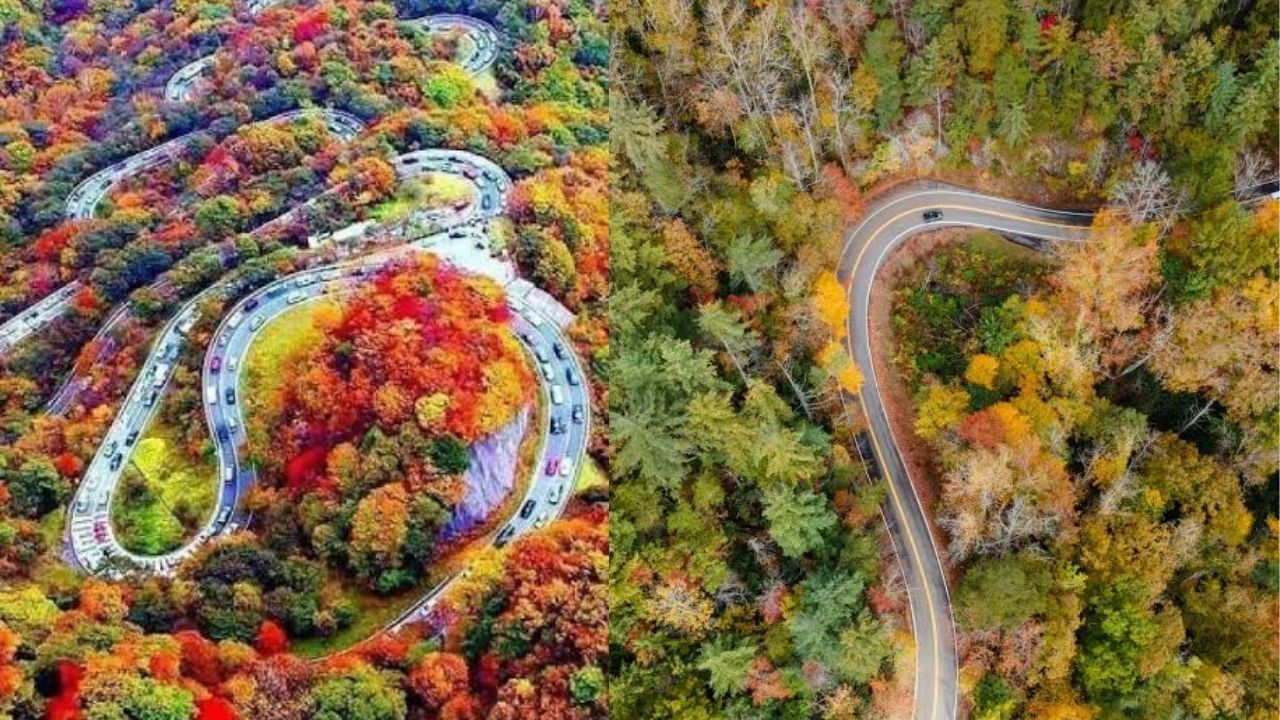
The Tail of the Dragon has become known for a rare feature: 318 curves distributed over just 18 km. This concentration completely changes the way of driving, as the driver does not find long straight stretches to relax, correct posture, or regain attention after a more intense sequence.
-
Brazilian Official Proposes Plan to Revive 223 km Railway, Connecting 13 Cities and Transporting 32,000 Passengers and 600 Containers Daily, Plus a Tourist Train in Just 2 Hours 20 Minutes.

-
China Completes Mountain-Top Airport After Major Engineering Feat Near Three Gorges
-
Small Brazilian Town in Santa Catarina Boasts Latin America’s Largest Wooden Church, Preserves German Traditions, and Offers Thermal Waters

-
Freelance Construction Worker Reveals Earnings After 20 Days of Plastering Work




On a mountain road, this type of route increases the demand on steering, braking, stability, and road reading. The challenge is not just in the number of curves, but in the continuous repetition of quick decisions, making the journey an extreme example of how road design influences driver behavior.
The absence of intersections reduces conflicts but increases the sense of continuity
One of the most important aspects of the Tail of the Dragon is the absence of intersections, driveway entrances, and side accesses along the stretch. On regular highways, these points create conflicts between vehicles entering, exiting, crossing, or unexpectedly slowing down.
In the case of the Tail of the Dragon, the road functions as a continuous corridor of curves through the forest. This characteristic helps reduce external interferences in traffic, but it also demands more discipline, as the driver spends long minutes dealing only with curves, the roadway, speed, and vehicles ahead.
Heavy trucks were banned due to the risk of blocking curves
The ban on heavy trucks is one of the elements that reinforce the technical nature of the road. According to the source, cargo vehicles attempting to cross the mountain often got stuck in the tight mountain curves, occupying both lanes and interrupting the flow.
On a narrow and winding road, an immobilized truck not only causes slowdowns. It can create a collision risk, prevent safe overtaking, complicate maneuvers, and require intervention to clear the road. The restriction on heavy traffic, therefore, functions as a road safety and operational management measure for the route.
Speed limit and double yellow line organize the risk
The Tail of the Dragon is not a racetrack, despite its fame among motorcycle and sports car enthusiasts. The source mentions a maximum limit of 30 miles per hour on tight curves and a prohibition on overtaking over a double yellow line, two essential rules to control behavior in a high-concentration stretch.
These rules exist because the margin for error is small. In successive curves, overtaking in a prohibited area or entering too fast can compromise the trajectory, invade the opposite lane, or force abrupt maneuvers. The safety of the road depends less on adrenaline and more on adherence to simple rules, repeated curve after curve.
Pull-off areas help reduce pressure among drivers
Another important element is the pull-off areas, small asphalt pockets used to allow slower drivers to safely give way. On winding roads, the difference in pace between vehicles can generate pressure, impatience, and risky overtaking attempts.
These areas serve as a practical solution to organize different flows on the same road. A more cautious tourist, an experienced motorcyclist, and a sports car can occupy the same stretch without turning the speed difference into a direct conflict. The infrastructure, in this case, tries to compensate for human behavior before it turns into an accident.
Smooth asphalt helps, but does not eliminate the risk of driving
The Tail of the Dragon is described as a smooth and well-marked asphalt road, a characteristic that contributes to its fame among drivers and motorcyclists. A regular surface improves driving predictability, especially in tight curves, where grip and stability are crucial.
But asphalt alone does not solve the risk. Even in good conditions, a sequence of curves requires constant attention, speed control, and respect for the road limit. A well-paved track can increase driver confidence, but it can also encourage overconfidence when the route seems more controlled than it really is.
The rural origin explains the winding design of the road
The highway was originally paved to facilitate access for rural communities through the Great Smoky Mountains forest. The layout follows the natural contour of the slopes, which explains the large number of curves and the feeling that the road was fitted into the mountain, rather than imposed on it.
This history helps to understand why the Tail of the Dragon does not follow the pattern of more modern roads, planned for fast and predictable travel. What started as rural access ended up becoming a case study on how terrain, paving, and tourist use can change the function of a road.
The fame of the route also requires constant monitoring


Over time, the Tail of the Dragon began to attract motorcycles, sports cars, and visitors interested in testing driving skills. This flow created a culture around the road, with well-known stopping points, themed shops, and references like Deals Gap, the Tree of Shame, and the Calderwood Dam Overlook.
But popularity also increases the responsibility of local authorities. The more famous the road becomes, the greater the risk of receiving drivers who confuse a technical route with a space for recklessness. Therefore, patrolling, signage, and traffic rules are a central part of the operation, not secondary details.
The road shows how infrastructure changes behavior

A Tail of the Dragon is a clear example of how infrastructure influences user behavior. The absence of intersections, the winding design, the speed limit, the pull-off points, and the prohibition of heavy trucks create a set of choices that guide how the road should be used.
This type of discussion goes beyond a famous route in the United States. Mountain roads, tourist highways, and narrow lanes also need to balance commuting, safety, scenery, and different types of vehicles. When the layout is extreme, engineering needs to anticipate not only the behavior of the road but also the behavior of people.
A mountain route that became a warning for other roads
The case of the Tail of the Dragon shows that a short road can require complex management decisions. In just 18 km, it combines tight curves, a flow of motorcyclists, sports cars, visitors, speed rules, truck restrictions, and the need for continuous monitoring.
Therefore, the route should not be seen only as an adrenaline attraction. It also reveals how mountain roads depend on planning, signage, adequate pavement, and traffic control to function safely. In your opinion, should winding roads that are highly sought after by drivers have stricter rules to prevent accidents, or would that take away part of the freedom for those who enjoy driving?


