






 Portuguese
  Spanish


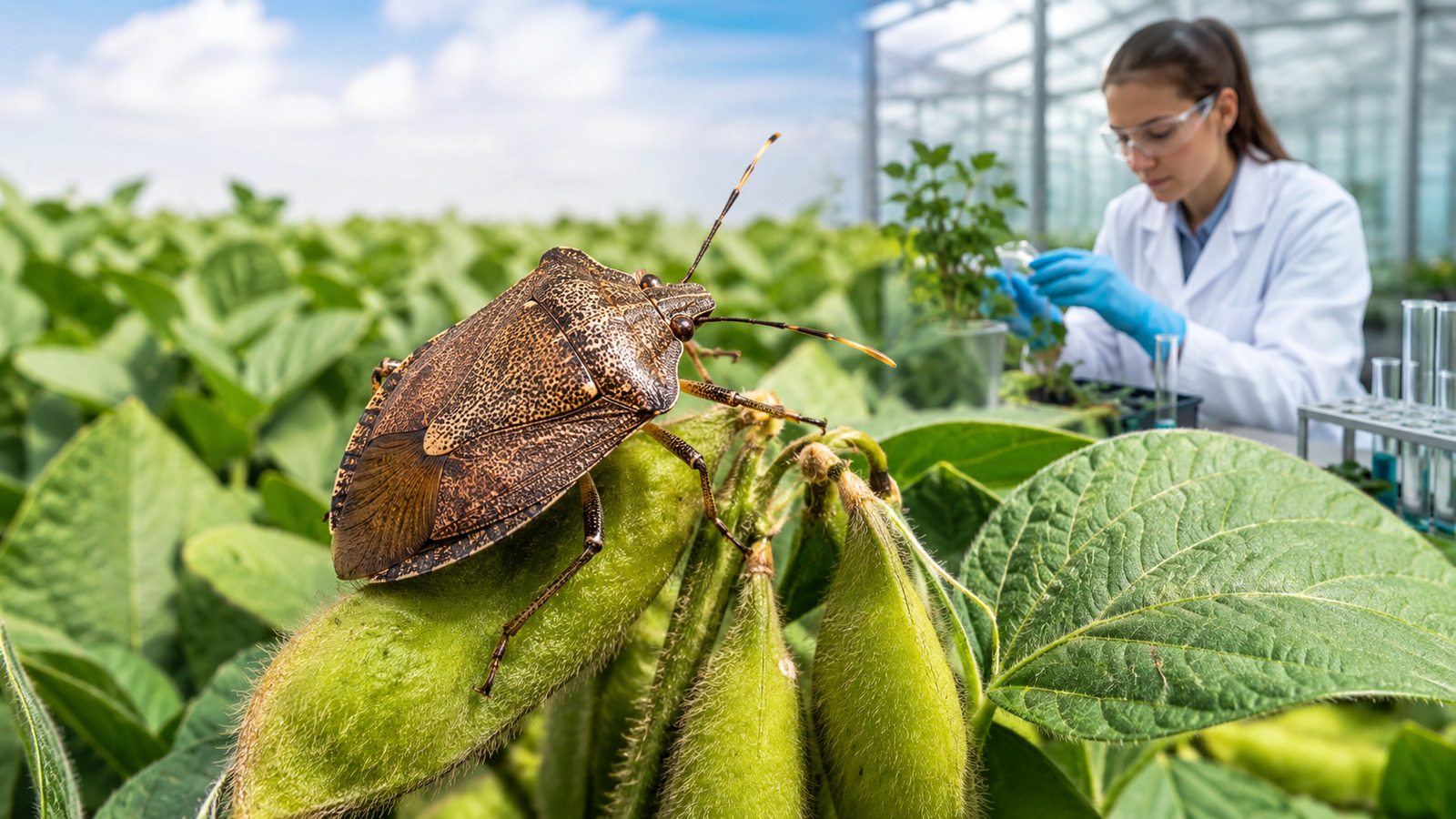

Researchers from Unesp identified a new use of the bacterium Bacillus altitudinis against the brown stink bug, a pest that caused losses of R$ 12 billion in soybeans and challenges traditional chemicals
Bacillus altitudinis may open a new front against the brown stink bug, a pest that caused an estimated loss of R$ 12 billion in the last soybean harvest, after Unesp researchers recorded a mortality rate close to 80% in the laboratory through contact by the legs.


Bacillus altitudinis targets resistant pest
The discovery was made by researchers from INCT NanoAgro, linked to the São Paulo State University “Júlio de Mesquita Filho”, Unesp. The group identified a new use for the bacterium Bacillus altitudinis in controlling the brown stink bug.
The insect, Euschistus heros, is considered one of the most difficult pests to control in Brazilian agriculture. It concerns researchers, consultants, pesticide companies, and soybean producers due to its economic impact and increasing resistance.
-
Brazilian Engineer Develops Affordable Custom 3D-Printed Prosthetics for Children and Teens, Operated by Elbow or Wrist Movement Without Batteries

-
China Left 51 Rocket Bodies in Low Earth Orbit Between 2021 and 2025, Doubling Previous Period, Report Warns of Space Debris Threatening Satellites for Decades
-
Brazilian Researcher Uses Low-Cost Sensors to Measure Cyclists’ Pollution Exposure in São Paulo

-
18 Iron Age gold coins discovered by a teacher using a metal detector in a Suffolk field sell for £33,200 at auction, exceeding estimates.


The bacterium was already known for applications related to plant growth promotion and disease control. In the study, it demonstrated high efficiency against the brown stink bug.
The central point is the mechanism of action. The bacterium worked through tarsal contact, that is, through the insect’s legs, a strategy still little explored against this type of pest.
Ricardo Antonio Polanczyk, an associate professor at Unesp and researcher at INCT NanoAgro, states that genetic variability helps explain the accelerated resistance.
He cites a common phrase among Embrapa researchers: every 50 kilometers there is a different population of the stink bug. This diversity makes management more difficult.
Loss increases with efficiency decline
The brown stink bug has become a large-scale economic problem not only due to direct damage to productivity but also due to the loss of efficiency of the chemicals used in management.
In some regions, insecticide doses that were previously around half a kilo per hectare have increased to one and a half kilos. In other areas, resistant populations respond differently just a few kilometers apart.
Depending on the infestation, losses range between 49 kilos and 120 kilos per hectare, equivalent to up to two bags of soybeans.
The timing of the attack worsens the loss. Leonardo Fernandes Fraceto states that the stink bug acts at the end of the cycle, during grain filling, where it destroys the producer’s profit potential.
In our laboratory tests, while many chemicals deliver efficiency between 30% and 40%, the researchers achieved levels close to 80% mortality, a result that attracts companies in the sector.
Bacteria contaminates insect through the legs
The differential of Bacillus altitudinis lies in its mode of action. The bug gets contaminated while walking on the treated surface of the plant, through the leg region.
Polanczyk explains that this is a novelty because the bug has antifungal substances and static layers on its back, which makes traditional control difficult.
Microbiological products based on Bacillus usually depend on ingestion by the insect. In the case of the brown bug, this logic encounters a significant obstacle.
The insect has a sucking mouthpart. Instead of chewing the leaf surface, it directly pierces the grain to suck nutrients, limiting the efficiency of many conventional biologicals.
According to Polanczyk, the problem with the traditional use of Bacillus against bugs is that the insect does not ingest the bacteria applied on the leaf. Therefore, tarsal contact became the main novelty.
Biologicals market expands interest
The discovery occurs amid the global expansion of the biologicals market, which exceeds US$ 13 billion, or R$ 65 billion, according to estimates from international consultancies.
In Brazil, the bio-inputs market moved more than R$ 6.2 billion in 2025 and reached a treated area of 194 million hectares, according to CropLife Brasil.
The segment left niches linked to organic agriculture and became one of the main strategic bets of the crop protection industry.
Increasing pest resistance, regulatory restrictions, and demand for more sustainable solutions have led multinationals to accelerate acquisitions, investments in biofactories, and agreements with startups and research centers.
Nanotechnology is expected to define commercial advancement
The technology of INCT NanoAgro is among the levels known as technological proof of concept. This means that the organism demonstrated efficiency in a controlled environment but still needs to advance.
The path includes tests in greenhouses, regional validations, industrial scaling, and the development of a commercial formulation. At this stage, nanotechnology is expected to take center stage.
Fraceto states that the challenge is not only to find an efficient organism. The solution needs to ensure stability, persistence, and protection against UV radiation.
In soybean crops, temperatures above 40°C are common. Therefore, the microorganism’s survival in the field becomes a decisive factor for the commercial success of the technology.
INCT NanoAgro works with encapsulation of biological assets, controlled release systems, and biogenic nanoparticles produced from living organisms.
The expectation is that partnerships with companies will accelerate industrial development. The estimated time for a commercial product based on this lineage to reach the market ranges from three to six years.
Until then, work continues in laboratories and experimental areas. Regional validations and industrial scale are still needed.
With information from Forbes.


