






 Portuguese
  Spanish


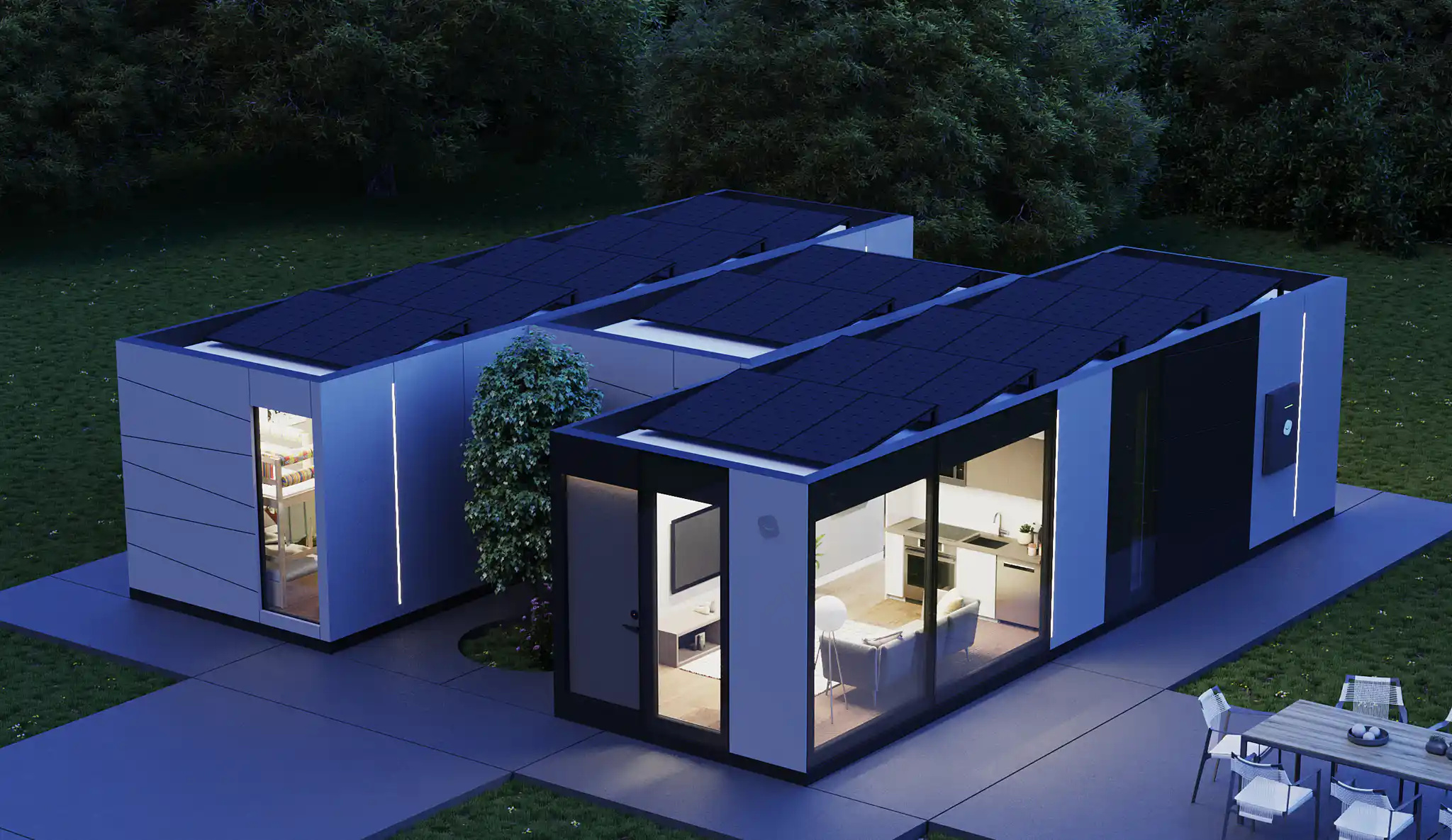

Roombus Nest is a smart modular house with a steel frame, anti-theft glass, local RoomOS, models from 22.3 m² to 44.6 m², and rental starting at US$ 550 per month.
According to Roombus, the Nest is a prefabricated modular house with a rigid steel frame, four-layer composite anti-theft glass windows, premium insulation in the walls and ceiling, and a proprietary operating system called RoomOS. The technology runs on Intel and ARM processors, with up to 10 TB of local storage, without relying on the cloud or a monthly subscription.
The Californian company, founded in 2019 by Dami Jegede, offers three models: Pico, with 22.3 m² for US$ 59,000; Nano, with 31.2 m² for US$ 69,999; and Solo, with 44.6 m² for US$ 89,000. All can be rented starting at US$ 550 per month, instead of purchased.
According to the company, the modules are resistant to hurricanes, earthquakes, and fire, and the Fortress Shell option adds level 8 ballistic protection. The houses arrive by truck and crane, can be installed on level ground, and do not require conventional foundation, long construction, or unpredictable budget.
-
U.S. City Builds Tiny Home Village on Water Company Land to House 136 Homeless People: Inside the Social Housing Units

-
Woman Turns Shipping Container into Home, Embraces Rural Life to Cut Monthly Expenses to Just Over $330
-
France Revamps 530 Social Housing Units with Large Balconies and Glass Facades Without Demolishing Existing Buildings

-
Facing high rent, couple transforms parents’ garage into a fully functional apartment, creating a complete home at a fraction of the market cost.




Roombus Nest modular house uses rigid steel frame and four-layer anti-theft glass
Most micro-housing on the market uses wood structure, shipping container, or aluminum profiles. Roombus made a different choice by using a welded steel frame as the structural core of the Nest, organizing the entire construction around this metal spine.


The steel frame fulfills structural, thermal, and acoustic functions. According to the company, it allows stacking the Nest up to four floors in active seismic zones and up to six floors in areas without seismic activity, without altering the base structure.
The four-layer composite anti-theft glass windows are one of the most unusual elements of the project. They offer superior thermal and acoustic insulation compared to standard double glass and add physical resistance against break-ins, something rare in compact modular houses.
RoomOS transforms the smart modular house into a connected system without relying on the cloud
The most unexpected feature of the Roombus Nest is not just the steel or reinforced glass. It is the RoomOS, a proprietary operating system embedded in the house, which works without mandatory internet, without cloud subscription, and without dependence on third-party platforms.
RoomOS runs on Intel and ARM processors, with up to 10 TB of local storage. This allows security camera recordings to be kept within the home itself, instead of being sent to servers of companies like Amazon, Google, or Apple.
The system monitors air quality, temperature, humidity, and presence in each room. When indoor air quality worsens, the integrated purifier is automatically activated; when outdoor air is better, ventilation can be adjusted according to the room temperature.
Roombus smart home allows controlling light, temperature, windows, and digital keys via mobile phone
Mobile control allows adjusting lighting, color, intensity, temperature, window privacy, and usage modes. The so-called Moods save sets of preferences for situations like movie, sleep, work, or relaxation.

Up to three residents can have their own profiles, with Digital Access Keys and individual settings. Visitors can also receive digital keys with expiration dates, and access can be revoked remotely.
This model eliminates part of the dependency on physical keys and integrates security, comfort, and automation into a single system. Nest tries to sell not just a compact house, but a smart home with its own digital infrastructure.
Pico, Nano, and Solo models are priced from US$ 59,000 to US$ 89,000
The base configuration of each model includes a complete structure, RoomOS system with built-in computer, LED lighting in all rooms, digital HVAC, temperature and air quality sensors, security system, motion sensor, and alarm.
The entrance door comes with an electronic lock and deadbolt with a declared resistance of 1,360 kg. Four-layer windows and up to five built-in speakers are also part of the package, allowing music and hands-free calls.
The Pico is 22.3 m² and costs US$ 59,000. The Nano is 31.2 m² and costs US$ 69,999. The Solo, the largest base model, is 44.6 m² and costs US$ 89,000, before options and expansion modules.
Solar panels, battery, heated floor, and ballistic protection are optional
Options can be configured in the Roombus Design Studio. Among them are solar panels with a battery for off-grid operation for up to 10 days in typical daily use, electric floor heating by zones, and different interior finishes.

There are also options for walls with washable acoustic panels, traditional drywall, antimicrobial cork, waterproof SPC flooring, and Fortress Shell package with level 8 ballistic protection for high-security environments.
The Station module is one of the most significant expansions. It connects to the Solo model and increases the total area to 104 m², including two 60A electric vehicle charging points, one internal and one external.
Roombus Nest can function as an ADU, main residence, or off-grid house
The Roombus Design Studio asks the buyer to choose between three usage profiles: ADU, main residence on an urban lot, or off-grid house in a remote location. The difference is not just commercial, as each use changes licensing, installation, and service connection.
As an ADU, an accessory unit installed on land with a main house, the Nest can be delivered to the backyard by truck and crane, connected to the existing electricity, water, and sewage network. This use has gained strength in the United States amid the housing crisis.
As a main residence, the process is similar to that of a permanent construction, with municipal permit and approved project. In off-grid mode, the Nest uses optional solar panels and battery to operate without network connection, in remote locations such as forests, mountains, or isolated lands.
Modular house without conventional foundation promises quick installation on leveled ground
The Nest is delivered by truck and positioned with a crane on leveled ground. The proposal is to avoid conventional foundation, months of construction, and budget variations common in traditional constructions.

This model reduces construction site stages but does not eliminate all requirements. Land, truck access, leveling, local licensing, and water, sewage, and energy connections remain decisive points for installation.
The advantage lies in predictability. By concentrating construction in the factory, Roombus tries to reduce delays, waste, and improvisations that usually increase the cost of conventional works.
Roombus still needs to prove it can deliver the Nest at scale
Roombus has pre-seed funding from Backstage Capital and the WeFunder platform. It also has a visitable physical prototype in Torrance, California, a functional online Design Studio, and detailed technical specifications.
The challenge lies in scaling execution. The company has documented delays: the launch was planned for February 2022, postponed to September 2022, and then announced for September 2024.
The problem doesn’t seem to be just with the product, but with production. Scaling quality modular construction is difficult because it involves factory, logistics, crane, installation on variable terrains, technical support, and maintenance of its own operating system.
Smart micro-housing targets remote workers, ADUs, and buyers outside the conventional market
Roombus doesn’t need to produce millions of units to be relevant. Its likely audience includes remote workers who want to live in isolated locations, homeowners interested in income with ADU, and buyers excluded from the conventional market due to properties over $400,000.
The combination of structural strength, local automation, off-grid option, monthly rent, and quick installation creates a clear niche in the smart micro-housing market. The product, on paper, is one of the most complete in the category.
What is missing is the consistent record of deliveries at scale. Nest already has a prototype, specifications, and a strong proposal; now, Roombus needs to prove it can turn the technical promise into delivered, installed, and functioning homes for real buyers.









