






 Portuguese
  Spanish
  5 min of reading
  0 comments


Nuclear technology developed in Brazil tracks microplastics and helps reduce environmental pollution with innovative water treatment solutions.
The increasing presence of microplastics in rivers, oceans, and food has mobilized scientists worldwide. In Brazil, a solution developed by the Institute of Energy and Nuclear Research (Ipen), linked to the National Nuclear Energy Commission (Cnen), uses nuclear technology to monitor and combat this type of contamination.
According to information from MCTI and IPEN on June 9, 2026, the initiative brings together a Mobile Technological Demonstration Unit equipped with an electron accelerator and isotopic tracer tracking techniques. Together, these tools allow identifying the origin of the waste and treating up to 1 million liters of water per day, enhancing the national capacity to tackle one of the greatest challenges of modern environmental pollution.
Brazilian nuclear science gains prominence in the fight against microplastics
Brazilian nuclear science has been taking a leading role in combating microplastics, plastic particles smaller than 5 millimeters that can escape conventional water and sewage treatment systems.
-
Robot Works 900 Hours to Build World’s Tallest 3D-Printed Concrete Tower, 30 Meters High, in Swiss Village of 12 Residents

-
German Collector Discovers New Mineral in Ancient Mine, Named After Him

-
Elon Musk Plans $25 Billion Chip Factory with SpaceX and xAI at Tesla’s Massive Texas Site, Visible from Space

-
Brazilian Innovator Marcelo Loureiro Sets Guinness World Record with 12,000 km Robotic Surgery from Brazil to Kuwait



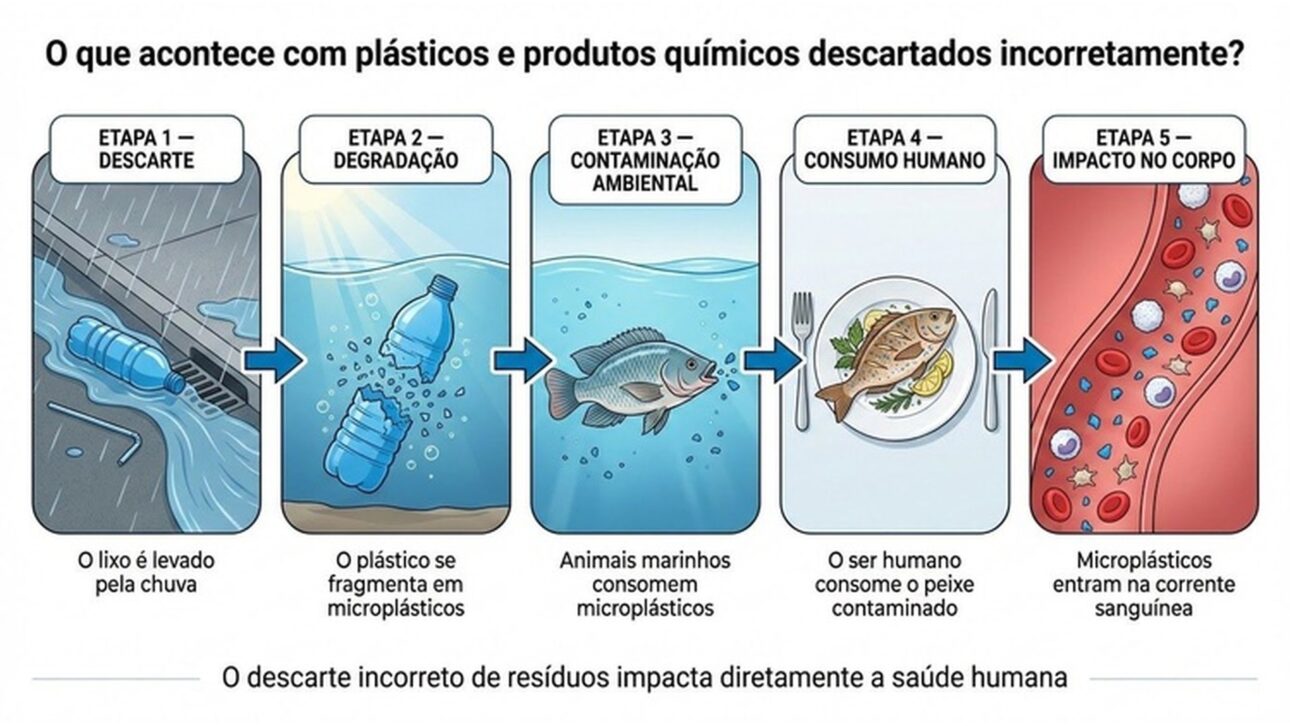
These residues end up reaching rivers, lakes, and oceans, where they remain for long periods and can be ingested by aquatic organisms. Over time, they enter the food chain and also reach human consumption.
In this scenario, researchers at Ipen have developed methods capable of monitoring and reducing the presence of these contaminants, strengthening environmental research and expanding understanding of the dispersion of these materials in the environment.
Technological truck treats up to 1 million liters of water per day
One of the most impressive innovations of the project is the Mobile Technological Demonstration Unit.
Installed in a truck, it uses a state-of-the-art electron accelerator to decontaminate wastewater. The system employs electricity to generate enough energy to break down pollutant molecules present in the water, including microplastics.
During the process, the contaminated water passes through a high-speed electron beam. This contact causes changes in the molecules of chemical residues, reducing their toxicity and facilitating the cleaning of the water before its return to nature.
In addition to high operational capacity, the technology presents important advantages:
- Treatment of up to 1 million liters of water per day;
- Possibility of reusing treated water;
- Physical process without the use of chemical reagents;
- Direct application in industries and treatment plants;
- Technology already validated in a real operational environment, with TRL readiness level 7/8.
How nuclear technology tracks the origin of plastic waste
In addition to removing contaminants, nuclear technology also helps to understand the path taken by microplastics.
Researchers use isotopic tracers, substances that function as a kind of invisible marker. They allow identifying the origin of the waste, tracking its movement through ocean currents, and determining the locations where there is a greater accumulation of these particles.
This capability offers a much more detailed view of environmental pollution and provides valuable information for monitoring programs and the preservation of water resources.
The data obtained even helps in the creation of global contamination maps.
Environmental research expands monitoring in critical areas
The work carried out by Ipen is not limited to laboratories.
Currently, Cnen conducts systematic monitoring of microplastics in areas considered strategic for environmental research. The collected samples undergo detailed analyses to identify the origin of the contaminants.
The information generated is shared with international research networks, allowing for the comparison of results and the construction of a more robust database on the presence of these residues in different ecosystems.
This collaboration strengthens Brazil’s ability to develop public policies based on scientific evidence.
Why microplastics concern scientists and authorities
Microplastics represent a problem that goes far beyond visual pollution.
Because they are extremely small, they can easily circulate through aquatic environments and reach living organisms. This raises concerns related to biodiversity, food security, and even the economy.
Among the main risks identified by specialists are:
- Entry into the food chain through fish and crustaceans;
- Transport of pesticides and heavy metals adhered to the surface of particles;
- Spread of bacteria and other harmful microorganisms;
- Possible impacts on economic activities related to fishing and aquaculture.
For this reason, environmental research related to microplastics has been receiving increasing attention in different countries.
Brazilian nuclear science integrates global network coordinated by IAEA
The advancement of Brazilian nuclear science is also connected to international initiatives.
Brazil participates in the Nutec network (Nuclear Technology for Controlling Plastic Pollution), coordinated by the International Atomic Energy Agency (IAEA). The program brings together various countries that use nuclear tools to monitor and reduce pollution caused by plastic waste.
Brazilian participation strengthens the exchange of scientific knowledge and expands access to new methodologies aimed at tackling this global challenge.
Additionally, it reinforces international recognition of the work carried out by Ipen and Cnen.
Nuclear technology operates safely and without environmental risks
Despite the name, the nuclear technology employed in this type of research does not pose radiation risks to the population or the environment.
The electron accelerators used in water treatment do not make materials radioactive. Similarly, the isotopic tracers used in the analyses follow strict safety protocols.
In practice, nuclear technology functions as a high-precision tool, allowing analyses that would be extremely difficult by conventional methods.
This advantage has expanded its use in various areas related to environmental monitoring.
The advancement that can transform the fight against environmental pollution
The combination of Brazilian nuclear science, environmental research, and microplastic monitoring represents an important step for the protection of water resources.
With the capacity to treat up to 1 million liters of water per day, trace the origin of contaminants, and generate high-precision scientific data, Brazil consolidates a modern structure to tackle a problem that affects ecosystems, economic activities, and the quality of life of the population.
The work developed by Ipen, Cnen, and the Ministry of Science, Technology and Innovation shows how nuclear technology can be applied safely and efficiently to reduce environmental pollution and expand knowledge about the impacts of microplastics in the 21st century.


Be the first to react!