






 Portuguese
  Spanish
  7 min of reading
  0 comments


Bri and Destiny bought a tiny house in Portland to escape expensive rent and create financial freedom with 37 m² well utilized, king-size bed, mezzanine office, kitchen with 36 cabinets and drawers, closet in the bathroom, and accessible parking in the side yard, according to the Tiny House Blog, in the original report.
The tiny house purchased by Bri and Destiny, a newlywed couple living in Portland, United States, became their first home after trying to escape the increasingly expensive rent of an apartment. The story was reported by the Tiny House Blog, in a publication on September 9, 2022, written by Alexis Stephens.
The compact property, called Matchbox, has 37 m² of usable area and was designed by Tiny Homiez. The move was part of a choice for a simpler life, where the couple started to see small housing as a possible way to reduce costs, gain autonomy, and build financial freedom.
Expensive rent pushed the couple to a smaller but more planned choice
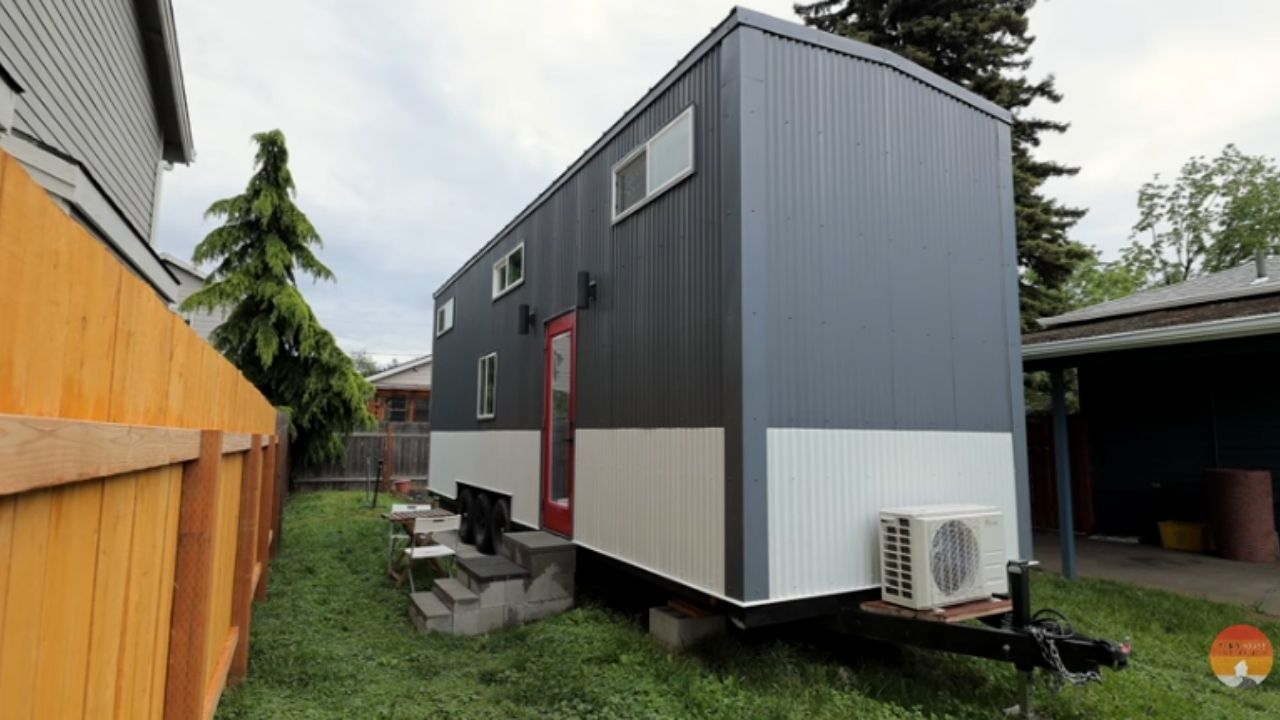
Before the move, Bri and Destiny faced the burden of traditional rent, a common reality in cities where housing costs pressure families, young couples, and those trying to start adult life with more stability. Instead of insisting on an increasingly expensive apartment, they chose to buy a tiny house as their first property.
-
In Sweden’s Jukkasjärvi, Artists Transform the Frozen Torne River into the Icehotel, a Seasonal Ice Structure That Melts Back into Nature

-
Innovative Heat Storage Tower in Finland Uses 2,000 Tons of Crushed Soapstone to Warm Cities
-
17-Year-Old Homeschooler from the Bahamas Solves 40-Year-Old Math Puzzle, Earns Direct PhD Admission
-
Giant South American Tree Stores Water in Its Trunk, Survives for Years in Dry Regions


The decision was not presented as a miraculous solution, but as a conscious exchange. The couple gave up the idea of a large house to prioritize financial control, practicality, and real use of space. At the center of the choice was a simple question: why pay for square meters that might not even be used in daily life?
The accessible spot in the side yard in Portland also helped make the project viable. In small houses, the location where the structure is installed is often as important as the construction itself, because it affects the monthly cost, routine, access, and the sense of permanence.
Therefore, the story of Bri and Destiny draws attention not only because of the size of the house but because of the overall decision. They didn’t just buy a compact home; they bought a different way to organize money, routine, and expectations about their first home.
37 m² Tiny House Bets on Storage to Avoid Feeling Cramped
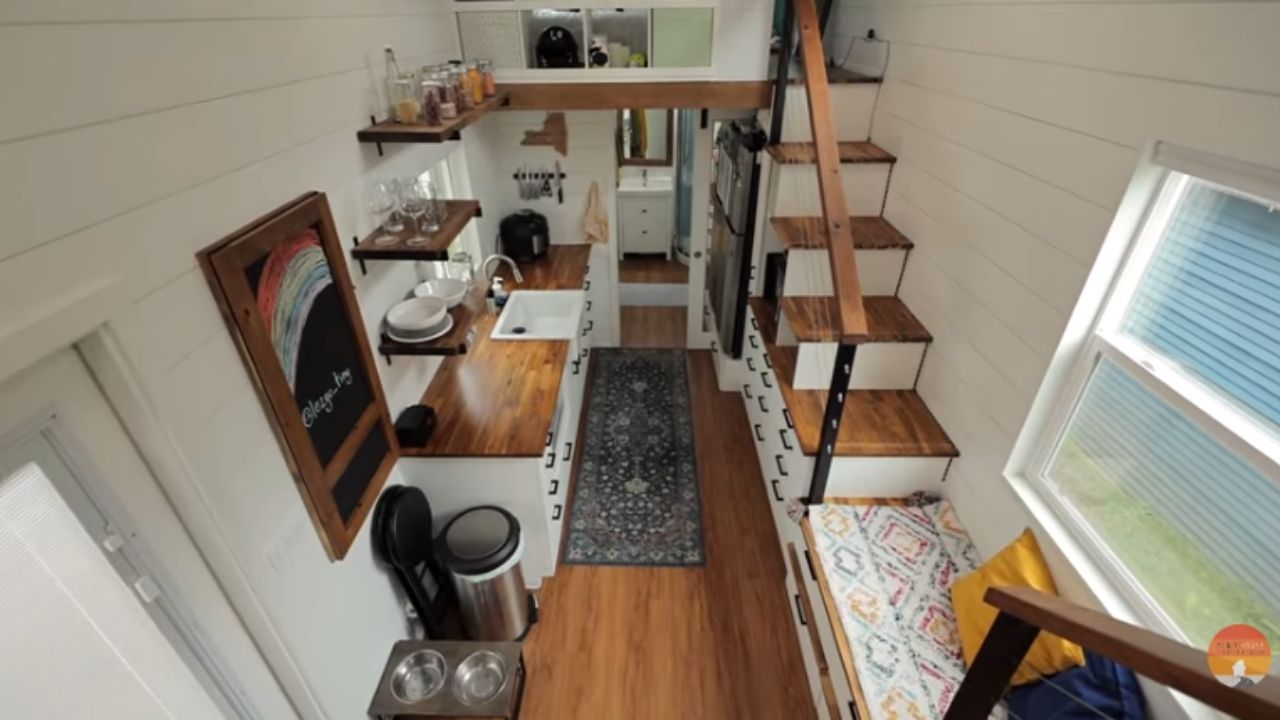
The Matchbox is 9 meters long and has 37 m² of usable area, measurements that might seem limited for two people. However, the project was designed to preserve visual spaciousness and functionality, preventing the house from appearing just like a cramped version of a regular apartment.
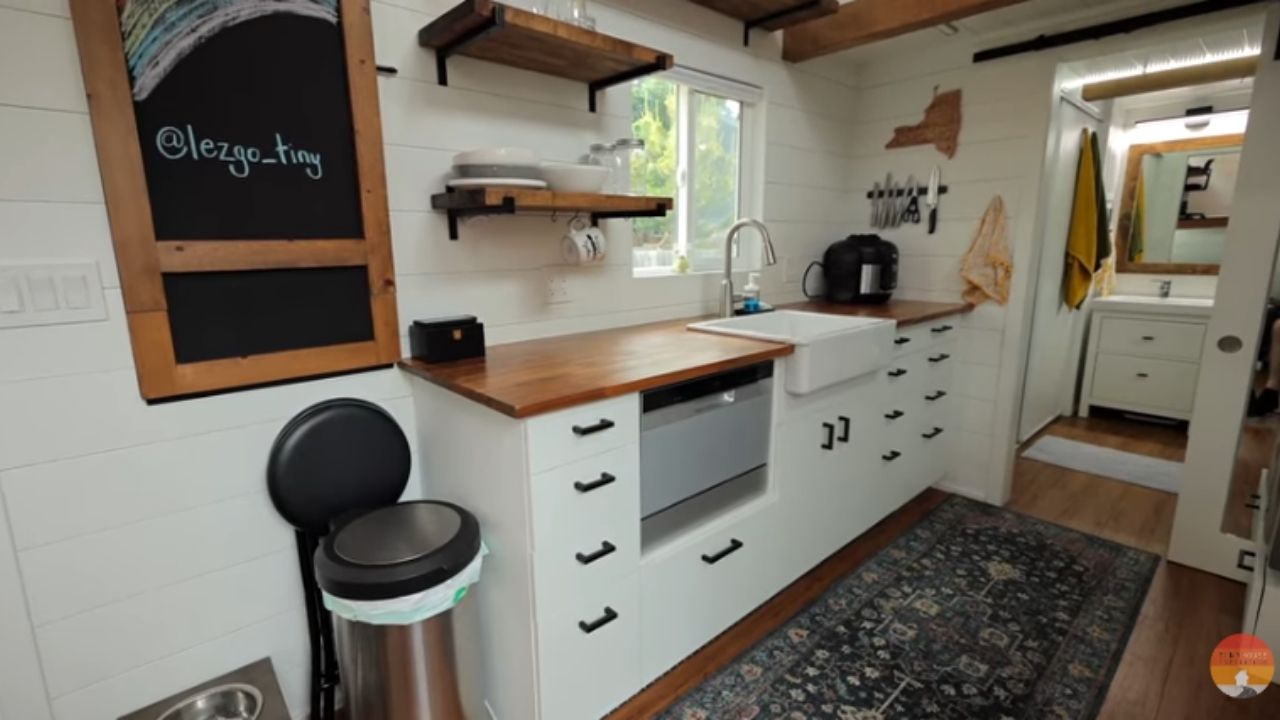
The main highlight is storage. According to the Tiny House Blog, the kitchen alone has 36 cabinets and drawers. This number changes the perception of space, because a tiny house without sufficient storage can quickly become disorganized and difficult to maintain.
The presence of many compartments allows utensils, food, personal items, and routine items to be hidden or well distributed. In a compact house, each drawer helps free up circulation, reduce apparent clutter, and maintain the feeling of a clean environment.
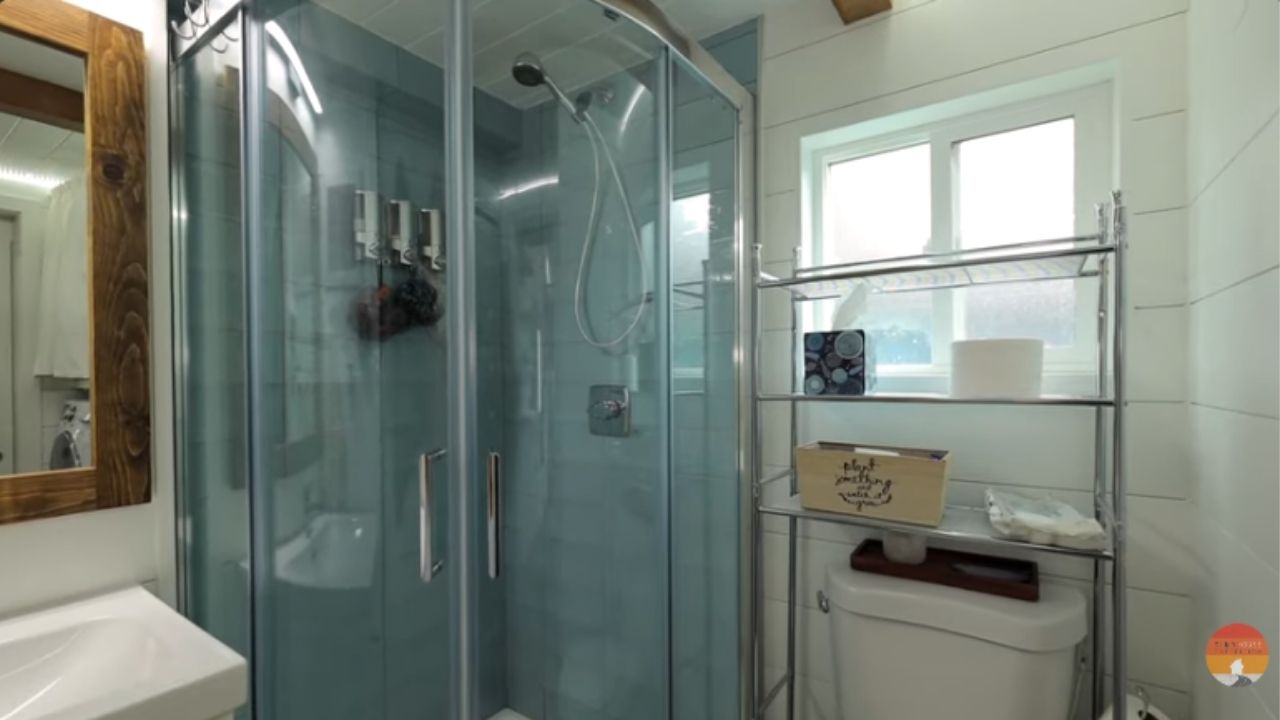
Besides the kitchen, the bathroom also received an unusual solution for a home of this size: a 1.8-meter-long closet. This detail shows that the project didn’t just focus on aesthetics but on everyday use, considering the real needs of those living there full-time.
Mezzanines Became Bedroom and Office Inside the First Home
One of the most striking features of the tiny house is the use of mezzanines. On the upper floor, Bri and Destiny sleep in a space capable of accommodating a king-size bed, something that defies the common image of small houses with makeshift mattresses or very limited sleeping areas.
On the other side of the house, the mezzanine office functions as a workspace. The space has a high ceiling, enough area for two desks, cabinets, and free circulation. For a couple that needs to organize personal routine, work, and rest in the same property, this detail is decisive.
Below, there is another environment with about 1.70 meters in height. The former owner used this area as a bedroom, but Bri and Destiny decided to transform it into a living room. There, they can relax and watch movies without the need to stand up.
This adaptation shows an important rule of compact houses: the project only works when it accompanies the routine of those who live in it. The same space can serve as a bedroom for one person and as a living room for another, depending on priorities and lifestyle.
First property became an alternative to the traditional American dream
The couple’s story also touches on a larger discussion about the so-called American dream. Instead of seeking a large house with a spacious backyard and high maintenance costs, Bri and Destiny began to advocate for the possibility of building their own dream, smaller and more aligned with real life.
According to the account published by the source, they once desired the traditional model of a large house. Over time, however, they realized that the idea of success could also change. The first property didn’t need to be huge to represent achievement, security, and future.
The tiny house, in this case, appears as a practical response to financial pressure. It does not eliminate all the challenges of compact living, but it reduces dependency on expensive rent and forces a more objective relationship with consumption, space, and priorities.
This point helps explain why stories of small houses gain so much attention. They mix visual curiosity, domestic economy, and a question that many people ask themselves: is it better to have extra space or live with lower costs and more control over one’s own budget?
Simple life does not mean absence of comfort
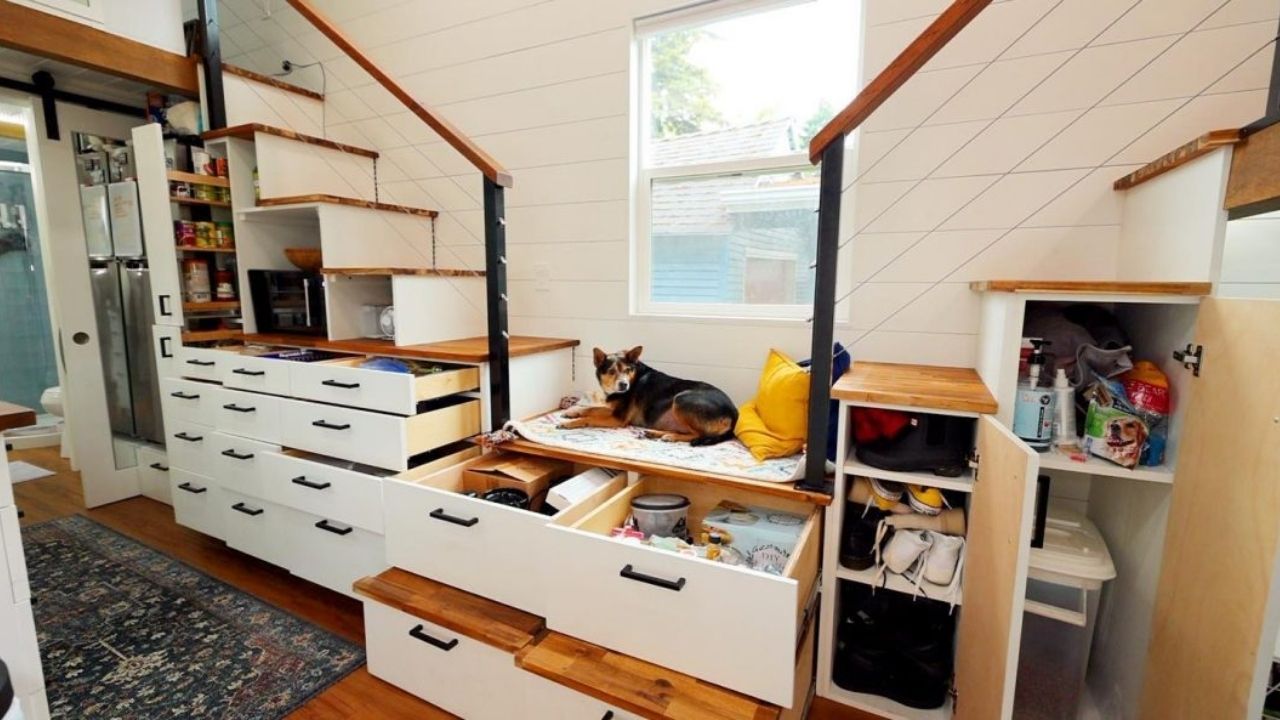
A common mistake is to imagine that a tiny house needs to be uncomfortable to be financially viable. The case of Bri and Destiny shows the opposite: the house is small but includes a king-size bed, separate office, kitchen full of storage, and bathroom with a closet.
This combination helps break the idea that living small means giving up everything. In practice, it means choosing better what enters the house and making each area work harder. Comfort comes less from absolute size and more from intelligent design.
At the same time, the model requires detachment. A 37 m² house does not accommodate excess furniture, impulse purchases, or accumulation without function. The space forces residents to review habits and keep only what is truly useful.
For some people, this limitation would be a problem. For others, it might be precisely the attraction. In the case of Bri and Destiny, simple living appears as a way to reorganize priorities and show that housing does not need to follow a single script.
Representation also entered the tiny house journey


Besides the financial aspect, Bri and Destiny also highlight the importance of sharing their experience. They express pride in representing queer women of color within the tiny house movement, a universe that often does not show the diversity of people who choose this lifestyle.
This part of the story broadens the reach of the case. The tiny house is not just a smaller property; it also becomes a way to show that housing alternatives can be occupied by different profiles, families, and identities, without following a single resident pattern.
By exposing their own journey on social media, the couple helps others see possibilities that might not appear in traditional housing models. Seeing someone similar living a concrete alternative can change how others imagine their own future.
Still, the experience does not need to be idealized. Living small requires planning, coexistence agreements, constant organization, and awareness of space limits. The merit of the case lies precisely in showing a real choice, with benefits and sacrifices.
Living smaller can mean choosing better
Bri and Destiny’s tiny house shows how a newlywed couple transformed 37 m² into their first home, with a mezzanine office, bedroom with a king-size bed, kitchen with 36 cabinets and drawers, and a living room adapted for relaxation.
The case does not mean that everyone should live in small houses, but it shows that the size of the property does not always define the size of the achievement. For some people, financial freedom may begin precisely when the dream of a big house gives way to a smaller, more feasible project that is more aligned with their routine. Would you live in a tiny house to escape expensive rent, or do you think the reduced space would weigh too much on a daily basis? Leave your opinion in the comments.


Be the first to react!