






 6 min of reading
  0 comments


São Paulo introduced 500 electric buses on Marginal Tietê, expanded clean public transport with an investment of R$ 6.5 billion, and estimates cutting diesel, CO₂, and urban noise, while the fleet reaches 1,759 vehicles and promises environmental gains in the daily routine of millions of passengers in the capital every day.
The electric buses gained prominence in São Paulo after the city hall delivered a batch of 500 new vehicles for the municipal public transport system. The presentation took place on Sunday, June 21, 2026, on Marginal Tietê, with the vehicles lined up in two parallel rows along approximately 7.2 kilometers.
According to information published by Exame, the delivery is part of a fleet renewal program estimated at R$ 6.5 billion. With the incorporation of the new vehicles, São Paulo now operates 1,759 electric buses, consolidating the largest fleet of this type in Brazil.
Electric fleet grows and changes the scale of public transport
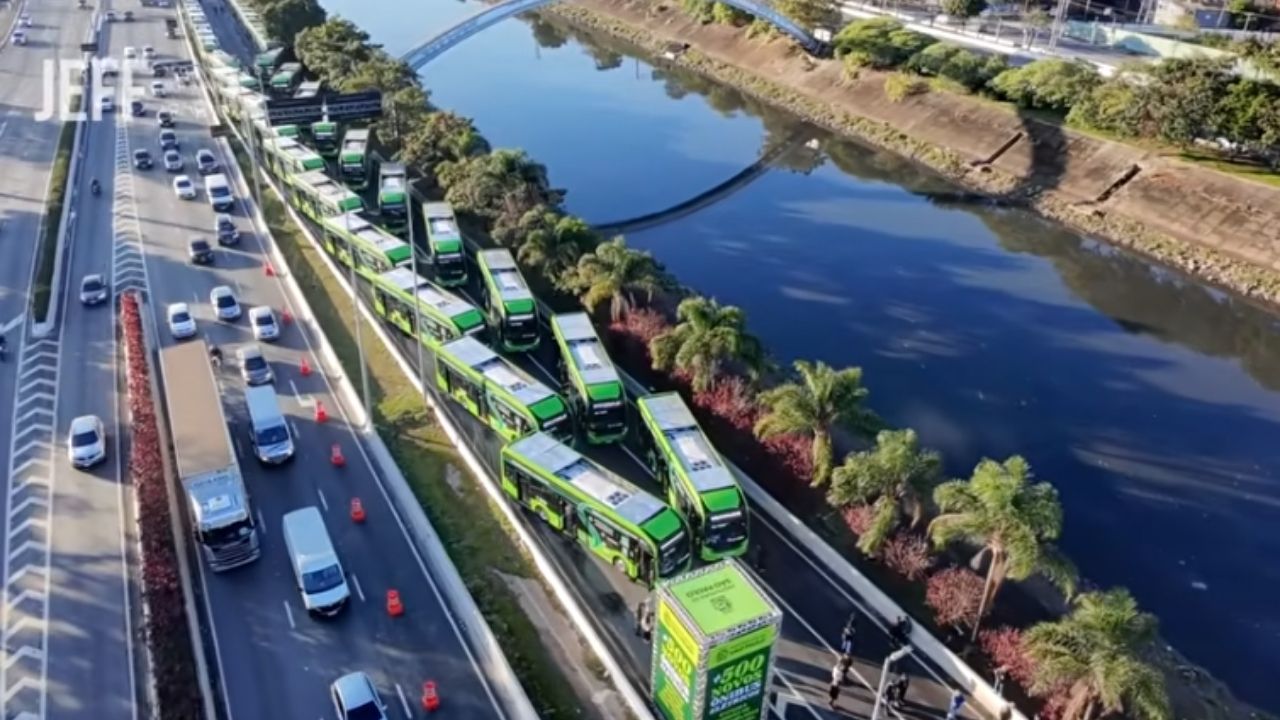
The arrival of the 500 new vehicles marks a significant expansion within the municipal public transport. The city of São Paulo already transports more than 7 million passengers per day, and the electrification of part of the fleet seeks to reduce emissions, diesel consumption, and environmental impacts associated with the daily circulation of buses.
-
Robot Works 900 Hours to Build World’s Tallest 3D-Printed Concrete Tower, 30 Meters High, in Swiss Village of 12 Residents

-
Brazilian Nuclear Science Uses Advanced Techniques to Combat Microplastics in Waterways and Food, Paving the Way for Innovative Environmental Solutions

-
German Collector Discovers New Mineral in Ancient Mine, Named After Him
-
Elon Musk Plans $25 Billion Chip Factory with SpaceX and xAI at Tesla’s Massive Texas Site, Visible from Space




According to the city hall, the new electric buses are expected to stop consuming approximately 20 million liters of diesel per year. The estimate also points to an annual reduction of more than 45 thousand tons of carbon dioxide, in addition to cuts in nitrogen oxides and particulate matter.
The scale is noteworthy because the delivered batch alone surpasses the total estimated electric buses in circulation in the rest of Brazil in 2025, outside the city of São Paulo. According to data cited by the municipal administration, this number was calculated at about 460 vehicles.
With the new delivery, the capital’s electric fleet now includes 1,570 battery-powered buses and 189 trolleybuses. Together, these vehicles are expected to prevent the emission of approximately 130,000 tons of CO₂ per year and reduce the consumption of about 57 million liters of diesel annually.
Marginal Tietê became a showcase for a billion-dollar change
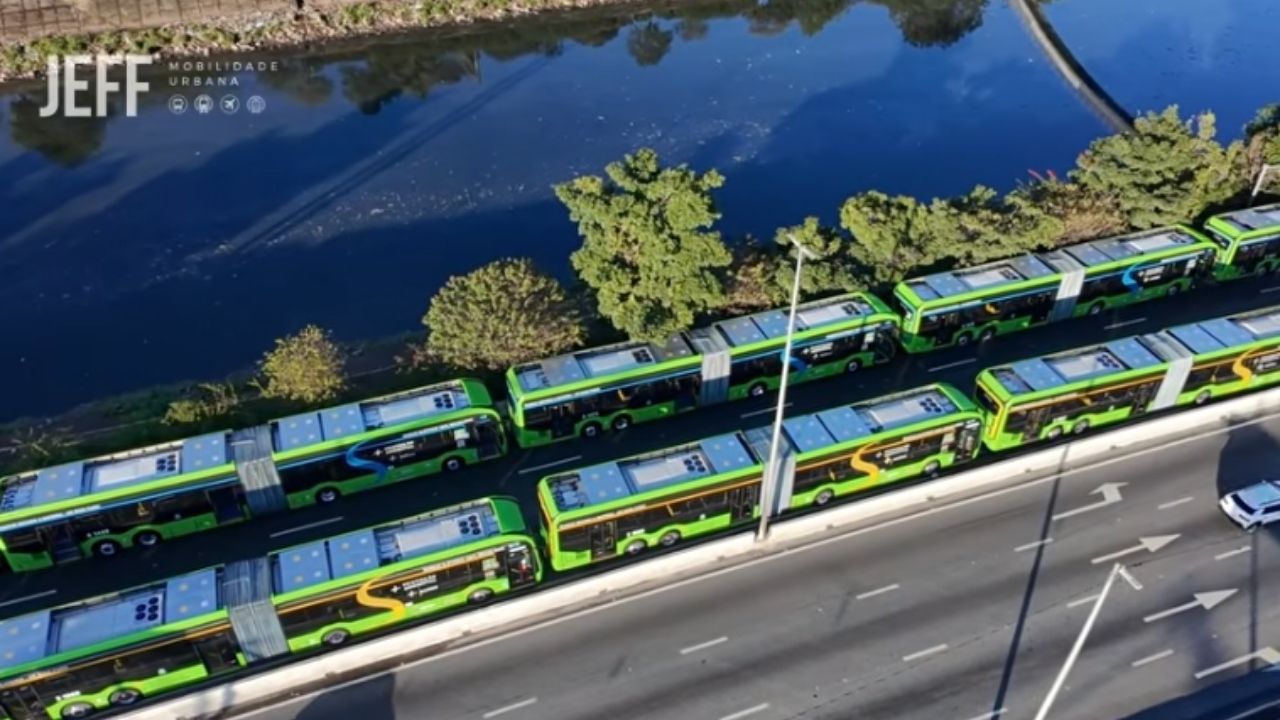
The presentation of the 500 electric buses took place on Marginal Tietê, one of the most well-known and busy roads in São Paulo’s capital. The vehicles occupied two parallel lanes over a stretch of about 7.2 kilometers, creating a symbolic image of the energy transition in public transport.
The total investment structured by the city hall is estimated at R$ 6.5 billion, with national and international resources. The delivered batch also included financing from the National Bank for Economic and Social Development, BNDES.
The choice of Marginal Tietê as the stage reinforced the visual aspect of the delivery, but the real impact will be measured in the daily life of the lines, garages, passengers, and operators. Electrification only gains strength when it stops being an event and becomes part of the routine for those who use the bus every day.
According to Exame, the city hall states that the renewal is linked to a larger strategy of emission reduction and air quality improvement. The municipal policy also prevents concessionaires from renewing the fleet with diesel buses when the vehicles reach the end of their useful life.
Diesel savings is one of the main environmental arguments
The estimated cut of 20 million liters of diesel per year is one of the central figures of the delivery. In a city with a large circulation of heavy vehicles, reducing the use of this fuel can decrease local emissions and contribute to a less polluting operation.
Besides carbon dioxide, the city hall estimates that the new batch will reduce 110.6 tons of nitrogen oxides and 0.9257 tons of particulate matter per year. These pollutants are linked to urban air quality and directly affect regions with a high circulation of buses.
The environmental estimate released by the municipal administration compares the effect of the new vehicles to the planting of approximately 3.2 million trees. Individually, each electric bus would be equivalent to planting about 6,400 trees and would prevent the emission of approximately 87 tons of CO₂ per year.
Even with impressive numbers, electrification alone does not eliminate all the challenges of urban mobility. Public transport also depends on frequency, integration, fare, comfort, safety, and route planning. Nevertheless, the gradual switch from diesel to electricity represents a structural change in operation.
Passengers should feel a change in comfort and noise
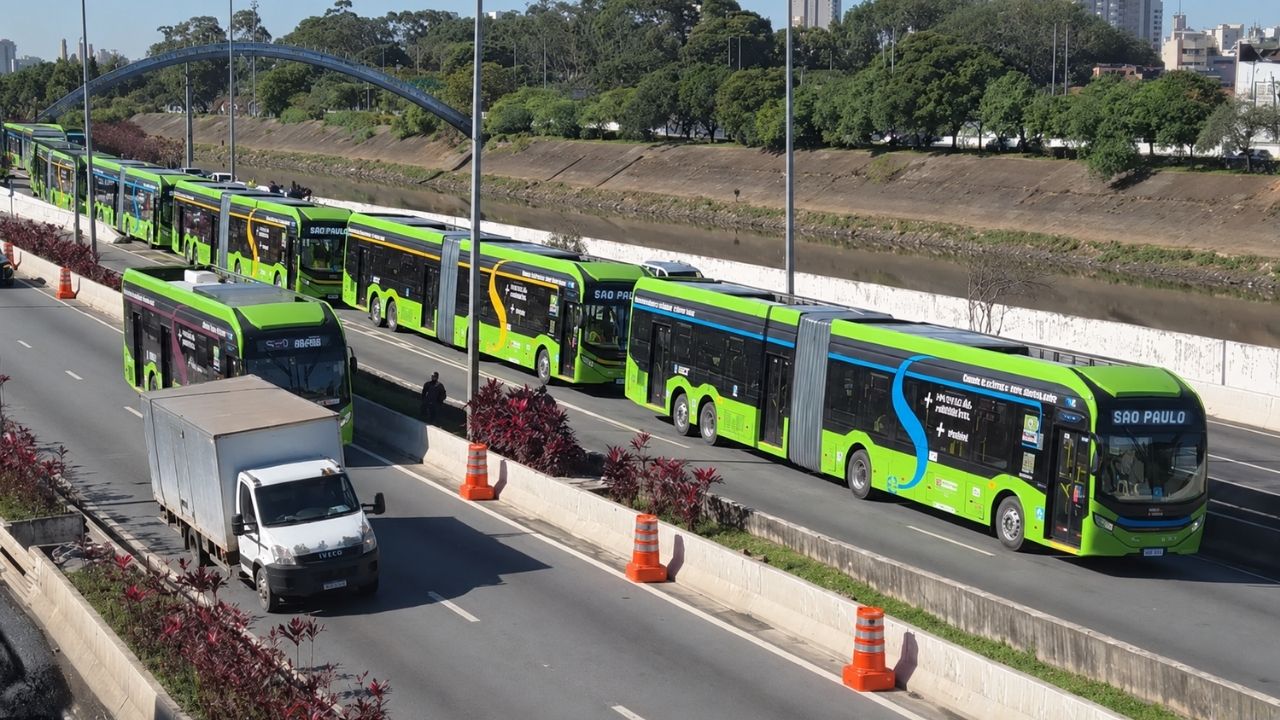
The new vehicles come with air conditioning, Wi-Fi connection, USB ports, and accessibility features. These elements help bring the environmental agenda closer to a practical perception for those who depend on public transport daily.
The delivered fleet includes 22 midi buses, 215 basic, 159 standard models of 13.20 meters, 64 articulated of 21 meters, and 40 articulated of 23 meters. This variety indicates that the vehicles should meet different line, capacity, and circulation demands throughout the city.
In addition to emission reductions, the lower noise of electric buses is likely to be noticed by drivers, conductors, passengers, and residents near the corridors. The quieter operation can improve the experience inside the vehicle and reduce some of the noise discomfort on the streets.
Exame also highlighted reports from operation professionals. Drivers and instructors point out that electric vehicles are quieter, more comfortable, and more powerful compared to diesel models, a difference perceived both in driving and in the passenger experience.
Smart Sampa and technology enter the new fleet
Among the vehicles presented, 20 have cameras integrated with Smart Sampa, the municipal urban monitoring program. With this delivery, the city now has 74 buses equipped with this technology.
The use of cameras in part of the fleet shows that the renewal involves more than just electric engines. Public transport now brings together connectivity, monitoring, accessibility, and onboard services, expanding the role of buses within urban infrastructure.
This advancement also raises discussions about security, privacy, data management, and transparency in the use of images. Technology can support urban monitoring but needs to be accompanied by clear rules and proper oversight.
In the context of clean mobility, fleet digitization functions as an additional layer. Electric buses reduce local emissions, while onboard systems can improve operational control, safety, and incident response, provided they are used with public responsibility.
São Paulo tries to lead clean mobility in Brazil


The capital of São Paulo seeks to position itself as a national reference in electric public transport. According to the city hall, the current fleet of 1,759 clean vehicles puts São Paulo on a higher scale than other Brazilian cities in this segment.
Comparison with the rest of the country helps to gauge the size of the operation. If the batch of 500 electric buses already surpasses the estimated fleet outside the capital in 2025, the delivery shows that São Paulo is concentrating a significant portion of the national electrification of public transport.
The challenge now is to transform scale into daily efficiency. For this, it will be necessary to ensure charging infrastructure, specialized maintenance, team training, operational predictability, and integration with the routine of the concessionaires.
The energy transition policy also needs to advance without compromising service availability. Changing technology is important, but passengers will continue to evaluate transport by waiting time, crowding, regularity, comfort, and fare cost.
Electric fleet grows, but the test will be in daily life
The delivery of 500 electric buses puts São Paulo in the spotlight within clean mobility in Brazil. The investment of R$ 6.5 billion, the estimated savings of 20 million liters of diesel per year, and the predicted reduction of 45 thousand tons of CO₂ show the environmental dimension of the measure.
At the same time, the showcase of Marginal Tietê will only be confirmed on the streets, when the new vehicles are incorporated into the routine of millions of passengers. Do you think electric buses can truly improve public transport in large Brazilian cities, or is the main problem still crowding, fare, and waiting time? Leave your opinion in the comments.




Be the first to react!