Portuguese
  Spanish


In Rio Grande do Sul, the Marchetti family was selling olive tree seedlings without buyers and decided to make their own olive oil to prove the value of the fruit. Thirteen years later, Prosperato became the most awarded olive oil brand in Brazil, with 330 awards, aiming for R$ 12 million in agribusiness.
Some businesses start off crooked and straighten out in the most unexpected way. In the countryside of Rio Grande do Sul, a family was trying to sell olive tree seedlings, but almost no one understood what they were for, so they decided to plant their own trees and make olive oil just to prove that the fruit was worthwhile. The story was told by the magazine Exame.
The improvisation turned into a national reference. Thirteen years and 330 awards later, Prosperato, from Caçapava do Sul, became the most awarded olive oil brand in Brazil, and now wants to double in size. The goal of the Marchetti family business is to earn R$ 12 million in 2026, supported by a new product line and the best harvest in its history.
The case is one of those turnarounds that only Brazilian agribusiness delivers. From a nursery of seedlings without clients to an olive oil covered in medals, Prosperato shows how a stubborn bet can reshape a family’s destiny and open up a market that many people didn’t even know existed in the country.
-
China Builds 400-Hectare Irrigation System in Tanzania to Aid 1,000 Families Dependent on Rainfall

-
High School-Educated Farmer in India Converts 40 Hectares of Arid Land into Native Forest with 900 Species and Up to 40,000 Trees

-
After Two Years of Water Scarcity, Brazilian Farmer Finds Well on Her Land, Boosting Mango and Passion Fruit Production in Central Brazil

-
Cashew Becomes Billion-Dollar ‘Superfood’ in Ivory Coast: 1.6 Million Hectares of Monoculture Encroach on Forests as Families Trade Food for Nuts


From Olive Tree Seedlings Without Buyers to Award-Winning Olive Oil
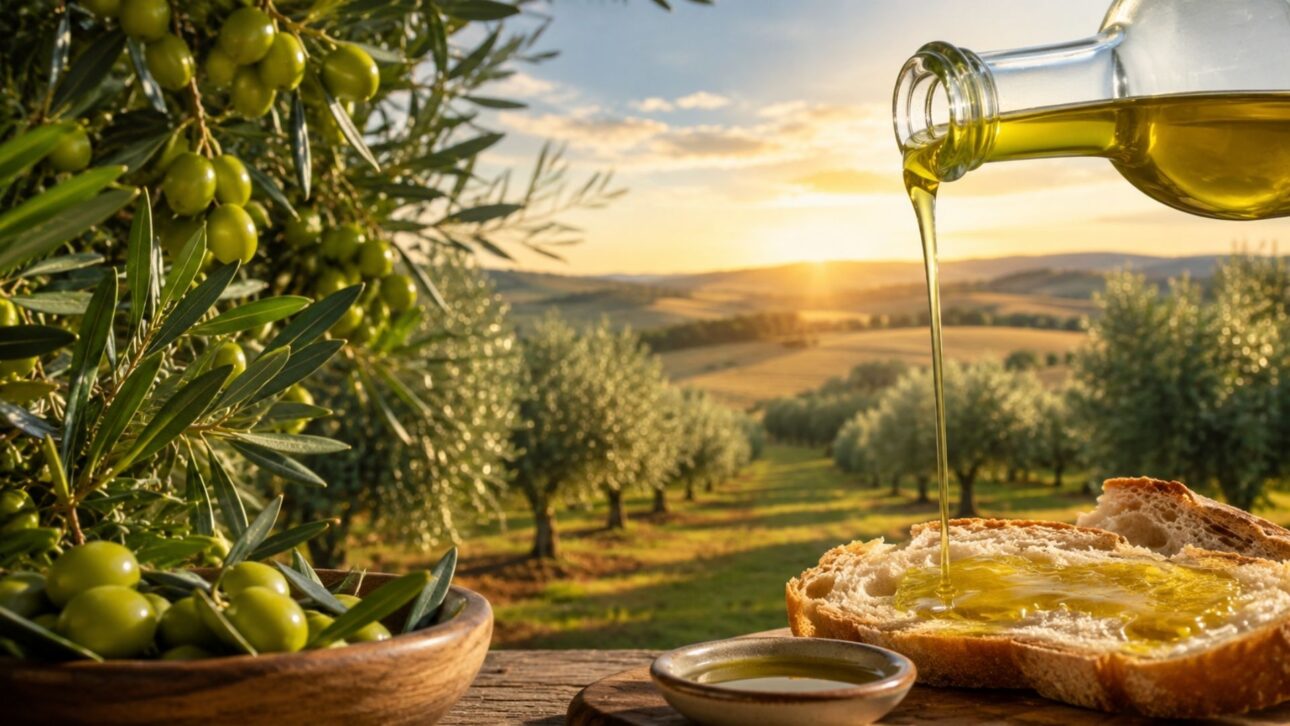
The beginning was pure commercial difficulty. Around 2011, the Marchetti family, from Caçapava do Sul, in Rio Grande do Sul, produced olive tree seedlings to sell to anyone who wanted to plant.
The problem was simple and big: almost no one bought them because Brazilians barely knew about the olive culture and didn’t know what to do with those trees.
The solution was to prove it in practice. “We wanted to offer the seedlings, but people didn’t even know what they were for,” Rafael Marchetti told Exame, explaining why the family decided to plant their own olive trees and extract olive oil. Instead of just selling the plant, they would start showing the result in the bottle.
The first batch came out in 2013 and changed everything. By transforming the fruit into olive oil, the Marchettis gave a concrete reason for someone to be interested in the olive tree, and what was a sales argument became the heart of the business. The seedling that no one wanted paved the way for one of the most celebrated olive oils in the country.
This turnaround is what makes the story so strong. Prosperato was not born from a grand marketing plan, but from the need to convince the customer, which forced the family to seek quality from day one. It was this origin, somewhat accidental, that planted the seed of obsession for award-winning olive oil.
The Marchetti Family and the Birth of Prosperato
Behind the brand is a grassroots family business. Rafael Marchetti joined the project in 2013, alongside his father, Eudes, and together they managed the transition from nursery to olive oil producer. Prosperato grew as a family business, with decisions made at home and an almost artisanal care with each harvest.
The growth was deliberately cautious. “We have always moved with great caution. Our focus in some years was not to run out of olive oil,” said Rafael, describing the strategy of not growing too fast to the point of compromising quality or running out of product to sell. It was better to lack ambition than to have unfulfilled promises.
This patience has a method name. Instead of flooding the market, Prosperato consolidated its reputation harvest after harvest, letting awards and word of mouth do the marketing work. When it decided to accelerate, the brand already had a foundation of credibility built with years of consistency in olive oil.
The transition required learning almost everything from scratch. Moving from seedling production to olive oil manufacturing meant mastering harvesting, pressing, and storage, areas in which the family had no tradition. Each harvest became a practical lesson, and the successes and mistakes shaped the quality standard that would earn the first awards.
330 Awards: The Most Awarded Olive Oil Brand in Brazil
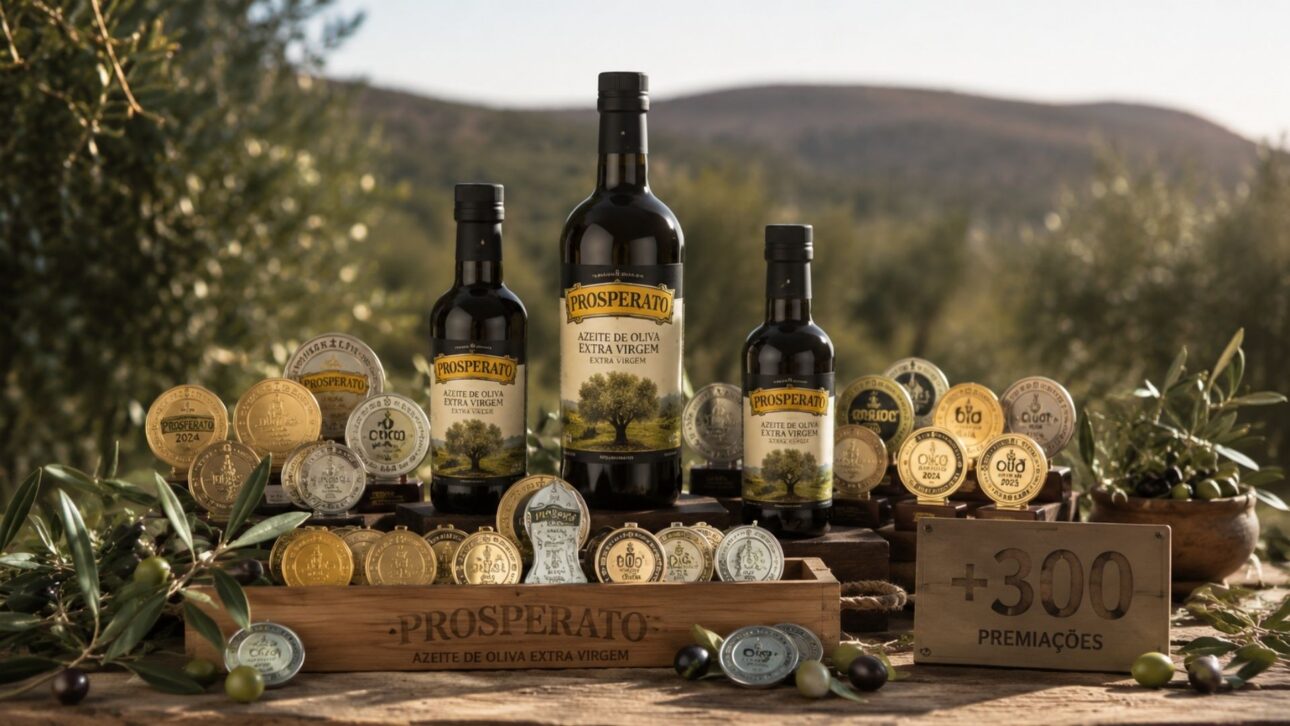
The recognition came in the form of medals, many medals. Over 13 years, Prosperato accumulated 330 awards and established itself as the most awarded olive oil brand in Brazil, according to Exame. For a product that started as an argument to sell seedlings, it’s quite a leap.
The trophy collection crossed borders. Besides national contests, the Marchetti family’s olive oil was awarded in international competitions, including in Europe, the cradle of olive culture, and began to rank among the best in the Southern Hemisphere in industry rankings. Bringing home an award in the backyard of Italians and Spaniards carries enormous symbolic weight for a gaucho olive oil.
Each award acts as a seal of trust for the consumer. In a market where Brazilians are still learning to differentiate good olive oil from bad, Prosperato’s row of medals becomes a shortcut to quality at the time of purchase. The awards, in the end, are the selling point the family didn’t have at the start, when they only offered seedlings.
Why does olive oil from Rio Grande do Sul win so many awards?
The answer begins with the climate and soil. Rio Grande do Sul has cold winters, hot summers, and thermal amplitude, conditions similar to traditional olive regions in the Mediterranean, which favor high-quality olives. It’s no coincidence that the state has become the largest producer of olive oil in Brazil.
The youth of the production, curiously, plays in its favor. As gaucho olive cultivation is recent, it was born with modern technology, selected varieties, and harvest at the right point, without centuries-old habits. This allows for the extraction of very fresh extra virgin oils, which perform well in international competitions, where freshness and low acidity are golden.
There’s also the human factor. Producers like the Marchetti treat olive oil as a high-standard product, not as a cheap commodity, investing in quality from start to finish. This mentality of excellence, combined with the gaucho terroir, explains the shower of awards that olive oil from Rio Grande do Sul has been winning.
Gaucho olive cultivation, by the way, is a recent story and in full expansion. The cultivation of olive trees gained strength in Rio Grande do Sul over the last two decades, with producers betting on a product once considered impossible in Brazilian soil. Today, the state concentrates most of the national olive oil and has become the showcase of this new chapter in the country’s agribusiness.
What makes an “extra virgin” olive oil award-winning?
It’s worth understanding what is at stake in the judges’ cup. Extra virgin olive oil is the highest category, made only with the juice of the olive extracted mechanically, without chemicals, and with very low acidity. Any flavor or aroma defect already removes the oil from this classification, so reaching the premium extra virgin level is difficult.
The secret lies in details from the field to the press. Picking the olive at the right point, processing it a few hours after harvesting, and controlling the temperature during extraction are steps that preserve the compounds that give flavor, aroma, and health benefits. It is this obsessive care that separates a common oil from a competition oil.
In major awards, judges taste blindly and evaluate freshness, balance, and complexity. An oil that resembles fresh grass, with bitterness and pungency in the right measure, scores high because these traits indicate a healthy and well-made product. It was in this demanding game that Prosperato learned to shine, award after award.
The goal of R$ 12 million and the global line
Now Prosperato has decided to accelerate for good. The brand’s plan is to double in size and earn R$ 12 million in 2026, according to Exame, leaving behind the caution of the early years. The turning point came from two fronts: a record harvest and a new product line designed to scale.
The 2024 harvest provided the missing breath. That year, the company harvested about 400 tons of olives and produced around 54,000 liters of oil, the best harvest in its history, compared to 25,000 liters in 2023. “With this last harvest that was very good, plus the entry of the global line, we can already go to the market with less fear of offering,” said Rafael Marchetti.
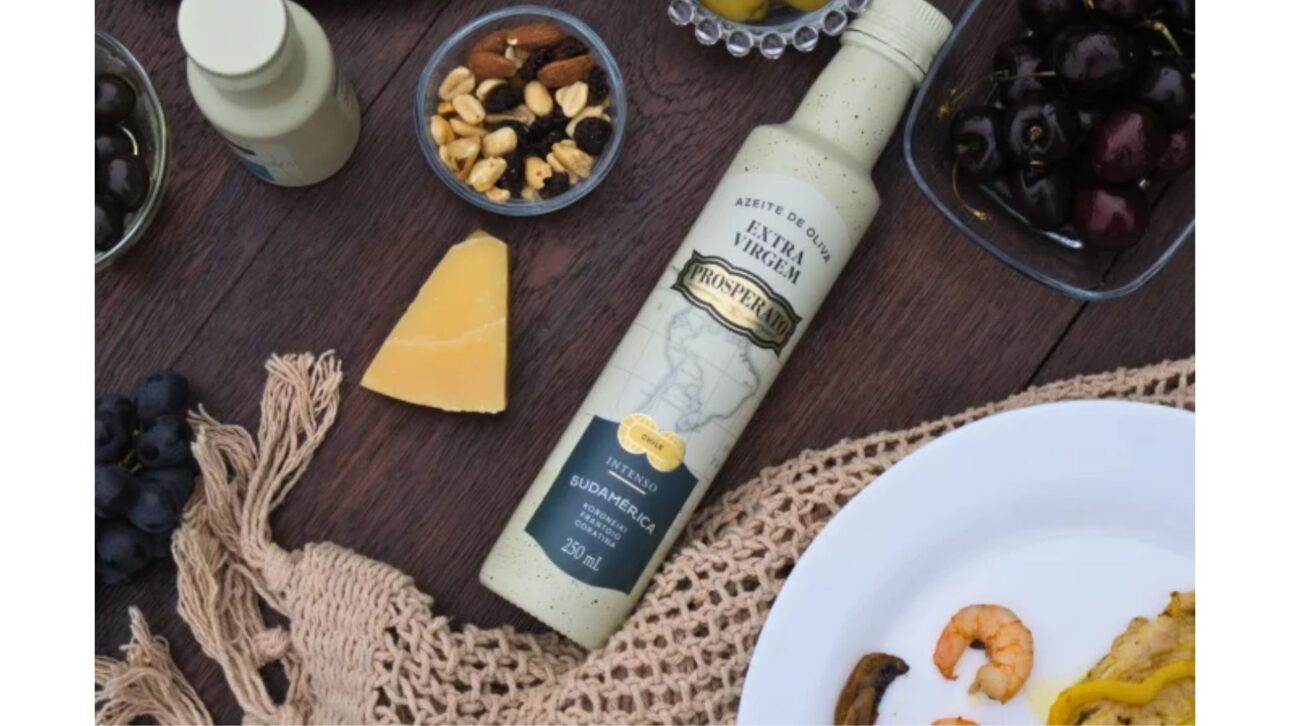
The so-called “global line” is the growth bet. It consists of four blends, mixtures of oils from different origins signed by Prosperato, produced with olives from Chile and Spain. To supply this line, the brand imported 78,000 liters in 2025 and projects 100,000 liters in 2026, combining the award-winning gaucho oil with foreign products to reach more people without losing quality.
The goal is to democratize without making it too cheap. “We need to balance, have quality and competitive price,” summarized Rafael, about the challenge of reaching more consumers while maintaining the level that earned the awards. With bottles starting at around R$ 55, Prosperato tries to occupy the premium slice of the Brazilian olive oil market.
The pricing strategy follows the ambition. With the award-winning labels on one side and the more accessible global line on the other, the brand tries to cater to both those seeking the best oil and those who want to try without spending too much. It is the attempt to grow in volume without giving up the image of quality built with great effort, award by award.
The nursery that never stopped and the “zero meter”
Curiously, the business that almost didn’t succeed is still standing. Even becoming an olive oil powerhouse, Prosperato maintains its own nursery of olive tree seedlings and serves producers of any size, from backyard to large farms. The activity that seemed to fail became one of the points of a complete business.
The on-site experience has become an attraction in itself. According to Rafael Marchetti, customers enjoy visiting the property, tasting the olive oil at its origin, and saying they bought it “at zero meter,” directly from where the olive is harvested and pressed. This contact with the farm adds value and builds loyalty, turning rural production into a destination.
It is proof that no stage was wasted. The seedling, the olive oil, the awards, and agritourism fit together like pieces of the same puzzle, where each part reinforces the other. The nursery that couldn’t find buyers now helps spread the culture of the olive tree throughout Brazil, selling the tree that started it all.
What Prosperato Says About Brazilian Agribusiness
The story has a bigger message about the country. Olive oil has always been synonymous with imported in Brazil, but cases like Prosperato show that it is possible to produce here, with export quality, and compete with the European giants. It is import substitution happening in practice, within agribusiness.
The size of the market excites those who produce. Brazil is one of the largest consumers of olive oil in the world and imports almost everything it uses, leaving a huge space for the national producer to grow. “On the day we have a million liters, we only have 1% of the market,” said Rafael Marchetti, highlighting how much there is still to conquer.
The sector’s numbers reinforce the size of the opportunity. Brazil imports the vast majority of the olive oil it consumes, spending hundreds of millions of dollars a year on foreign products, mainly from Portugal, Spain, and Chile. Each liter produced here, within the national agribusiness, is a step towards reducing this bill and keeping income in the country.
For the agribusiness in Rio Grande do Sul and Brazil, Prosperato becomes a model. It proves that a high-value product, well-made and well-told, can be born in the countryside and reach the country and the world, generating income and regional pride. The award-winning olive oil from Rio Grande do Sul is now a symbol that Brazilian olives have gone from being a dream to becoming a serious business.
And you, have you tried an award-winning Brazilian olive oil?
The trajectory of Prosperato proves that persistence and quality can turn the game around: the Marchetti family sold olive tree seedlings without buyers in Rio Grande do Sul, decided to make their own olive oil to show the fruit’s value, and ended up creating the most awarded brand in Brazil, with 330 awards and a goal to earn R$ 12 million in agribusiness.
And you, have you tried an award-winning Brazilian olive oil or do you still think good olive oil only comes from abroad? Share in the comments if you would consider switching the imported for an olive oil from Rio Grande do Sul and what weighs most in your choice when buying.