Portuguese
  Spanish


In a backyard, ingenuity is worth more than a diploma. This was demonstrated by the 1st National Invention Contest, by MDA and Embrapa, which gathered 242 inventions from family agriculture across Brazil, many created by farmers with little schooling, simple machines that save hours of heavy work in the field.
To invent a machine that makes life easier in the field, a degree in engineering is not always necessary. This was proven by a national contest that unearthed the best creations from the backyards and fields of Brazil. Many of the inventors are farmers who barely finished elementary school but solved in practice problems that no engineer had resolved. In total, the 1st National Invention Contest gathered 242 inventions from family agriculture, simple machines that do in minutes what used to take hours of manual labor.
The initiative was announced by the Ministry of Agrarian Development (MDA), which organized the contest alongside Embrapa. The 242 entries came from all regions of the country, and almost half were created by family farmers and rural workers, people who invent based on their own experience with the land. It’s not laboratory theory, it’s a solution born from the necessity of those who have their hands on the hoe.
242 inventions from all over Brazil
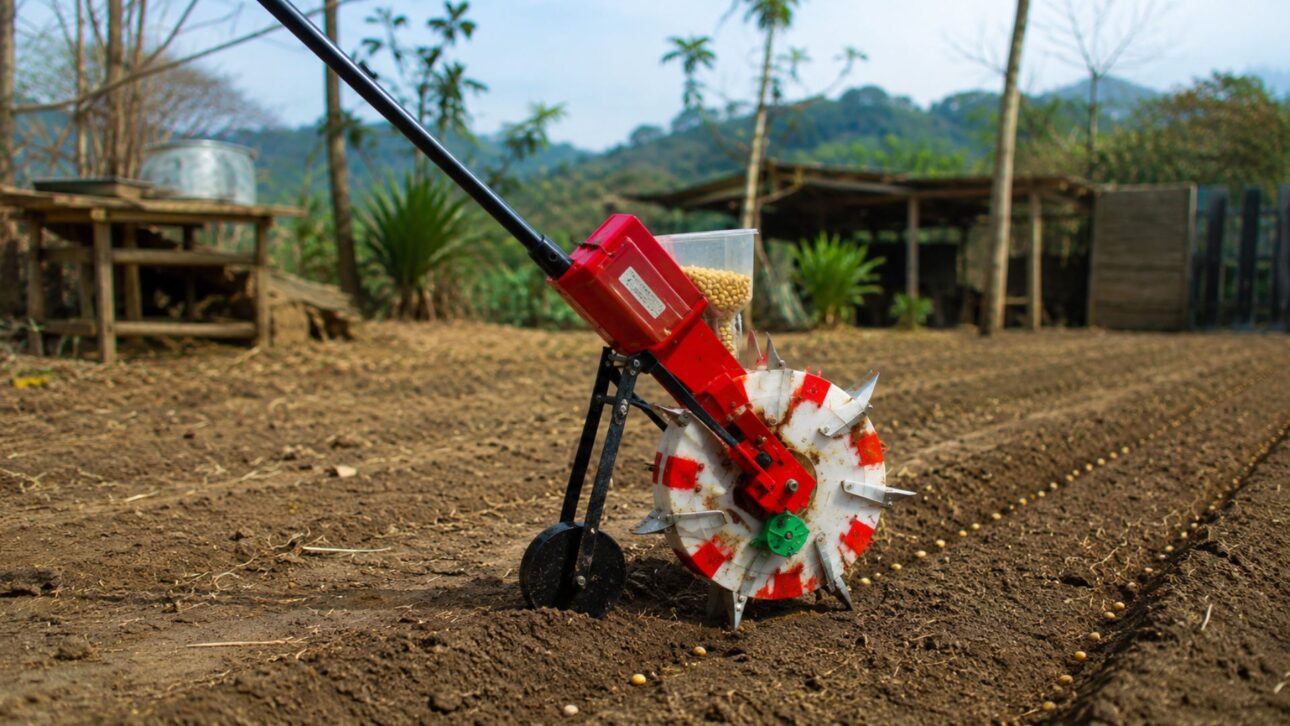
The 1st National Invention Contest received 242 entries from creators spread across Brazil, a number that shows the amount of hidden ingenuity in the field. About 47% of the proposals, 113 in total, came directly from family farmers and rural workers.
-
Brazilian Farm Innovates with Cage-Free Chickens, Producing 3,300 Odorless Eggs Daily

-
From Selling Unsold Saplings to Creating Brazil’s Most Awarded Olive Oil Brand with 330 Accolades and a $12 Million Goal by 2026

-
China Builds 400-Hectare Irrigation System in Tanzania to Aid 1,000 Families Dependent on Rainfall

-
High School-Educated Farmer in India Converts 40 Hectares of Arid Land into Native Forest with 900 Species and Up to 40,000 Trees


The remainder was divided among 66 researchers and 63 entrepreneurs from micro and small businesses. In other words, the largest share of family farming inventions did not come from universities or industries, but from the daily lives of those who plant and harvest. It is proof that innovation in the field has many anonymous parents.
Backyard machines that save hours of work
What unites the inventions is a simple goal: to ease the labor. Among the registered creations are seeders and planters adapted for small areas, equipment for soil preparation and weeding, machines for food processing, and solutions for irrigation and water management.
They are light and multifunctional implements, designed to reduce physical effort and perform in minutes tasks that previously took hours. Many were assembled with reused materials, improvised in the backyard, but they solve real bottlenecks of small properties.
Each of these machines means less back pain and more free time for the farmer. It is low-cost technology designed for the reality of those who cannot afford expensive equipment.
The knowledge of the field, without an engineering degree
The profile of the inventors is what stands out the most. Many are farmers with little formal education, some who barely completed elementary school, but with decades of practical experience on the land.
What they lack in formal education they make up for in experience: they know every step of the work and know exactly where a machine can save sweat. This knowledge of those who live off the land is the raw material for family farming inventions.
Without manuals and without laboratories, the farmers test, err, and adjust until the contraption works. It is the engineering of necessity, learned in practice.
Who is behind the contest
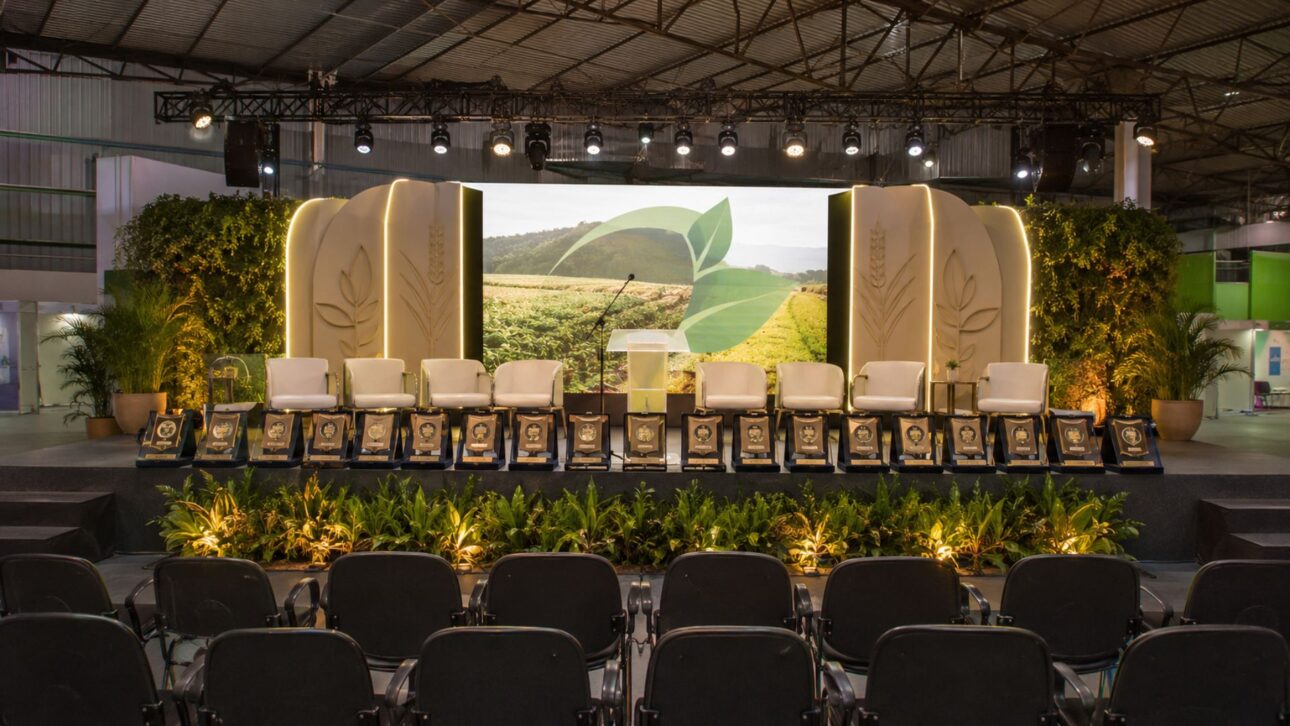
The 1st National Invention Contest was promoted by the MDA, the Ministry of Agrarian Development and Family Farming, in partnership with Embrapa, Anater, and supported by the Banco do Brasil Foundation.
The stated goal is to recognize and give visibility to technologies created by farmers, researchers, and entrepreneurs that reduce effort in the field and increase income. By having Embrapa and the MDA value backyard inventions, the public authorities acknowledge what the field already knew: a good solution doesn’t need to come from above.
It is an official nod to the creativity of the small producer, who rarely appears in technology headlines.
20 awarded and R$ 10,000 each
Out of 242 entries, a select group made it to the podium. After evaluation by a jury, 20 inventions were awarded: 10 from farmers, 5 from researchers, and 5 from micro and small enterprises, according to Embrapa.
Each of the winners received a plaque and R$ 10,000, a recognition that is worth more for the endorsement than for the amount. The ceremony took place during the National Fair of Machines and Technologies for Family Farming, in Campinas, São Paulo state, in March 2026.
There, anonymous farmers became, for a day, nationally awarded inventors. For those who invented in the backyard, it was the crowning of a life of ingenuity.
Why this strengthens family farming
The contest goes far beyond handing out prizes. Valuing the inventions of family farming is a way to spread cheap solutions that can be copied by other producers across Brazil.
When a backyard machine saves hours of work, it increases productivity and improves the income of those who live off the land. Family farming accounts for a large part of the food that reaches Brazilian tables, so making life easier for these producers affects everyone.
Shining a spotlight on these farmers also encourages more people to invent, knowing that their creation can be recognized. It is innovation that starts from the bottom and rises, rather than the other way around.
What the contest shows
The biggest lesson is about where innovation resides. The 1st National Invention Contest proved that ingenuity does not depend on a diploma, and that the Brazilian countryside is a breeding ground for creative solutions.
Of course, it’s important to stay grounded. The 242 entries are the total proposals, and only 20 were awarded, so not every invention was a winner, and many still need adjustments to become a product on a larger scale.
Even so, seeing the MDA and Embrapa recognizing farmers who barely finished school is the kind of news that values the knowledge of the countryside. From any backyard can come the machine that changes the routine of thousands of families, and the next big agricultural solution might already be being welded, right now, at the back of a farm.
And you, do you know any farmer inventor who deserves this type of award? Tell us in the comments about the most ingenious backyard invention you have ever seen.