Portuguese
  Spanish


Brazil’s beef exports could fall 10% in 2026 due to China’s 55% tariff on volumes above the 1.1 million-ton quota, according to Abiec president Roberto Perosa, who said that production for the Chinese market should stop in June.
Brazil’s beef exports face a scenario that the sector itself recognizes as the most difficult in recent years. The president of the Brazilian Association of Meat Exporting Industries (Abiec), Roberto Perosa, stated this Tuesday (5) that foreign sales of beef could fall by about 10% in 2026 compared to 2025, when Brazil exported 3.5 million tons of the product, of which 1.7 million tons were destined for China. The cause is the 55% tariff that China adopted this year on beef imports above a quota of 1.1 million tons, a protection that the Chinese government created to defend its domestic producers and which directly impacts the world’s largest exporter of the product.
The 1.1 million-ton quota exempt from the higher tariff is close to being exhausted because Brazilian slaughterhouses accelerated beef shipments to China in the first months of 2026 in an attempt to avoid the surcharge. The total includes beef shipments sent at the end of 2025 that arrived in the Asian country in early 2026, and according to Perosa, production specifically aimed at the Chinese market should be interrupted around June, when the quota will have been filled and exporting to China will cease to be economically viable with a 55% tariff on each additional ton. “There is no market that can replace China,” admitted the Abiec president in a conversation with journalists, a phrase that summarizes the dependence that the Brazilian beef sector built in relation to a single buyer that absorbed almost half of everything the country exported.
Why China imposed a tariff on Brazilian beef
China’s decision to limit beef imports with a quota and high tariff responds to internal pressure from producers in the Asian country. China had been importing increasing volumes of beef from Brazil, Argentina, Uruguay, and Australia over the last decade, a growth that pushed domestic prices down and generated dissatisfaction among Chinese cattle ranchers who could not compete with cheaper imported products. The 1.1 million-ton quota exempt from the 55% tariff is a mechanism that allows China to continue buying Brazilian beef in controlled volumes without unprotected its domestic market, a balance that benefits the Chinese consumer (who maintains access to the product) but harms the Brazilian exporter (who loses unlimited access to the world’s largest market).
-
In Brazil’s Arid Northeast, Vineyards Now Produce Wine Grapes Year-Round, Accounting for 98% of the Country’s Grape Exports

-
China Limits Brazilian Meat Imports After Returning 20 Soybean Ships, Causing Factory Shutdowns and Concerns in Brazil’s Meat Industry

-
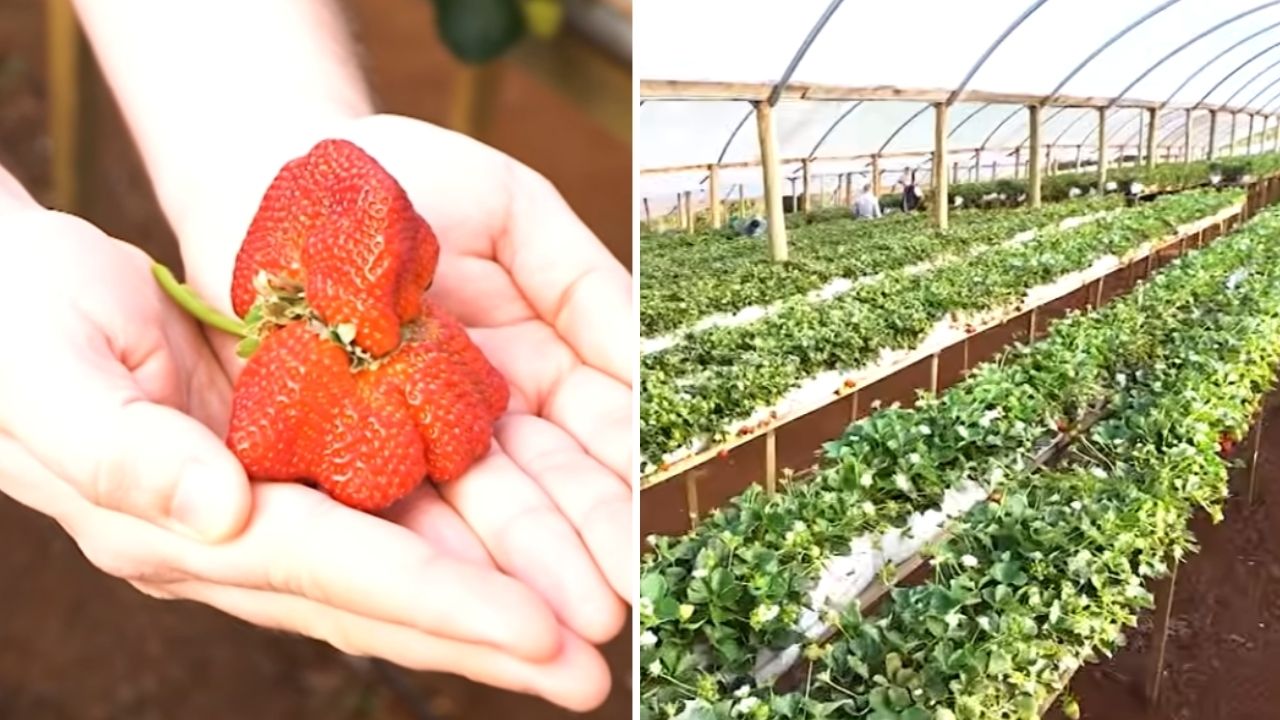
Brazilian Producer Adopts Hydroponic Strawberry Farming in Western Paraná, Achieving Year-Round Harvests and Becoming a Model for Continuous Production

-
Vertical Farming Company Backed by SoftBank and Jeff Bezos Files for Bankruptcy, Valuation Plummets from $1.9 Billion to Under $15 Million



The 55% tariff on the excess volume makes beef exports to China economically unviable above the quota. Slaughterhouses operating with already tight margins cannot absorb an additional cost of this magnitude without passing it on to the final price, and since Chinese consumers have alternative suppliers (Argentina, Uruguay, Australia, India), the Brazilian product loses competitiveness when the tariff is applied. The practical result is that Brazil will continue to export beef to China within the quota, but the volume that exceeded this limit, and which in 2025 represented about 600,000 additional tons, will need to find other destinations or be absorbed by the domestic market.
What the beef sector plans to do to compensate for the loss
The president of Abiec recognizes that replacing China as a destination for Brazilian beef is a task the sector cannot resolve in the short term. In early 2026, Abiec was working with a more optimistic scenario based on the possible opening of new markets and the redirection of sales to other destinations, but Perosa admitted that the expectation of opening the South Korean market for Brazilian beef is unlikely to materialize in 2026 and that negotiations with Turkey are hampered by a requirement for testing all Brazilian meat, a condition the sector considers operationally unfeasible. Brazil is negotiating for Turkish analyses to be done by batches instead of individually, but the “technical persuasion” Perosa mentions indicates that the process is far from conclusion.
The opening of the Japanese market remains an expectation that could help reduce the impact of the decline in beef exports to China. Japan is one of the world’s largest beef importers and pays premium prices for the product, but Japanese sanitary requirements are among the most rigorous on the planet, and the process of qualifying Brazilian slaughterhouses to export to the country can take years of diplomatic and technical negotiation. Even if Japan opens its market, the volume it would absorb in the first years would be a fraction of what China bought, a difference in scale that explains Perosa’s statement about the impossibility of replacing the Asian buyer.
What the drop in beef exports means for the domestic market
The most immediate consequence of the Chinese restriction for the Brazilian consumer is an increase in the supply of beef in the domestic market. If slaughterhouses cannot redirect the volume that will no longer go to China to other countries, this beef will remain in Brazil and put downward pressure on domestic prices, a scenario that benefits the end consumer (who can pay less for the product) but harms the cattle rancher who will see the price of the arroba fall due to oversupply. Perosa stated that it will be necessary to increase domestic consumption to compensate for the volume that will no longer be exported, but per capita beef consumption in Brazil had already shown signs of stagnation in recent years due to competition with chicken and pork, which are cheaper.
For slaughterhouses that concentrated operations in the Chinese market, adaptation requires a change in commercial strategy that does not happen overnight. Plants authorized to export beef to China follow specific standards for cutting, packaging, and certification that do not always coincide with the requirements of other importing markets, and the reorientation of production demands time, investment, and negotiation that the sector needs to undertake while export revenue shrinks. Brazil exported 3.5 million tons of beef in 2025, and a 10% drop represents 350,000 tons that need to find an alternative destination or become additional supply in the domestic market, a volume equivalent to approximately the annual beef consumption of a state the size of Minas Gerais.
What China’s dependence reveals about the Brazilian beef sector
The crisis caused by the Chinese tariff exposes a vulnerability that Brazilian agribusiness analysts had been pointing out for years. When a single country absorbs almost half of an entire sector’s beef exports, any change in that buyer’s commercial policy produces an impact that no belated diversification can cushion, and Brazil reached 2026 in this position precisely because China offered for years growing demand, competitive prices, and a relatively agile slaughterhouse authorization process compared to other demanding markets like Japan, South Korea, and the European Union. The ease of selling to China discouraged the diplomatic and sanitary efforts needed to open alternative markets that are now sorely missed.
The lesson for the beef sector is the same one that other Brazilian export sectors have already learned with soybeans, iron ore, and oil: destination concentration is a strategic risk. Brazil will continue to be the world’s largest beef exporter regardless of the Chinese tariff, but the distribution of this volume among markets will need to change in the coming years, and the cost of not having diversified earlier will be paid now, in 2026, with a drop in revenue, pressure on domestic prices, and a sector that publicly admits that “there is no market to replace China” after having bet for a decade that it wouldn’t need one.
And you, do you think the drop in beef exports will make the product cheaper in Brazil? Should the sector have diversified earlier? Leave your opinion in the comments.