Portuguese
  Spanish


The Moegão grain terminal at the Port of Paranaguá received an investment of R$ 1.1 billion and is 67% complete in 2026, with full operation expected later this year — when it will triple the port’s loading speed to 8,000 tons of soybeans, corn, and meal per hour, marking one of the most significant leaps in logistics capacity of Brazil’s largest grain port in recent years.
What is Moegão and why is 8,000 tons per hour impressive
8,000 tons per hour means loading a 30-ton grain truck every 13 seconds — or filling a 70,000-ton Panamax grain ship in less than 9 hours of continuous operation. For a port that handles dozens of ships per month, this loading speed is the difference between a ship waiting two days at anchor or being loaded and released on the same day.
Moegão — named after Moeagro, the company operating the terminal — is located within the Port of Paranaguá, in Paraná. Paranaguá is the largest grain port in Latin America and historically the main export point for Brazilian soybeans, especially from Mato Grosso do Sul, Paraná, São Paulo, and parts of Mato Grosso.
The current terminal has a significantly lower loading speed. With Moegão, the speed triples — meaning more ships loaded per day, shorter queues in the access channel, and a reduction in so-called “demurrage”: the penalty exporters pay when a ship waits beyond the contracted period. Demurrage costs the Brazilian agribusiness billions every year.
-
Cost of Installing Subflooring in 2026: The Importance of Proper Slope to Prevent Water Damage and Costly Repairs

-
New Offshore Borehole Mining Technique Extracts Lithium and Cobalt Without Damaging Ocean Floor
-
Vale Doubles Copper Drilling in Brazil’s Carajás, Plans to Drill 120 Kilometers of Rock by 2026
-
Innovative Vertical Cistern Becomes Water Tank in Container Home Amid Pressure Issues, Offering a Compact 1,000-Liter Solution Without a Tower or Underground Tank


The race for flow speed and competition with the Northern Arc
Paranaguá faces a dilemma. In the last ten years, soybean production has progressively migrated to more northern and central states — Mato Grosso, Pará, Tocantins — which are closer to the Northern Arc ports (Itaqui, Barcarena, Vila do Conde, Santarém) than to Paranaguá. These ports are closer to routes to Asia and save days of freight.
Moegão is a partial response to this pressure. If Paranaguá can process more ships in less time, the cost of shipping through Santos or Paranaguá decreases — and farmers in the south and Mato Grosso do Sul, who have Paranaguá as a natural alternative, gain more competitive options.
Vale Base Metals is already accelerating copper drilling in Carajás, and Abu Dhabi’s AD Ports has just purchased terminals in Itaqui and Santos. Brazilian agribusiness logistics is receiving more investment in 2025-2026 than in any comparable period in history — reflecting that the world knows Brazilian soybeans will remain indispensable for decades.
The bottlenecks Moegão does not solve
The Moegão terminal will solve the ship loading bottleneck in Paranaguá. But the land access bottleneck to the port — the rail and road sections bringing grain from the interior — is not solved by any terminal.
The Ferrogrão, which would connect Mato Grosso to the Port of Miritituba on the Tapajós, still faces environmental impasse. The North-South railway is expanding slowly. The Transnordestina has completed sections but still does not operate as an integrated railway. Brazil invests in sophisticated port terminals while still transporting much of its grain by truck on congested highways — a logistical paradox that costs agribusiness between R$20 and R$30 billion per year in inefficiency, according to industry estimates.
Moegão is an important piece. But it is a piece in a chain that still has huge gaps between the farm and the quay.
Why this matters beyond Paraná
The Port of Paranaguá handles more than 50 million tons of grain per year and is one of the anchors of Brazil’s trade balance. Every efficiency improvement at the port has a cascading effect: it reduces export costs, improves the competitiveness of Brazilian grain against American and Argentine competitors, and releases more value for the rural producer.
With Moegão operating at full capacity, Paranaguá will compete on equal footing with any grain terminal in the world in processing speed. The question is whether the tracks and roads leading there will be able to supply a terminal that can load a ship in less than a day.
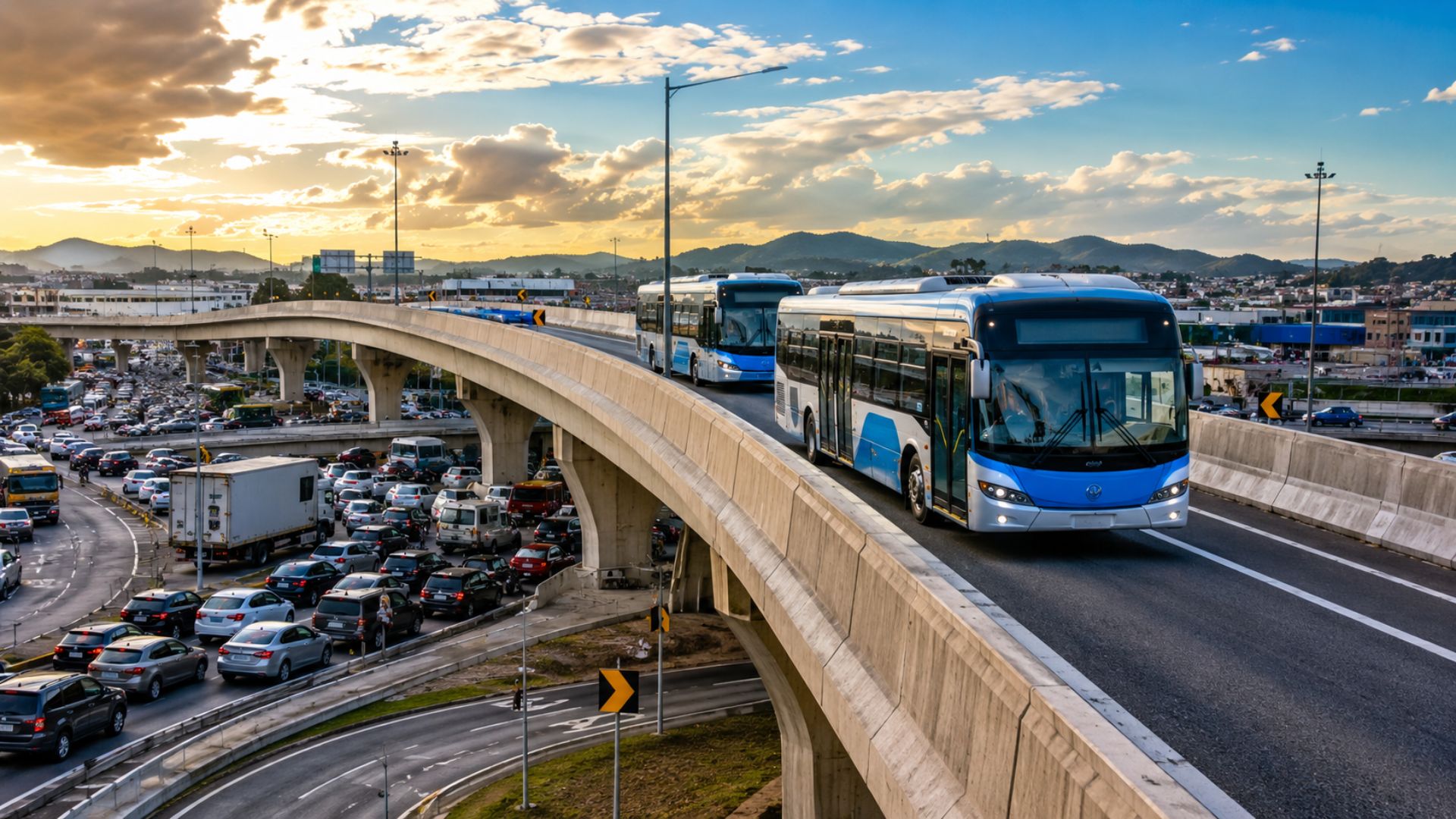
The challenge of Moegão goes beyond the terminal’s engineering. Paranaguá faces chronic truck congestion, forming queues of 40 to 80 km on BR-277 during peak harvests, with truckers waiting two to four days to unload. No terminal, no matter how modern, solves this problem if trucks cannot reach the scales. The long-term solution is rail — the expansion of RUMO from Rondonópolis to Paranaguá and integration with branches reaching Mato Grosso and Mato Grosso do Sul. Until that happens, Moegão will operate with a loading speed of 8,000 t/h and 80 km queues on BR-277 — a paradox that perfectly illustrates the nature of Brazil’s logistical bottleneck: we invest from end to end without solving the middle of the chain. The modern terminal plus the congested road is the metaphor for Brazilian agribusiness: competitive in the field and at the quay, but stuck in the hundred kilometers that separate the two. RUMO is expanding capacity, but the completion timeline for new railway branches pushes relief to after 2027 at best — meaning at least two more harvest cycles with queues on BR-277, regardless of whether Moegão is operating or not.
If Brazil has the largest grain port in the Americas loading at 8,000 tons per hour, why does it still pay billions in demurrage penalties because trucks don’t arrive on time?