






 Portuguese
  Spanish


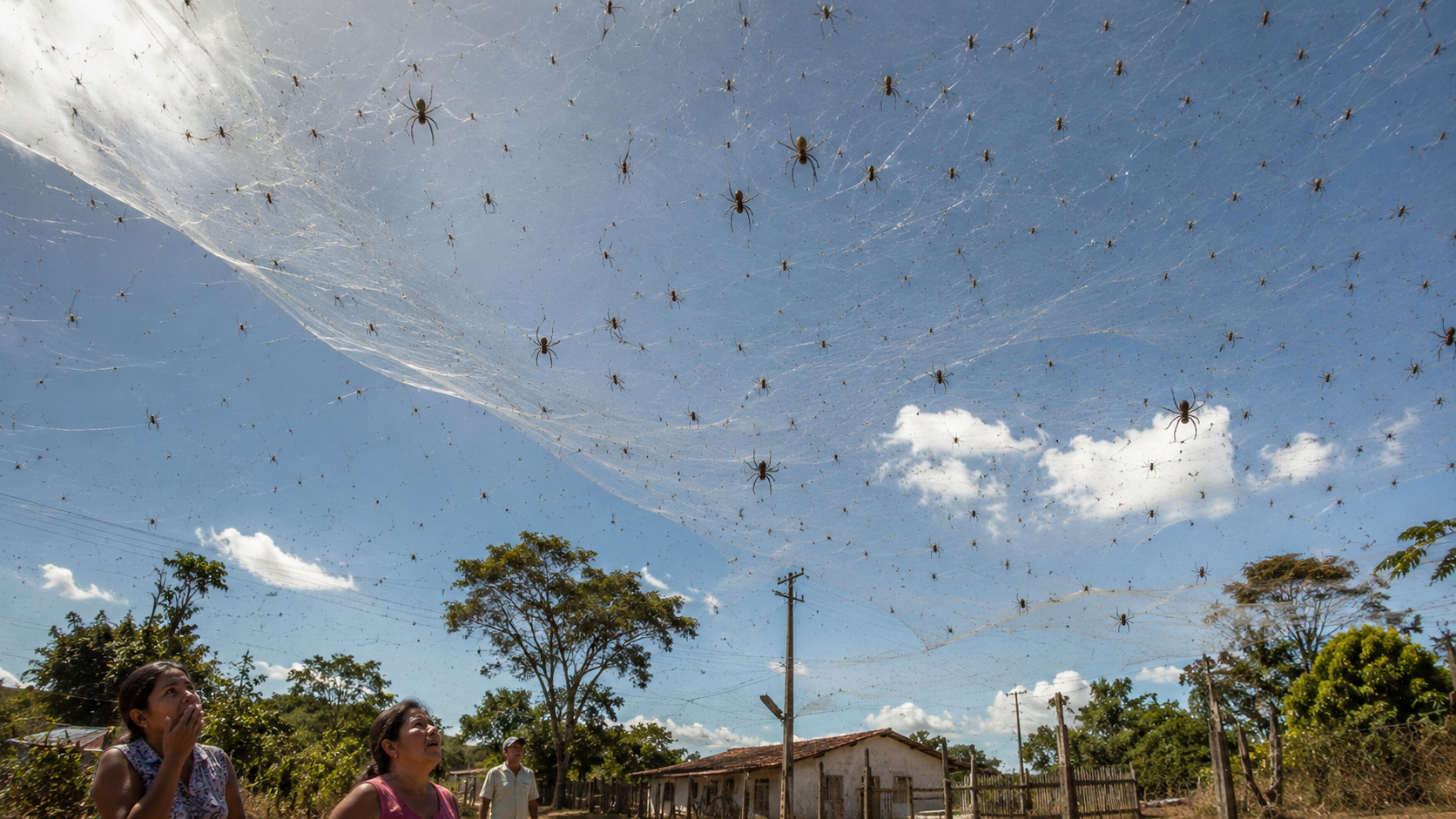

Spider rain in Minas Gerais goes viral again, but experts explain that the phenomenon involves collective webs of Parawixia bistriata.
The so-called spider rain in Minas Gerais has gone viral again and reignited the scare of those who see hundreds of dark spots hovering in the air. Despite the frightening appearance, the phenomenon is not a literal fall of spiders from the sky, but rather a visual effect caused by an almost invisible collective silk structure. According to UOL, the most well-known case was recorded in Espírito Santo do Dourado, in the south of Minas, and drew attention precisely because it gave the impression that the animals were falling from the clouds.
According to The Guardian, the scene is explained by the behavior of the species Parawixia bistriata, described by professor Adalberto dos Santos, from UFMG, as a rare social spider that builds a large communal web to capture prey. As these threads are very thin and hard to see, the human eye only sees the suspended bodies and interprets the image as a “spider rain.”
Spider rain in Minas Gerais is the effect of a large collective web and not animals falling from the clouds
According to UOL, the images taken in Minas Gerais show spiders of the species Parawixia bistriata suspended in a communal web. Biologist Cristina Anne Rheims, from the Butantan Institute, explained to the outlet that the illusion happens because the silk structure is extremely thin, which makes it seem like the animals are loose in the air.
-
After 53 Years, the U.S. May Reopen Skies to Supersonic Passenger Jets, but Success Hinges on Quiet Technology and Overcoming Challenges That Grounded the Concorde

-
China Overhauls Universities, Cuts 12,200 Outdated Courses to Focus on AI, Robotics, and Chips as 12.7 Million Young People Enter Workforce

-
Goodbye Wireless Earbuds: Gen Z Brings Back Wired Headphones as a Trend in 2026
-
Living Robots Made from Human Cells Crawl on Their Own in Lab, Help Heal Neuron “Wounds” and Turn Human Tissue into Microscopic Biological Machines




According to The Guardian, the phenomenon occurs when these spiders build a kind of “ceiling” of web between trees and shrubs to capture prey. The newspaper highlighted that they are not falling, but hanging on a wide and almost invisible net, which turns a natural behavior into an image that seems straight out of a horror movie.
According to the Vital Brazil Institute, the episode observed in São Thomé das Letras was also not a literal rain. The agency stated that what appears in the videos is a group of spiders forming a large collective web, and not arachnids falling from the clouds.
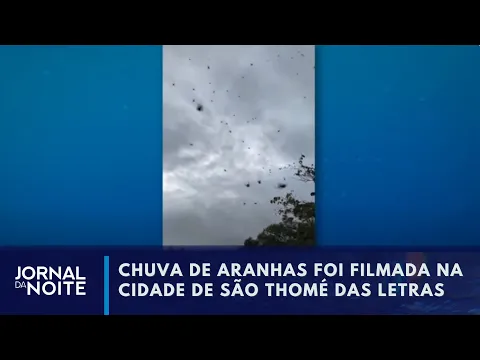

Species Parawixia bistriata has rare social behavior and forms large clusters in the air
According to The Guardian, the Parawixia bistriata is a rare social species. This characteristic helps explain why so many individuals appear gathered at the same time in a single structure, creating a much more impactful visual effect than that of isolated spiders.
According to the Instituto Vital Brazil, some species of spiders exhibit collaboration among individuals and can form large clusters. In the case analyzed by the organization, this collective behavior was identified as the key to understanding why the phenomenon seems so unusual to those observing it for the first time.
According to UOL, the community structure can house up to 100 spiders. This information helps to understand why the phenomenon seems so intense in recordings: it is not a single animal or a small group, but a concentration capable of transforming the sky into a visually disturbing scene.

Heat, rural areas, and late afternoon favor the formation of the so-called spider rain
According to UOL, biologist Cristina Anne Rheims explained that the phenomenon usually occurs in rural areas and mainly during periods of high temperature. The expert also stated that these webs are woven in the late afternoon and usually disappear by morning, which helps explain why the records are concentrated in certain environmental conditions.
According to The Guardian, during the day these spiders stay grouped in the vegetation and come out at the beginning of the night to build the large capture web. Professor Adalberto dos Santos told the newspaper that each structure can reach up to four meters in width and three meters in thickness, a size sufficient to produce an impressive illusion when observed from afar.
According to the Instituto Vital Brazil, environmental changes can also influence this type of collective behavior. The organization explained that changes in temperature and other environmental conditions can lead spiders to build large webs as a survival strategy.
Record in São Thomé das Letras shows that the natural phenomenon continues to go viral on social media
According to the Instituto Vital Brazil, the case of São Thomé das Letras, in the interior of Minas Gerais, gained attention after residents recorded hundreds of spiders in the air. The institute highlighted that, despite the striking appearance, the phenomenon is natural, explainable, and recurrent in some regions.
According to the organization, what is frightening is not a mysterious anomaly, but the way the brain interprets a very thin web supporting several individuals at the same time. This perception error helps explain why such videos tend to go viral quickly and generate exaggerated descriptions about a supposed real rain of arachnids.
According to The Guardian, the phenomenon draws attention precisely because it seems to defy visual logic. The observer sees the spiders but does not clearly see the silk that supports them, and this turns a hunting strategy into one of the most impressive scenes of Brazilian fauna.
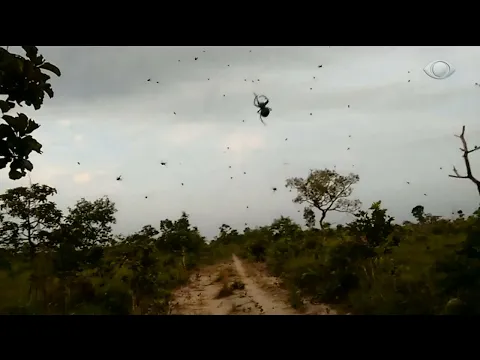
Spiders from the spider rain do not pose a significant threat to humans and help capture insects
According to UOL, biologist Cristina Anne Rheims stated that these spiders are harmless, do not cause significant accidents, and have venom that poses no significant danger to humans. This dispels the idea that the phenomenon, being frightening, automatically represents a threat to the population.
According to the Instituto Vital Brazil, the episode observed in Minas Gerais does not pose a danger to the population. The institution reinforced that it is a natural behavior of certain species and that the unusual appearance should not be confused with imminent risk.
According to The Guardian, these webs are used to capture small insects throughout the night. In the end, what seems like a terrifying invasion is just an efficient feeding and survival strategy, turned into a scare because of the way the human eye perceives the scene.


