Portuguese
  Spanish


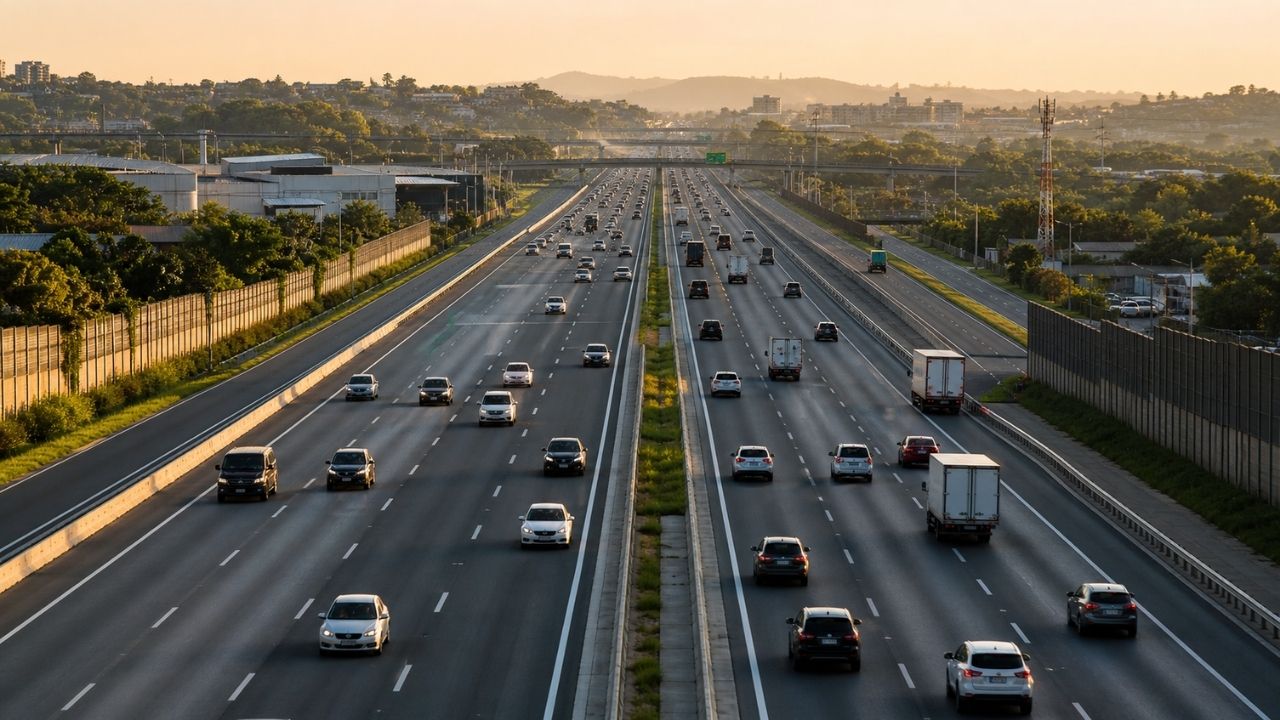

Brazil’s largest highway gained 20.3 kilometers of additional lanes in Rio Grande do Sul, in a DNIT delivery that expands BR-116/RS between Porto Alegre and Novo Hamburgo, opens a new pedestrian bridge in São Leopoldo, and reinforces a corridor used daily by approximately 140 thousand vehicles.
Brazil’s largest highway, BR-116, received this Wednesday (29) 20.3 kilometers of new additional lanes on the stretch between Porto Alegre and Novo Hamburgo, in a delivery carried out by the National Department of Transport Infrastructure. The work, located in the metropolitan region of Rio Grande do Sul, also included the opening of a new pedestrian bridge in the Scharlau neighborhood, in São Leopoldo, with the presence of the Minister of Transport, George Santoro, the mayor of Porto Alegre, Sebastião Melo, the DNIT superintendent in the state, Hiratan Pinheiro da Silva, and other local authorities.
According to information from the National Department of Transport Infrastructure, the delivery is noteworthy because it is not just about expanding a lane. The stretch is part of an essential highway for access to the south of the state, to the Port of Rio Grande, to Gaúcho tourism, and to the flow of production between Brazil and Mercosur. With an investment of approximately R$ 203 million, the intervention transforms segments of intense traffic and promises to improve fluidity, reduce travel time, and increase safety on one of the country’s busiest connections.
BR-116/RS gains 20.3 kilometers of additional lanes in two strategic segments

The delivery covered two stretches of BR-116/RS. The first is between Porto Alegre and the Avenida Inconfidência overpass, in Canoas, with 7.9 kilometers in length. The second goes from Arroio Sapucaia, in Esteio, to the bridge over the Rio dos Sinos, in São Leopoldo, with 12.4 kilometers.
-
While modern cities rely on pumps and electricity, in Iran, ancient tunnels carried water through the desert using only slope and gravity.
-
In the land of soybeans, Sinop’s first 42-story skyscraper will consume 1,900 truckloads of concrete and 350,000 kilograms of steel, with a foundation of 50 meters, deeper than that of the future “tallest building in Brazil” in Balneário Camboriú.

-
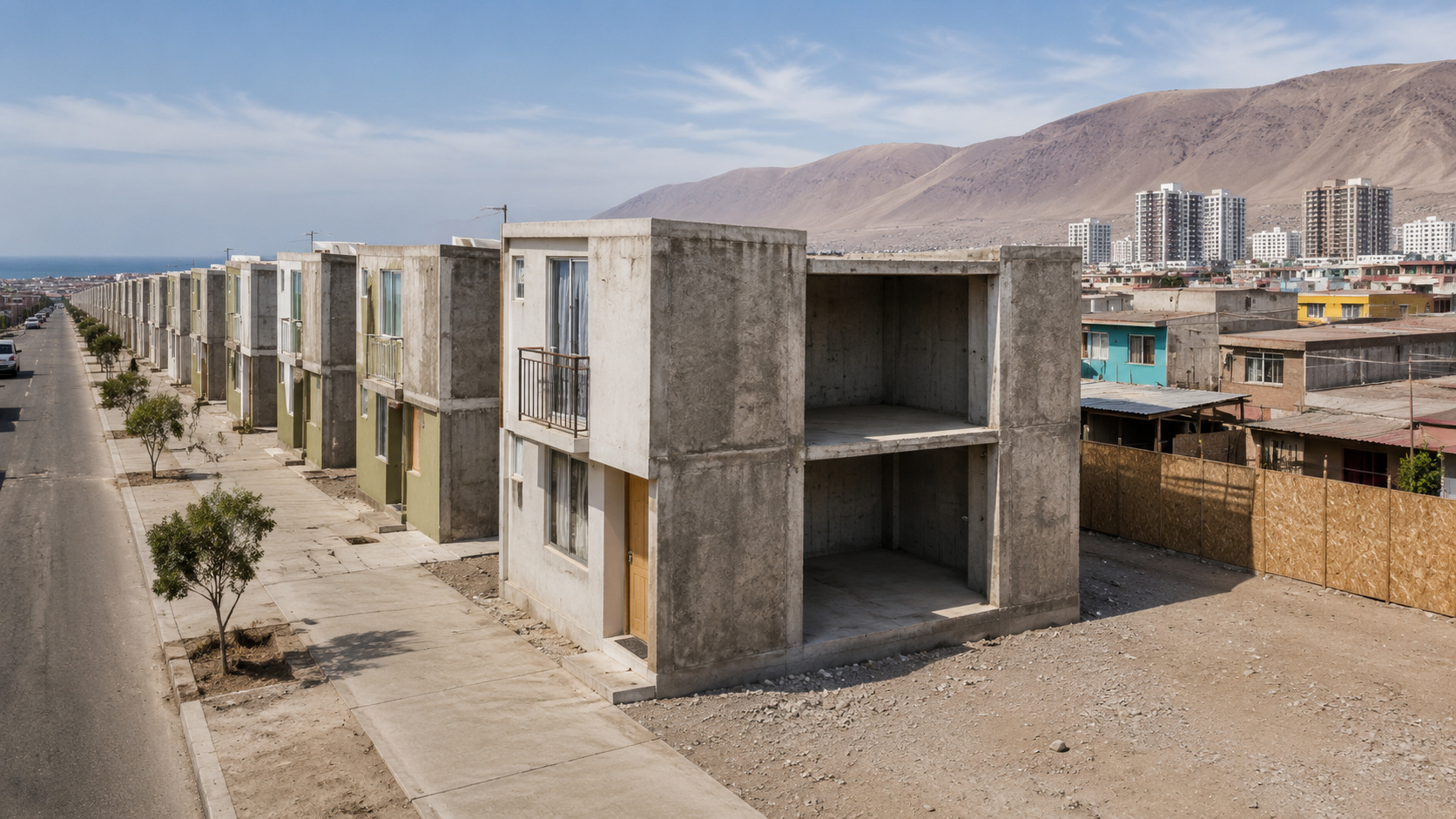
Instead of sending families far from the city, a project in Chile intentionally created incomplete houses on expensive urban land and left technical space for each to grow.

-
EPS duplex house is ready in up to 5 days without conventional pillars and beams: fair in Espírito Santo showcases sand made from mining waste, a 250 m² modular house assembled in 15 days, and technologies that can change the time, cost, and waste on construction sites.



Combined, the two segments total 20.3 kilometers of completed improvements. The expansion increased the highway’s capacity in the serviced stretches, which went from four to five lanes per direction.
To allow for the implementation of the new lane, old concrete side medians that separated the main road from the marginal roads were removed. Following this, earthworks, drainage, and paving services were carried out, preparing the structure to receive the additional lane along its entire length.
Works included pavement, signage, drainage, and concrete dividers
The intervention on BR-116/RS involved a set of services that goes beyond the simple opening of new lanes. New Jersey-type concrete dividers were also installed on the central lanes, as well as anti-glare screens to improve safety and visibility conditions.
The teams carried out repairs to the existing pavement, application of asphalt micro-surfacing, implementation of complete definitive signage, and installation of resin lane segregators, highlighted as an innovative solution on BR-116/RS.
Complementary services were also carried out, such as construction of sidewalks, curbs, and drainage devices. This set of interventions reinforces the work’s function as an improvement in mobility and road safety, not just as a capacity expansion.
New side roads, bridges, and overpasses change the structure of the metropolitan stretch
In addition to the additional lanes, approximately 5.5 kilometers of new side roads, ramps, and accesses were implemented in the municipalities of Esteio, Sapucaia do Sul, and São Leopoldo.
The delivered package also includes special engineering works. In the 12.4-kilometer segment between Esteio and São Leopoldo, two new bridges over the Arroio Sapucaia, three new overpasses in Esteio, and four new bridges over the Rio dos Sinos, in São Leopoldo, were built.
These structures are important because they better organize local and regional flows in a high-traffic area. In metropolitan regions, the efficiency of a highway depends not only on the main lane but also on accesses, service roads, ramps, underpasses, and safe connections with surrounding municipalities.
Scharlau Footbridge delivered with accessibility and R$ 5.1 million investment
The new footbridge in the Scharlau neighborhood, in São Leopoldo, was also opened this Wednesday (29). The structure is part of Lot 2, which included the construction of **23 new footbridges along the metropolitan stretch**.
The Scharlau pedestrian footbridge was the last of this set to be completed and delivered. With an investment of **R$ 5.1 million**, the work features ramp access, complies with accessibility standards, and boasts a modern metallic structure, suitable for the region’s urban mobility demands.
According to the DNIT superintendent in the state, Hiratan Pinheiro da Silva, the new footbridge should ensure a more adequate crossing for pedestrians and reduce the risk of accidents in a high-traffic section. The assessment reinforces that the safety of those crossing the highway is also a central part of the intervention.
DNIT points to gains in fluidity, safety, and reduced travel time

According to Hiratan Pinheiro da Silva, the implementation of additional lanes on BR-116 should improve traffic flow, reduce travel time, and increase safety, especially at points with a high volume of heavy vehicles.
This is one of the main impacts of the work. BR-116/RS receives approximately **140,000 vehicles per day**, which makes any capacity expansion relevant for drivers, transporters, metropolitan residents, and users who depend on the connection between Porto Alegre, Canoas, Esteio, Sapucaia do Sul, São Leopoldo, and Novo Hamburgo.
In high-traffic corridors, small delays can turn into major bottlenecks. Therefore, the expansion to five lanes per direction in strategic sections can help better distribute flow and reduce conflicts between light vehicles, freight transport, and urban commutes.
Guaíba Bridge also on the agenda with estimated investment of R$ 525 million
During the agenda in Rio Grande do Sul, the homologation of the tender for the completion of the remaining works of the Guaíba bridge, on BR-116/290/RS, was also signed.
The estimated investment is approximately **R$ 525 million**, with a total term of about **1,080 days**. Of this period, 180 days will be allocated to the preparation and approval of the basic and executive projects, while 900 days will be dedicated to the execution of the work.
The completion of the remaining structures is considered fundamental to ensure the full operation of the road complex. With this, the expectation is to expand traffic capacity and reinforce road infrastructure in a strategic region for Rio Grande do Sul.
Brazil’s largest highway connects production, tourism, and the Port of Rio Grande
BR-116 is the largest highway in the country and, in Rio Grande do Sul, plays a decisive role in connecting with the south of the state and with the **Port of Rio Grande**. It is also one of the main corridors for production outflow between Brazil and Mercosur.
This logistical importance helps explain the significance of the expansion delivered by DNIT. The highway does not only serve local commutes. It integrates industrial, commercial, port, and regional flows, connecting productive areas to markets and transport routes.
The impact also extends to tourism. BR-116 connects the metropolitan region of Porto Alegre to the Serra Gaúcha, with routes such as the **Romantic Route**, which passes through cities like Nova Petrópolis and Gramado, and the **Wine Route**, which includes municipalities like Bento Gonçalves and Garibaldi.
These routes are known for cultural and gastronomic experiences, contact with nature, and typical architecture from German and Italian colonization in Rio Grande do Sul. Thus, the highway improvement also benefits visitors, residents, and the tourism sector.
BR-290/RS also had delivery planned to enhance road safety
In addition to the works on BR-116/RS, the state’s infrastructure agenda foresaw for Thursday (30) the delivery of the completion of the duplication of **14 kilometers of BR-290/RS**, between Eldorado do Sul and Pantano Grande.
The work was presented as an intervention capable of reducing travel time, improving traffic flow, and increasing road safety. Although it is on another highway axis, the duplication reinforces the same movement of expanding circulation capacity in Rio Grande do Sul.
Together, the deliveries show an attempt to address bottlenecks on roads of great relevance for mobility, logistics, and regional integration. In the case of BR-116/RS, the progress is particularly sensitive as it affects a metropolitan stretch with a high daily volume of vehicles.
Expansion reinforces the role of infrastructure on a decisive highway for the state
The delivery of 20.3 kilometers of additional lanes on BR-116/RS represents a significant advance for Brazil’s largest highway in one of the busiest stretches of Rio Grande do Sul. The expansion from four to five lanes per direction, combined with new side roads, bridges, overpasses, signage, drainage, and pedestrian walkways, creates a more robust structure for a region of intense traffic.
The expected impact goes beyond the daily commuter. The project affects cargo transport, urban displacement, access to the Port of Rio Grande, tourism in the Serra Gaúcha, and integration with production corridors linked to Mercosur.
From now on, what will need to be observed is how the new configuration will respond to the daily flow of approximately 140,000 vehicles, especially during peak hours and in stretches with a higher presence of heavy vehicles. The delivery does not eliminate all regional mobility challenges but signals a relevant stage in the modernization of a highway essential for the state and the country.
What do you think this expansion on BR-116/RS could mean for the mobility and economy of Rio Grande do Sul? Leave your opinion in the comments.