






 Portuguese
  Spanish


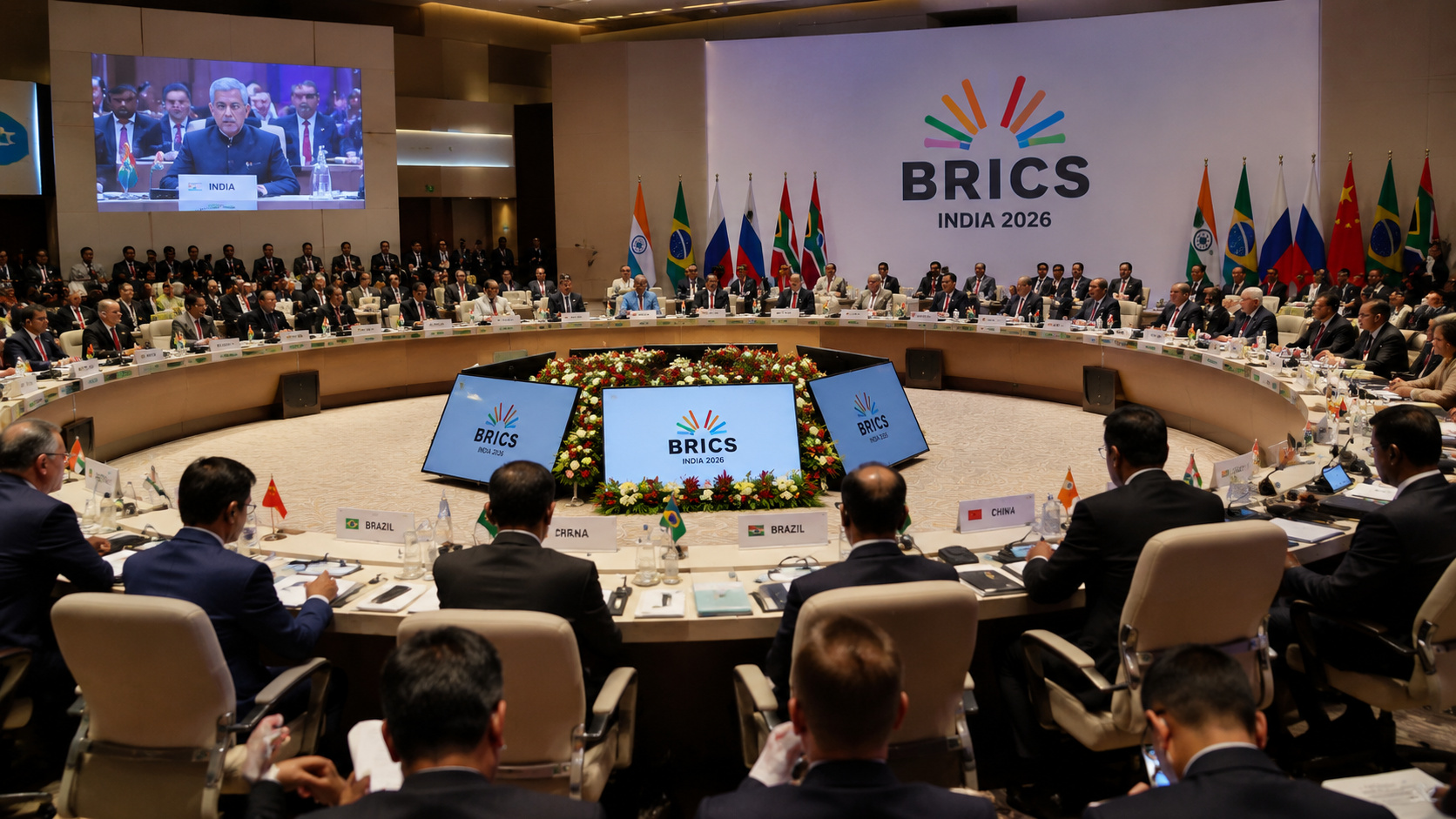

Meeting between Russia, Iran, Brazil, China, and India takes place amid escalation of conflicts in the Gulf and instability in the global energy market.
A new round of diplomatic negotiations of the Brics takes place this Thursday, May 14, 2026, in New Delhi, India, amid the intensification of the war in the Middle East and the effects of the international oil crisis.
Additionally, the meeting brings together foreign ministers from countries such as Brazil, Russia, China, Iran, and South Africa, enhancing the geopolitical relevance of the meeting at one of the most tense moments in the recent global scenario.
The Brazilian chancellor, Mauro Vieira, also participates in the discussions, which occur as international concerns grow over energy security and the stability of the Persian Gulf maritime routes.
-
Brazil’s 2026 Tax Refund: Record 9.58 Million Filers in Largest Payout Ever, But a Key Detail on Priority Recipients Draws Nationwide Attention

-
Itaú Alters Hybrid Work Model, Increasing Office Days from 2028, Prompting Employees to Adjust to New Routine
-
Facing Labor Shortage, Japan Plans to Invest $34 Million to Attract Foreign Workers in Construction, Healthcare, Industry, and Commerce

-
Brazilian City Makes Remarkable Leap, Becomes 4th Wealthiest in the Country with GDP of R$ 134.1 Billion




As diplomatic authorities monitor, the advancement of conflicts involving Israel, the United States, and Iran has increased pressure on the international energy market and heightened fears of global economic impacts.
Blockade of the Strait of Hormuz increases international concern
Currently, one of the major concerns discussed at the meeting involves the Strait of Hormuz, considered one of the main maritime routes for the global transportation of oil.
Furthermore, instability in the region has increased volatility in oil and gas prices, putting pressure on economies dependent on energy imports.
India, for example, obtains almost half of the crude oil it consumes through this strategic route.
Similarly, the Asian country also depends on the maritime corridor to import fertilizers, a factor considered essential for its economy and food security.
According to India’s Foreign Minister, Subrahmanyam Jaishankar, the international scenario is going through a period of “considerable transformation.”
As he stated before the closed meetings, the ongoing conflicts, economic uncertainties, and challenges related to trade, climate, and technology are reshaping the global balance.
Expansion of Brics increases internal divisions among members
Created in 2009 by Brazil, Russia, India, China, and South Africa, Brics emerged as a forum for articulation among major emerging economies.
Subsequently, the group expanded its composition to include countries such as Iran, Saudi Arabia, and the United Arab Emirates.
However, this expansion also increased political and diplomatic divergences within the bloc itself.
Iran and Saudi Arabia, for example, hold opposing positions on issues related to the Middle East, a scenario that complicates the building of consensus among the members.
In light of this, diplomats assess that the meeting may end without an official joint declaration from the Brics.
Lavrov and Abbas Araghchi reinforce the diplomatic weight of the meeting
Among the participants of the meeting are the Russian Foreign Minister, Sergei Lavrov, and the Iranian Minister, Abbas Araghchi.
Furthermore, the presence of representatives from countries directly involved in regional tensions increases the political and strategic weight of the meeting held in India.
Meanwhile, members of the bloc advocate that the Brics act in a “constructive and stabilizing” manner, especially among emerging and developing countries.
Even so, internal divisions and the economic impacts of the energy crisis pose additional challenges for the group.

Energy crisis places Brics before a new geopolitical test
With the increase in tensions in the Gulf, the Brics faces one of its most delicate diplomatic moments since its creation.
Moreover, the advancement of the oil crisis, combined with geopolitical disputes in the Middle East, increases the pressure on the member countries.
Therefore, the meeting in New Delhi becomes an important showcase to measure the bloc’s ability to maintain dialogue and coordination amid international instability.
In this scenario, will the Brics be able to find a common position on the Middle East crisis and the impacts of the war on the global energy market?







