





 Portuguese
  English
  Spanish
  4 min of reading
  0 comments


Robust investment, industrial expansion, and a strategy focused on small producers reposition Yanmar in Brazil, with expectations of growth in agricultural mechanization and significant advancement in market share over the next few years.
Yanmar will invest approximately R$ 280 million in a new factory in Indaiatuba, in the interior of São Paulo, expanding its industrial capacity in the country while seeking to keep pace with the advancement of agricultural mechanization among small and medium-sized producers throughout this decade.
With execution divided into three stages, the project foresees the gradual transfer of production, the parts area, distribution, and also corporate structures to the new unit, progressively reorganizing the national operation.
In the first phase, the company will concentrate the manufacturing area and machine assembly, with operations expected to start in 2027, in a move that aims to alleviate limitations already perceived in the current structure.
-
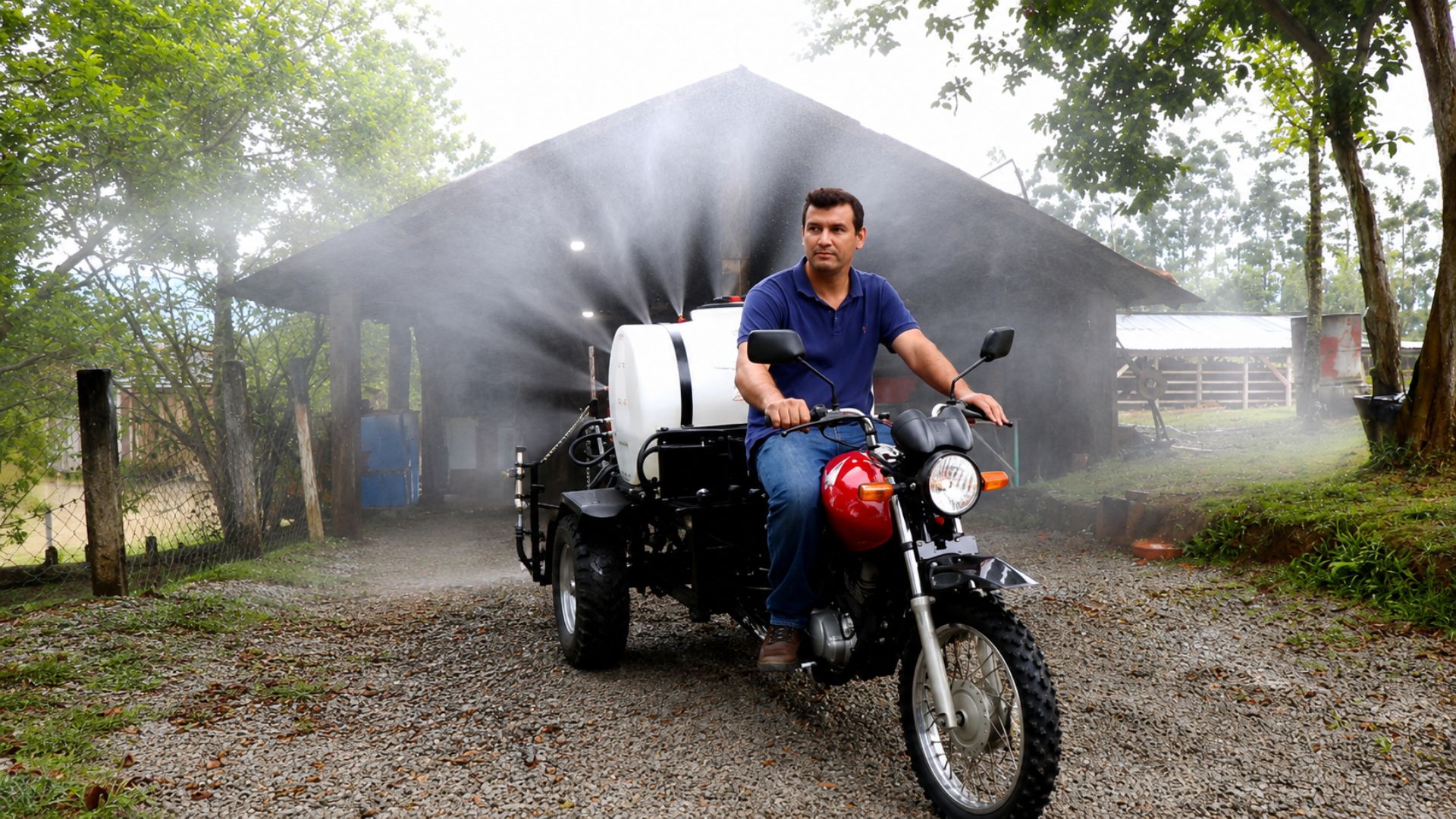
Without money for a tractor or Tobata, a farmer from Presidente Getúlio bought an old motorcycle from an auction and created an agricultural tricycle that carries up to 900 kg of fertilizer in the field; in five years, he has already sold eight to neighbors.

-
A single tank in the lake of a plant yields 90,000 kilos of tilapia every six months, and the company wants to multiply this by 500 to take Mato Grosso do Sul from 11th place to the top in the country.
-
Russia recognizes Brazil as free from foot-and-mouth disease without vaccination on June 10, 2026, strengthens Brazilian agribusiness, and paves the way for more meat, fish, nuts, and new business with a billion-dollar market.

-
Fish farming becomes the new giant of Brazilian agribusiness and transforms tilapia into the “water ox,” in a chain that already moves R$ 11 billion per year and exceeds 1 million tons produced.



Today, the Brazilian operation works close to its limit, producing about 5,000 machines per year, a volume that restricts the capacity to fully meet the growing demand for agricultural tractors, mini-excavators, harvesters, engines, and parts.
New factory in Indaiatuba and expansion timeline
Scheduled to begin in May 2026, the construction of the new plant will have its main structure delivered in June 2027, within a timeline considered accelerated for industrial standards of this size.
Maintaining this pace, industrial operations are expected to begin as early as August of the same year, marking the effective entry of the new unit into the company’s production system during the first stage of the plan.
Subsequently, by 2028, the second phase includes the migration of parts and distribution operations, expanding the unit’s scope and reinforcing its strategic function within the logistics chain.
Finally, the third stage, planned until 2030, will be responsible for consolidating the administrative, commercial, and corporate areas, completing the process of centralization and operational integration.
By reorganizing its structures, Yanmar aims to gain industrial and logistical efficiency, while reducing internal bottlenecks and creating conditions to expand its operations in segments considered promising.
Agricultural production and market target until 2030
Within this strategy, the company considers the expectation that the Brazilian market will reach approximately 70,000 machines sold per year by 2030, a scenario that guides its medium and long-term planning.
In this context, Yanmar is working to maintain a market share between 10% and 12%, which would represent something close to 7,000 units annually, significantly expanding its presence in the country.
In addition to increased production, the plan includes expanding the workforce, which is expected to grow from approximately 300 to about 500 employees by 2030, with impacts also on indirect job creation.
Even in an environment marked by tighter credit and economic uncertainties, the internal assessment is that certain segments continue to sustain demand for mechanization.
Crops such as coffee, fruits and vegetables, and activities related to livestock farming remain strong, ensuring a consistent flow of interest in compact machines geared towards the reality of smaller-scale producers.
Yanmar’s strategy in Brazil and focus on the small producer
Historically, Yanmar’s operations in Brazil have been linked to small and medium-sized rural producers, a profile that remains at the center of the company’s announced expansion strategy.
Since its arrival in the country in 1957, and with the installation of the first small-power diesel engine factory in Indaiatuba in 1960, the company has built a trajectory focused on accessible mechanization.
This history helps explain why the new phase of investments maintains its focus on properties that need to increase productivity but operate with structural limitations and smaller production scales.
During Agrishow 2026, Wagner Santaniello, innovation and marketing manager at Yanmar South America, stated that the focus remains on the small farmer, highlighting coffee, livestock, and fruits and vegetables as segments that continue to sustain demand.
Agricultural innovation and adaptation to the Brazilian market
In the field of innovation, the company adopts a strategy that combines the transfer of global technologies with specific adaptations to the Brazilian context, seeking to balance standardization and efficiency with local needs.
Present in several countries, Yanmar uses this international reach to share solutions between markets, although practical application in Brazil requires technical adjustments aligned with tropical conditions.
Among the fronts analyzed are partnerships with implement manufacturers and the development of solutions aimed at crops where presence is still limited, expanding the available portfolio.
In this movement, sugarcane emerges as one of the segments observed for future expansion, within a strategy that seeks to diversify the company’s agricultural operations.
According to Santaniello, the proposal is to offer farmers a more complete solution that goes beyond the tractor and incorporates implements capable of increasing productivity and operational efficiency in the field.
Although 2026 is seen as a year of more moderate growth, internal expectations point to a more consistent recovery starting in 2027, sustaining the planned progress.
Thus, the investment is positioned less as a short-term response and more as a necessary structural reorganization to accompany the evolution of Brazilian agribusiness over the coming years.






Be the first to react!