Portuguese
  Spanish



Budweiser Has Just Developed a Sustainable Refrigerator That Works Without Electricity. The Equipment Uses an Ancient Technique Developed by the Egyptians.
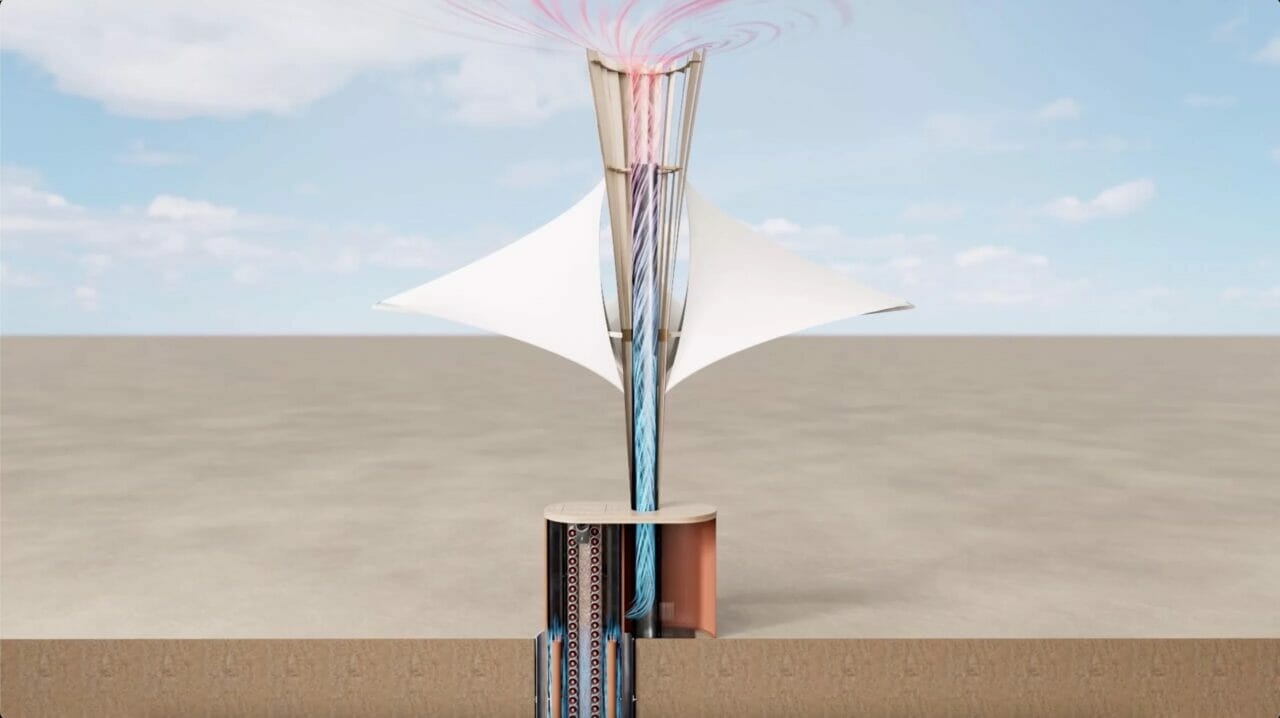
Budweiser, a company founded over a century ago, recently partnered with BETC Paris and announced the development of its first geothermal sustainable refrigerator that can cool drinks to 8ºC without using wind energy. With heat waves becoming increasingly common, the demand for electricity rising, and the capacity of various regions to deal with heat being quite unequal, this solution is especially useful for places like Morocco.
Refrigerator Inspired by 40,000-Year-Old Technique
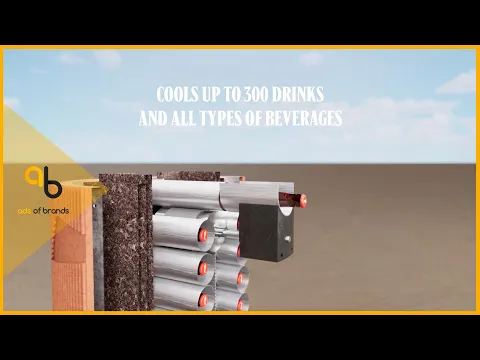

This is the first refrigerator that operates without electricity, and the temperature maintenance is achieved through clay vessels that hold the beverages 4 meters deep, where the air is cooled by evaporation.
The equipment, named Bud Ground Cooler, has the capacity to store up to 300 bottles or cans at temperatures below 8ºC, even in hot and humid climates. The developed solution is inspired by an ancient cooling technique used by Egyptian and Indus Valley civilizations over 40,000 years ago that utilizes the geothermal cooling properties of the soil to maintain lower temperatures.
-
Miniature Nuclear Reactor to Be Installed in South Wales, Powering 20,000 Homes and Reviving UK’s Nuclear Industry After Nearly 50 Years

-
San Andreas Fault Reaches “Highest Tension in 1,000 Years,” Raising Fears of the “Big One,” but New Study Identifies Key Zone Near Los Angeles Influencing Earthquake Impact

-
French Scientists Set Sail on Ice-Trapped Ship for 18-Month Arctic Climate Study
-
Dyson Introduces WashG1: A Revolutionary Floor Cleaner with Motorized Rollers and Self-Cleaning Technology


In its ancient version, the sustainable refrigerator could cool drinks to 15ºC, but with some adjustments, the Bud Ground Cooler now achieves between 6ºC and 8ºC, the ideal temperature for beverages. The project aims to combine business, design, and technology to create a positive, sustainable, and long-term impact for consumers, future generations, and companies.
Additionally, the equipment can benefit underprivileged communities that have problems with regular access to energy in 48% of their territory by keeping drinks cold even during periods of extreme heat waves.
Refrigerator That Works Without Electricity Is a Technical Achievement
The solution was developed by Budweiser and BETC Paris in partnership with Frog, providing an example of a sustainable refrigerator that can be used in other parts of the world aware of the need to conserve electricity. Its installation in Morocco has already been completed, and the beer company plans to bring this solution to other regions with energy problems or lack thereof.
According to Babatope Aiku, a thermodynamics engineer at Frog, the refrigerator that works without electricity is a true technical achievement, as with the new high-performance clay pots, it was possible to double the airflow, thus enhancing freshness.
The fresh air below the ground is further cooled by a current of air that descends through a 4.5-meter-high pole in a process called the Venturi effect, where the fresh air from above simply flows through the duct directly to the ground to cool the beverages below 8 degrees.
Equipment Goes Beyond Simple Advertising
The sustainable refrigerator is also extremely practical for countries experiencing extreme heat. The umbrella-shaped top protects from the blazing sun and turns the Ground Bud Cooler into a perfect place to gather and cool off from the heat.
For the creative director of BETC Paris, David Martin Angelus, the refrigerator that works without electricity goes beyond simple advertising for Budweiser and is a true innovation that contributes to underprivileged communities with simple things that developed countries take for granted. It is an innovative, low-tech, zero-emission piece of equipment that can be scaled up to benefit businesses, people, and especially the planet.