Portuguese
  Spanish


Mullet season undergoes new restriction after the advance of official captures, with a short deadline for the return of vessels and federal monitoring on the limits defined for 2026 in the authorized fishing modalities in the South and Southeast of Brazil.
The Ministry of Fisheries and Aquaculture ended, as of Sunday (07), the capture of mullet in the beach seine modality in the 2026 season, after the collective limit reached 90% of the authorized quota for this type of fishing.
Announced in a statement published at 3:26 PM, the decision applies to the species Mugil liza and is part of the federal monitoring of captures recorded during the season in regions authorized for the activity.
The measure was adopted to prevent the landed production from exceeding the volume allowed by Interministerial Ordinance MPA/MMA No. 51, of February 27, 2026, which defined rules for the season.
-
In China, a 26-story building produces 1.2 million pigs annually, revolutionizing livestock farming with tube feeding and AI surveillance.

-
With Nearly 60% Desert, Israel Desalinates Seawater and Recycles 90% of Wastewater to Build a Billion-Dollar Agricultural Powerhouse in Dates and Cotton
-
74-Hour Barbecue in Brazil Sets World Record: 3.4 Tons of Meat, 10,500 Meals Served

-
Man Takes on Swarms in Singapore, Saves 6 Million Bees and Encourages Locals to Choose Conservation Over Pesticides




According to the rule released by the ministry, vessels that were still at sea at the time of the announcement had up to 24 hours to make the last landing before the capture was interrupted.
End of mullet fishing in the beach seine
The blockade announced by the federal government does not end the entire mullet season in the country, but interrupts the capture of the species in the beach seine modality, according to the segment informed by the MPA.
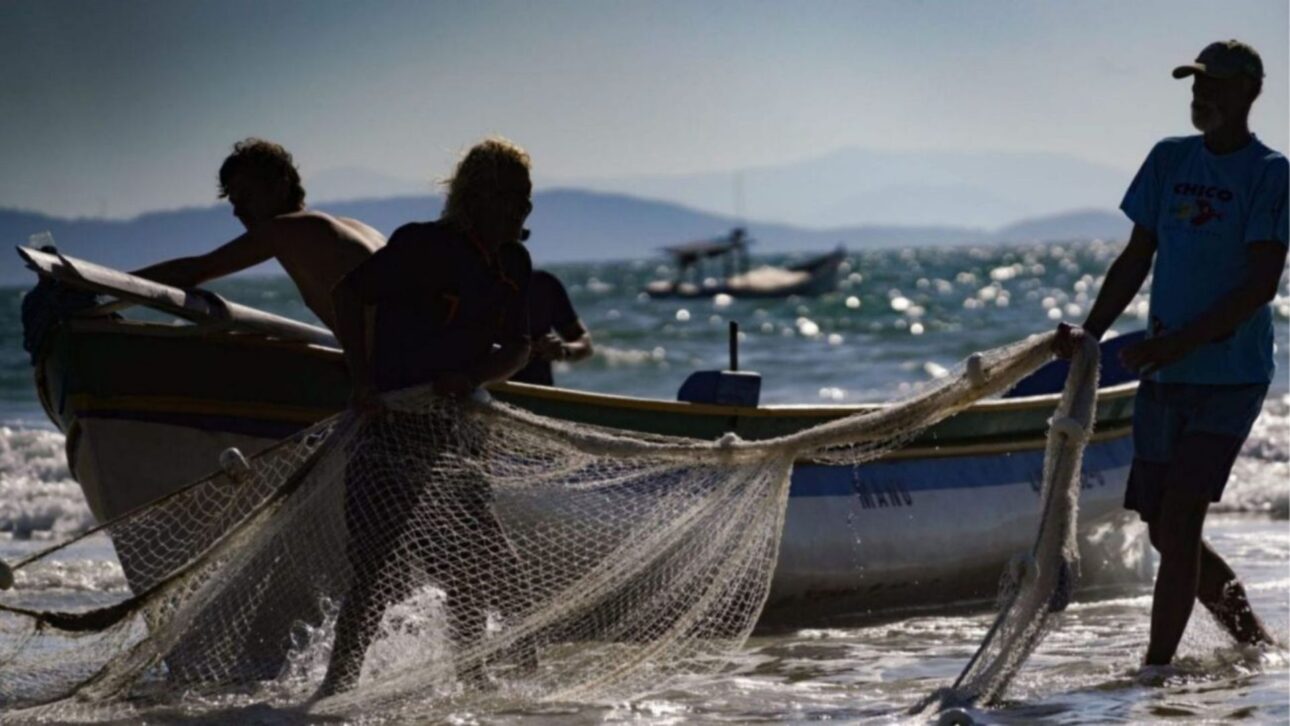
After the 24-hour period, fishermen are prevented from landing new mullet loads by this type of permission, although other fishing activities may continue when authorized by legislation.
According to the MPA, the decision was based on consolidated data from the Declarations of Mullet Entry in Fishing Companies, used to monitor the production reported during the season.
This information feeds the Mullet Fishing Season Monitoring Panel, a federal tool used to observe the evolution of captures and guide administrative measures during the season.
Fishermen and fisherwomen will be able to resume activity for other species provided in the modality, as long as they observe the rules of the Interministerial Normative Instruction MPA/MMA No. 10, dated June 10, 2011, informed the ministry.
Mullet Quota in 2026
Defined by the Ministry of Fisheries and Aquaculture and the Ministry of the Environment and Climate Change, the 2026 season establishes limits for the capture of mullet in the Southeast and South regions of Brazil.
The ordinance also set fishing areas, quotas per modality, and measures for registration, monitoring, and control of the species, applicable throughout the authorized period for the season.
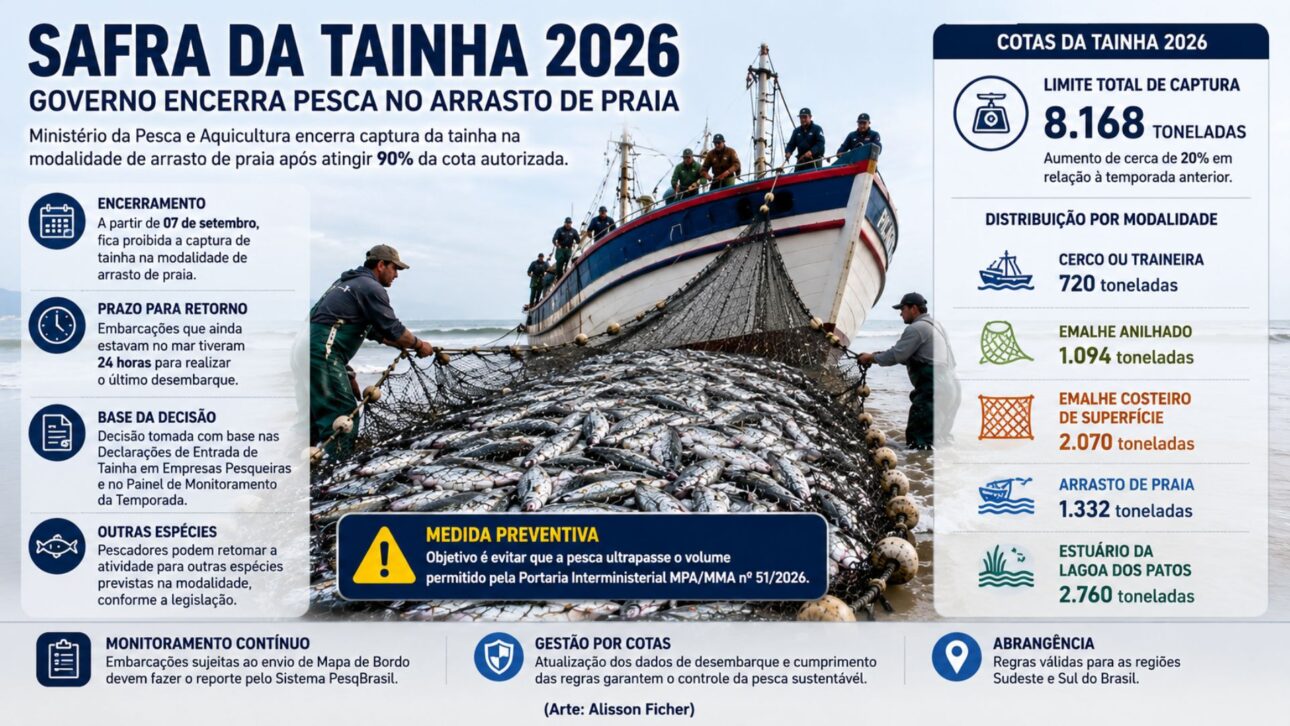
According to the MPA, the total limit for mullet capture in 2026 is 8,168 tons, based on the most recent stock assessment, prepared in 2025.
The volume represents an increase of about 20% compared to the previous season, according to data released by the federal government detailing the rules applicable to this year’s season.
In the official division, there are 720 tons for encircling or trawling, 1,094 tons for ringed gillnet, 2,070 tons for coastal surface gillnet, 1,332 tons for beach seine, and 2,760 tons for capture in the estuary of Lagoa dos Patos.
Federal Monitoring of the Season
Even with the end of beach seine for mullet, monitoring of the season continues through official control tools, according to the rules informed by the federal government.
Vessels subject to sending a Logbook must report through the PesqBrasil System – Logbook, as per guidance released by the Ministry of Fisheries and Aquaculture.
The rule aims to reduce the risk of quota overrun and maintain control over the capture of the species in the regions where fishing was authorized for the season.
With the landing data, the government monitors the progress of production and can adopt interruption measures when the recorded volume approaches the limits defined for each modality.
In Santa Catarina, beach seine is part of the fishing activity registered during the season that started in May, within the calendar that mobilizes communities and vessels authorized for mullet capture.
Quota management depends on the update of landing data and compliance with the procedures provided in the legislation, according to the Ministry of Fisheries and Aquaculture.
With the measure, the preventive interruption occurs before the quota reaches the maximum limit authorized for the beach drag modality in the 2026 season.