Portuguese
  Spanish


BYD unloaded 4,585 electric and hybrid vehicles at the Port of Itajaí on Wednesday night (27) aboard the ship Grande Shanghai, and is preparing a second operation in June with another 7,200 units, totaling 11,785 cars in two calls. According to information from NSC, BYD’s urgency has an explanation: the import tax rate for imported electric and hybrid cars is expected to reach 35% starting January 2027, and each ship arriving before this deadline represents a saving of millions in taxes. The operation mobilized 150 workers and 90 car carrier trucks in a night shift.
BYD is racing against the clock to bring as many electric cars as possible to Brazil before the tax window closes. The Chinese automaker unloaded 4,585 vehicles at the Port of Itajaí on Wednesday night aboard the Grande Shanghai, a ship from the Grimaldi Group, and has already confirmed a second call in June with the ship Changsha, which will bring another 7,200 units. The total of 11,785 BYD cars unloading in Itajaí in less than two months is an unprecedented operation for the Santa Catarina terminal, which before these calls had moved only 2,928 vehicles in ro-ro operations throughout 2026.
BYD’s urgency has a name: import tax. The temporary exemption for disassembled electric vehicles that was in effect until January 2026 has already expired, and the rate follows a schedule of increases expected to reach 35% starting January 2027. Each ship that BYD manages to unload before the full increase represents significant savings, because the difference between importing with a reduced rate and importing at 35% can mean thousands of reais more per vehicle, compromising BYD’s competitiveness against the 35% tax.
The night operation with 150 workers

The unloading of the 4,585 BYD cars began at 7 PM on Wednesday and was conducted by JBS Terminals in a night regime. The operation involved about 150 workers and 90 car carrier trucks mobilized to ensure agility in removing the vehicles from the ship and transporting them to storage yards and distribution centers.
-
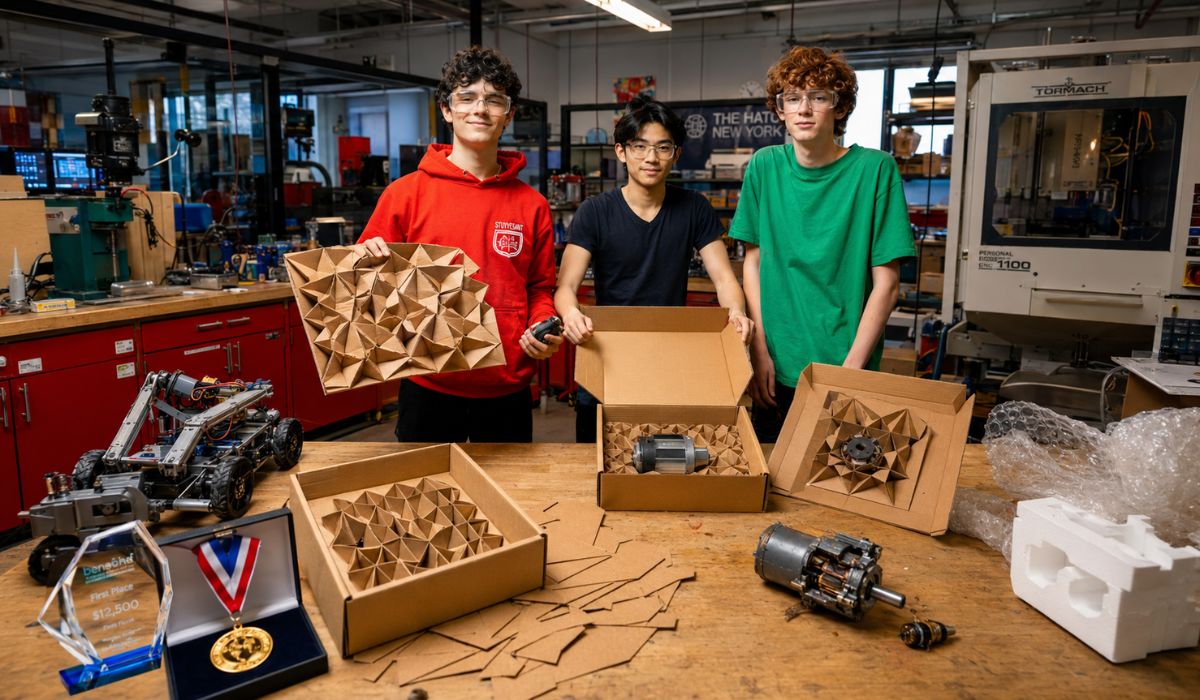
Three teenagers transform cut cardboard into Japanese origami-style packaging that promises to retire styrofoam and bubble wrap, win a $12,500 prize, and target giants like Amazon, FedEx, and Home Depot after a robot motor arrived broken.

-
The large jar blender has a rival: Oster Ultra Power bets on 1,000 W, six stainless steel blades, and two portable cups with leak-proof lids.

-
Tesla injected an additional $250 million into the German factory, doubled the battery cell target, and opened its own production line for startups.

-
No more TV stuck on the wall: Samsung The Freestyle+, the new projector with over 400 lumens projects on walls, floors, and ceilings, bringing cinema to any corner of the house.


The superintendent of the Port of Itajaí, Artur Antunes Pereira, stated that the operation “demonstrates the capacity of the Port of Itajaí to carry out large-scale operations with safety, efficiency, and planning.” For Mayor Robison Coelho, the import ships of BYD automobiles “are extremely positive for the city’s economy, they are high-value-added cargoes that directly impact job creation.”
The tax that BYD tries to avoid

The schedule for tariff increase for electric, hybrid, and imported cars foresees a rate of 35% starting January 2027. BYD had obtained a temporary six-month exemption in 2025 to import disassembled vehicles, but the measure expired in January 2026, and the automaker returned to the normal import regime.
The exemption, published by the Foreign Trade Secretariat in August 2025, covered partially assembled and completely disassembled vehicles. The measure prompted a joint reaction from Volkswagen, Stellantis, GM, and Toyota, who signed a letter to President Lula requesting that the exemption not be granted, arguing that the practice “could spread throughout the industry, directly affecting the demand for auto parts and labor.”
The letter war between BYD and traditional automakers
BYD’s response to the pressure from the four automakers was equally forceful. The Chinese company stated that its arrival in Brazil provoked a “negative reaction from traditional automakers” and suggested that the real concern is “losing the dominant market position and being unable to compete with the brand’s prices and technology.”
BYD classified the reaction of Anfavea and its associates as “the same old script: in the face of any sign of market opening or innovation, threats of mass layoffs, factory closures, and the end of the world as we know it arise.” The clash illustrates the tension between a Chinese automaker aggressively growing before the 35% tax and traditional manufacturers operating factories with thousands of employees in the country.
What’s coming in June for BYD in Itajaí
The second stop for BYD in Itajaí is scheduled for June, with the ship Changsha bringing 7,200 vehicles. The operation will be even more intense than the first, as the volume is almost double and will require proportional logistics in workers, trucks, and unloading time.
With the two BYD stops, the Port of Itajaí is expected to reach about 14,713 vehicles handled in ro-ro operations by the end of 2026, a volume that positions the terminal as one of the main entry points for Chinese electric cars in Brazil. For BYD, each ship docking before the 35% increase is a race won against the tax calendar that, starting in 2027, could completely change the pricing equation for imported electric cars in the Brazilian market.
Do you think BYD is right to rush to import before the tax increase, or are traditional automakers right to ask for protection? What weighs more: low prices for consumers or jobs in Brazilian factories? Tell us in the comments.