






 Portuguese
  Spanish


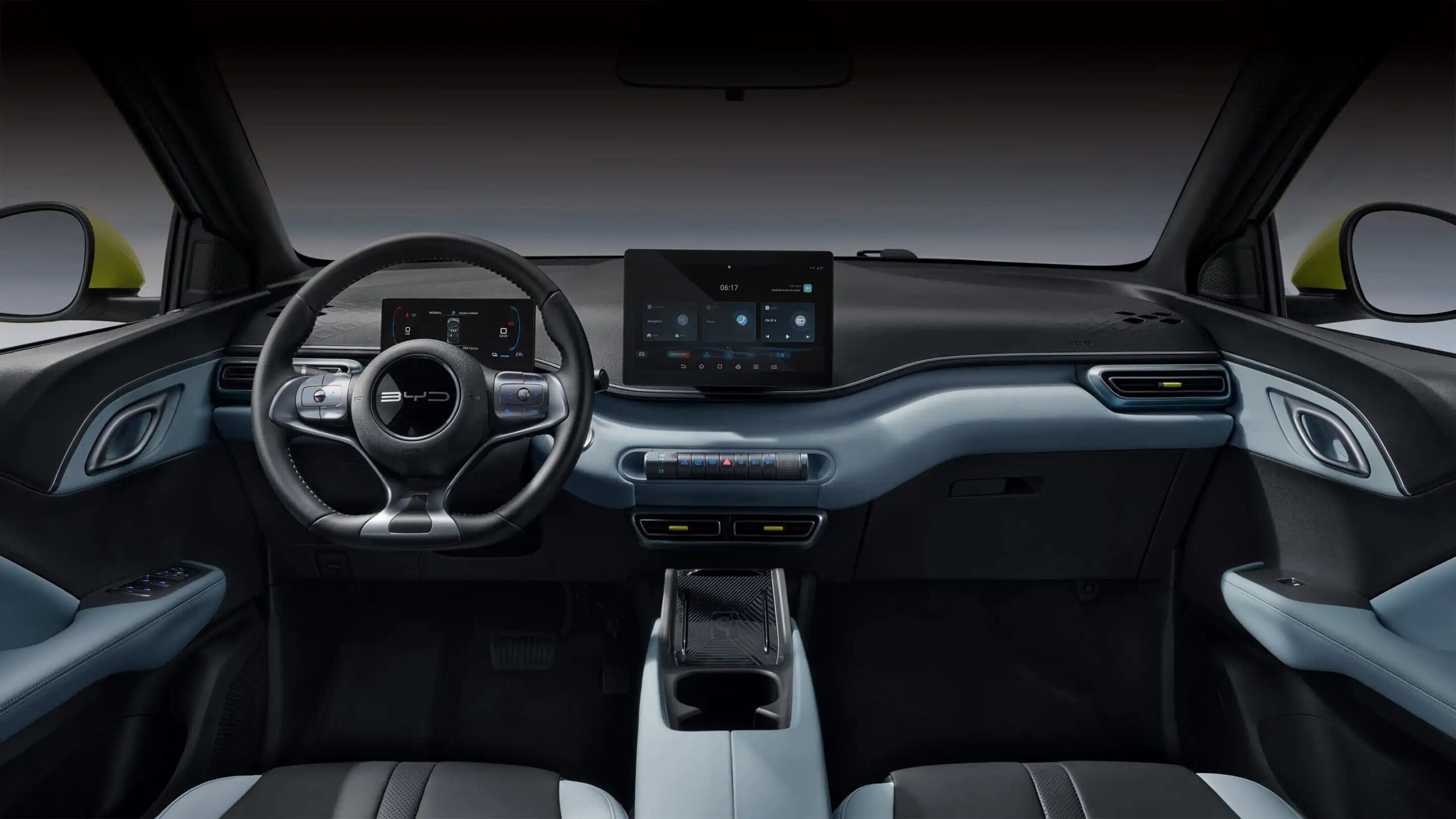

BYD Invests In The Global Success Of An Affordable Electric Compact That Is Notable For Its Combination Of Innovative Design And Cutting-Edge Technology At A Surprising Price For A 100% Electric Vehicle.
The Chinese brand BYD, which stands out in the electric vehicle market, has just surprised everyone by launching the electric compact Seagull, which is sold as Dolphin Mini in Brazil.
With prices starting at less than R$ 54 thousand in China, this model has become one of BYD’s biggest assets in its global expansion strategy.
In April 2025, the Seagull sold more than 55 thousand units, making it the best-selling electric car of the brand during that period.
-
A Brazilian street cleaner built a machine to recycle PET bottles in the hinterlands of Paraíba, transforming the trash he swept from the streets into threads, brooms, and equipment sold even outside Brazil, and began earning about R$ 7,500 per month with his own invention.

-
In a city where every piece of land is worth gold, he began buying plots in the 1960s and built a real estate empire with over a thousand properties.

-
An artist sank over 500 life-sized human statues at the bottom of the Caribbean Sea, and what seemed like macabre art turned into a living reef covered with corals that attracts divers from all over the world.

-
A fossil kept for years in a small museum in Montreal concealed 450-million-year-old soft tissue, a discovery that has only happened once before in history.


The Seagull was designed to meet a growing demand for affordable and efficient electric cars, and its proposition is clear: to offer an urban, modern, and low-cost model, without compromising on technological features and attractive design.
Its competitive pricing strategy and accessible features have made it a successful model in the Chinese market, and the trend is for this success to be replicated in other international markets.
The Impact Of The Seagull On BYD’s Global Sales
The Seagull is part of BYD’s Ocean and Dynasty families, and its popularity has played a crucial role in the automaker’s global sales, which reached 380,089 clean energy vehicles (electric and plug-in hybrid) in April 2025.
This represents a 21% growth compared to the same month last year.
For the first time in over a year, 100% electric cars surpassed hybrids, with 195,740 units delivered, a number significantly driven by the success of the Seagull.
In addition to its strong domestic performance, the Seagull is helping to boost BYD’s international sales.
In April 2025, the company exported 79,089 units of its vehicles, marking the fifth consecutive month of growth in exports.
By the end of April, the automaker had already exported more than 285 thousand cars, more than double the volume recorded in the same period of 2024.

Features Of The Seagull And Its Versions
With compact dimensions of 3.78 meters in length and 1.54 meters in height, the Seagull stands out as an excellent option for those seeking an urban car, ideal for large and congested cities.
However, despite its compact size, the model does not compromise on range.
The Seagull is available in two main versions: the base version, equipped with a 30.08 kWh battery, offers a range of up to 305 km on the CLTC (China Light-Duty Vehicle Test Cycle).
The more complete version, called Flying, comes with a 38.88 kWh battery and promises a range of up to 405 km, making it a more robust option for consumers who require more daily range.
These versions are priced in China between 69,800 and 85,800 yuan, equivalent to US$ 9,700 to US$ 12,000, or R$ 54,900 to R$ 67,900.
Although these prices are extremely affordable in China, the reality in Brazil and other countries may be different, mainly due to import taxes and fees that affect the final price of the cars. In Brazil, the car starts at R$ 118 thousand in the 4-seat version and R$ 122 thousand in the 5-seat version.
International Expansion And Arrival In Brazil
Although the Seagull is not manufactured locally in markets outside of China, the model has already been launched in countries such as Mexico, Colombia, Philippines, and Brazil, under the name Dolphin Mini.
BYD also plans to launch the model in Europe in 2025, where it will be marketed as Dolphin Surf, with an estimated starting price below £20,000, which is approximately US$ 26,000.
According to analysts at S&P Global Mobility, BYD’s aggressive pricing strategy for the Seagull may ensure the model’s competitiveness, even in the face of tariffs imposed by the European Union on vehicles manufactured in China.
This is because, in addition to the low price, the model offers excellent value for money, combining energy efficiency, modern design, and accessible technology for a range of consumers.

The Look That Conquered China And The World
Designed by Wolfgang Egger, former designer at Audi and Lamborghini, the Seagull’s design has also caught attention.
Its bold and futuristic style has captivated the Chinese market so much that the model has been nicknamed the “Mini Lamborghini”.
The combination of bold and elegant shapes with an affordable price has helped position the Seagull not only as a cheap car but as a symbol of affordable and modern mobility.
In addition to being an excellent choice for those seeking a low-cost electric vehicle, the Seagull represents an important step for BYD in the global expansion of electric mobility, especially in emerging markets, where the demand for affordable electric vehicles is growing rapidly.


Challenges And Opportunities For BYD
The success of the Seagull reflects BYD’s smart strategy of investing in compact, affordable electric cars, as well as betting on mass production to reduce costs and make the model more competitive.
However, the company still faces challenges, particularly regarding import tariffs, which can impact the final price of the model in markets outside China.
Despite these issues, the brand is optimistic about growth prospects, both in emerging markets and in the European market.
To achieve this, BYD is betting on technology, design, and competitive pricing as its main advantages to attract more consumers around the world.
Do you believe that the affordable prices found in China could someday arrive in Brazil, or will cars here continue to be sold at much higher prices? Leave your opinion in the comments!




Eu não vejo nenhum governo cortar impostos, mas sim criar ou aumentar. Diante deste cenário a tendência e não termos veículos com preços atrativos no Brasil.
O governo precisaria zerar o imposto para os “eletricos” ajudaria na compra do consumidor final e no meio “ambiente” agradece! sempre 🙏
O governo precisa colaborar reduzindo impostos para promover essa energia limpa e que não polui o meio ambiente