






 Portuguese
  Spanish


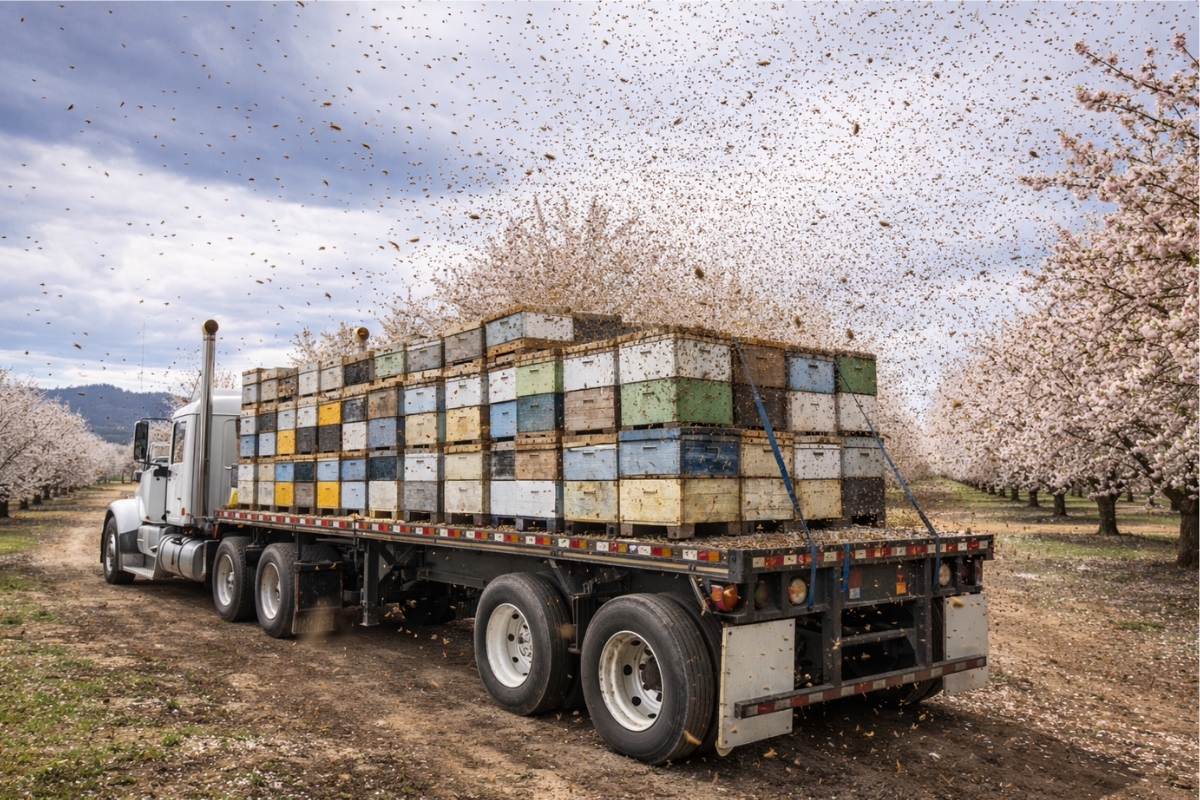


In California, Beekeepers Transported 18 Million Bees to Pollinate Almonds, Triggering Alert About Weaker Hives and Calling Attention to Agriculture
California is experiencing a massive pollination operation that relies on commercial hives arriving in bulk at almond orchards. The impact is direct on agricultural production and food supply.
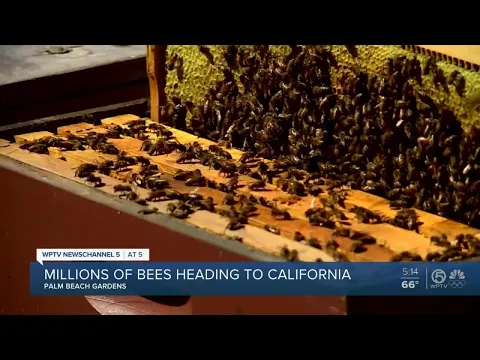
The information was released by WPTV, a local news station in the United States. The cited number is 18 million bees, sparking a discussion about scale and the sector’s dependence.
At the same time, there is a growing alert about what weakens the colonies from within. Pesticides enter the center of the debate because the effects can last more than a growing season.
-
Scientists Develop Needle-Free Insulin That Penetrates Skin, Reduces Glucose in Animals Within an Hour, Paving the Way for Diabetes Patches and Creams for Humans

-
After 40 Years of Research, Powdered Coconut Water to Be Produced in Brazilian Biorefinery, Aiming to Revolutionize Health for Children, Elderly, and Hospital Patients
-
Queen Guitarist Brian May Collaborates with ESA Scientists to Study Asteroids Bennu and Ryugu Using 3D Simulations
-
Largest Known Single-Piece Meteorite, Weighing 60 Tons, Puzzles Scientists with Its Intact Fall and Lack of Visible Crater



How 18 Million Bees and 600 Hives Became a Cog in the Pollination Machine in California
The transport of hives for pollination occurs as a large-scale logistics operation. The mentioned operation includes 600 hives loaded onto a truck heading to California.
Inspection upon entering the state also appears in the report, with checks to prevent pests that could accompany the hives.
This movement reinforces a practical point: pollination of almonds depends on a structure set up in just a few days, with high costs and significant risks if something goes wrong.

What Changed When Pesticides Are in the Equation, 44% Drop and 72% Reduction in Colonies
The harshest data appears in reproduction. Exposure to pesticides has been linked to 44% fewer offspring in bees.
The impact also emerges in the growth rate of the colonies. The same study indicates a 72% lower population growth rate after exposure in the first and second years.
The information was released by UC Davis, a public university in California conducting research on climate and ecosystems. The central point is the effect crossing generations, with weaker hives even after initial contact.
Why Almond Pollination Does Not Tolerate Failures and the Impact Reaches the Consumer
When pollination becomes unstable, productivity can drop, and the cost of maintaining healthy hives tends to rise. This pressures the supply chain from the field to retail.
The reliance on transported hives makes the system sensitive to weather, pests, inspections, and losses along the way.
With colonies weakened by environmental factors, the risk increases because the work needs to occur within a short flowering window.
Who Can Be Affected, Beekeepers, Producers, and What to Observe Now in the Hives
Beekeepers feel it first, as the costs show up in mortality, queen replacement, and loss of workforce within the hive.
Producers feel it next, needing more hives to ensure the same pollination, as well as higher costs in contracts and management.
What is worth observing is the strength of the hive, the presence of brood, and the consistency of development, as the data indicates impact on offspring and growth.
Points of Attention That Require Care, Inspections, Pests, and Exposure to Chemicals
Inspections at the entry points of California show how the operation is controlled and how pests can become reasons for detention or sanitary issues.
Exposure to chemicals is concerning due to its prolonged effect, with the risk of weakening hives over time, not just in the short term.
The scenario puts pressure to reduce stressors and improve management because the system depends on strong hives at the exact moment of flowering.
California manages to put 18 million bees in the field to pollinate almonds, but the data of 44% and 72% make it clear that the health of the hives has become a bottleneck.
The message is simple and uncomfortable: the greater the dependence on transported hives, the more urgent it becomes to cut what is weakening the bees’ strength before the impact appears in food.






Impossível ler a matéria com tudo essa **** de propaganda e avisos que atrapalham!??
Até para comentar já entraram duas propagandas!