Portuguese
  Spanish


The Chinese manufacturer Huawei has partnered with the British company Aggreko to supply Chinese batteries to a solar microgrid system in the state of Amazonas. The R$ 850 million project aims to serve 24 locations and is expected to start operating between 2027 and 2028, according to the companies.
Huawei will supply Chinese batteries for one of the most ambitious energy projects ever announced in the Brazilian Amazon. In partnership with the British company Aggreko, the Shenzhen manufacturer will participate in a solar microgrid system that is expected to serve 24 locations in the state of Amazonas, including cities with tens of thousands of inhabitants. The total investment is approximately R$ 850 million, equivalent to US$ 165.55 million, and the complete implementation may take up to three years, as informed by the two companies to Reuters in March 2026.
If it reaches the planned size, the project will become the largest energy storage system in Brazil’s history, according to the companies themselves. The country is still taking its first steps in this technology: there is currently only one large-scale project of this type in operation in the national territory, by the transmission company ISA Energia, on the coast of São Paulo, according to Reuters. What is being planned for the interior of the Amazon would, therefore, be a considerable leap compared to what Brazil knows so far in this segment.
Why Amazonas and why now
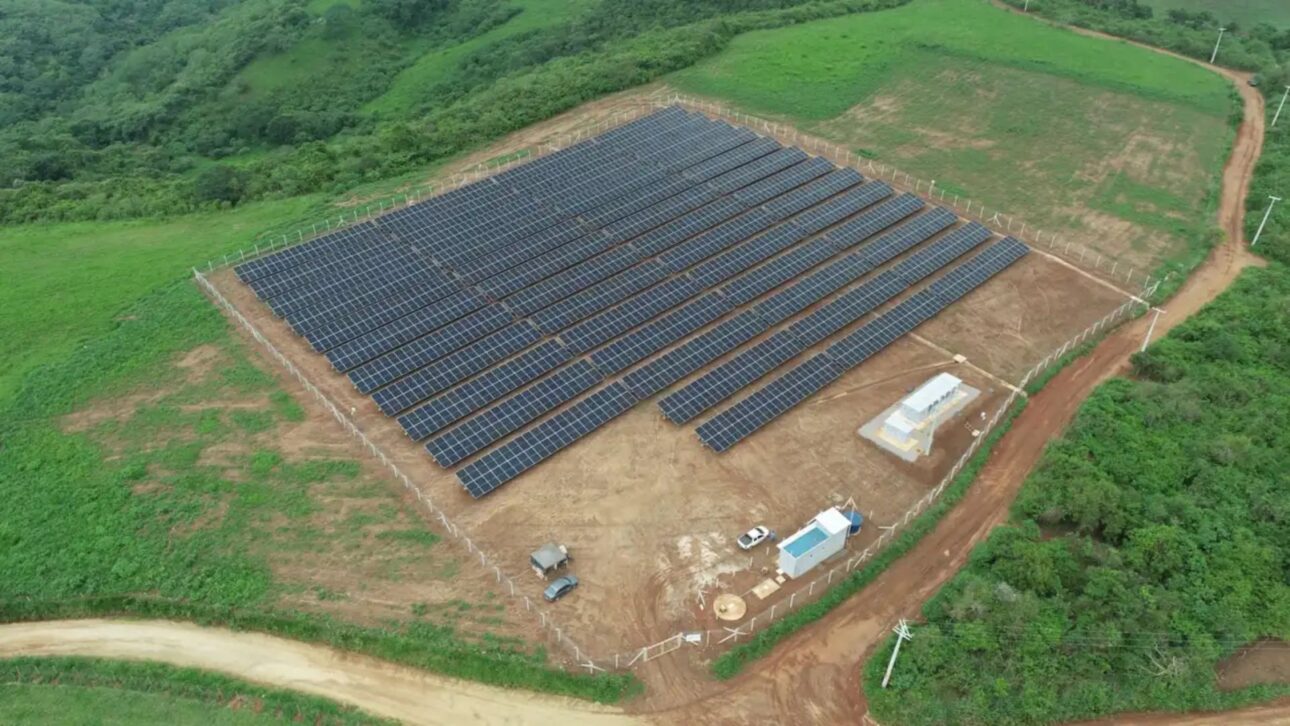
A large part of the inland cities is not connected to the National Interconnected System, the large power grid that covers most of the Brazilian territory.
-
Australia deploys poisoned sausages and uses traps, shooting, and fences in a battle against invasive cats that kill over 1.5 billion native animals annually, threatening more than 200 species.

-
NASA Rover Captures “Tired Face” on Mars, Highlighting Human Brain’s Tendency to See Faces in Rock Formations

-
Ancient Stone City in the Desert, Once Home to 30,000, Puzzles Scientists with Nabateans’ Water Mastery 2,000 Years Ago

-
Ancient Creature Thought Extinct Since Dinosaur Era Reappears, Baffling Scientists




These communities rely on local generation, and the historically adopted solution is diesel or fuel oil thermal power: expensive, polluting, and subject to fuel supply interruptions.
This is the so-called isolated system, and Amazonas concentrates most of it in the country.
It is in this vacuum that the Aggreko and Huawei project fits. The proposal is to install solar power plants combined with battery storage systems, forming microgrids capable of generating and storing energy locally.
Thermal power plants would not be immediately eliminated, but would operate as a backup, reducing dependence on fossil fuels and associated carbon emissions, according to the companies.
The model is not new in the world, but applying it on this scale in the Amazon is something that has not yet been done.
The role of Chinese batteries in this structure
Huawei’s batteries are the central component that enables the operation of solar microgrids outside of generation periods.
Solar energy is only produced while the sun is present. Without storage, the surplus generated during the day is lost and the community is left without supply at night or on cloudy days.
Huawei’s Chinese batteries come in precisely to cover this gap, storing what is produced and dispatching it when there is demand.
Barbara Pizzolato, Huawei’s off-grid project director in Brazil, described the venture to Reuters as “the largest microgrid project currently underway in the Americas.”
The statement is from the company, not from an independent evaluation, and should be read with this caveat. Still, the proposed scale of 24 locations in one of Brazil’s most extensive and difficult-to-access states places the project in a different category from the microgrid systems currently existing in the country.
The logistics of installation and maintenance in cities like Tefé, hundreds of kilometers from Manaus without road access, is a challenge in itself.
Tefé and the other 23 cities: what’s at stake
Tefé is the most populous city mentioned in the project. With about 75,000 inhabitants, according to Reuters, it is an important regional hub in central Amazonas, serving as a reference for riverside communities and neighboring municipalities.
Receiving a solar microgrid system with storage would structurally change the local energy dynamics: less dependence on diesel, lower energy costs in the long term, and fewer interruptions associated with fuel logistics.
The other 23 locations were not detailed individually in the available information.
What the project envisions is a replicable model across different municipalities in the state, adapting the size of the installation to the size and demand of each community.
The idea of a microgrid works precisely because it scales up or down according to local needs, which makes the model theoretically applicable both in larger cities and in villages with just a few thousand people.
Aggreko, Huawei and the division of roles
The structure of the agreement clearly separates the functions.
Aggreko is the company responsible for the project as a whole: it holds the energy supply contract, assumes the investment of R$ 850 million, and operates the installed systems.
Huawei enters as the supplier of the batteries, the storage component that integrates the solar plants with the microgrids. Cristiano Lopes Saito, Aggreko’s sales director for public services in Brazil, confirmed the values and deadlines to Reuters.
For Aggreko, a British company with experience in temporary and remote energy solutions in emerging markets, the project represents a bet on the decentralized energy segment in Brazil.
For Huawei, it is an opportunity to expand its presence in the Brazilian energy market at a time when the company seeks to diversify operations beyond telecommunications.
Brazil has not yet held its first government battery auction, and being present in a project of this visibility before this auction has strategic value for the Chinese manufacturer.
Brazil and energy storage: where the country stands
The Brazilian market for large-scale battery storage is embryonic.
The only relevant project in operation today is ISA Energia’s, on the São Paulo coast, as reported by Reuters.
This scenario is about to change: the federal government has been signaling the realization of specific auctions for storage, and the electric sector has been discussing how to integrate this technology into the expansion of renewable sources, especially solar and wind, which have grown significantly in recent years without the storage infrastructure keeping pace.
The Amazonas, paradoxically, may end up taking the lead in this race. Being outside the interconnected system, the state does not depend on federal regulation to implement local microgrid solutions.
The Aggreko and Huawei project does not need to wait for a national auction to happen: it is a private energy supply contract for isolated communities.
Sometimes, geographical isolation opens up space for innovation that the connected system, with its rules and regulatory disputes, has not yet managed to create.
What still needs to be proven
The announcement is significant, but the project is still on paper. The first plants are only expected to start operating between 2027 and 2028, and full implementation may take three years from the start of construction.
In this interval, variables such as equipment logistics in the Amazon rainforest, system maintenance in remote locations, contractual stability, and the final cost of energy delivered to communities will determine whether the enterprise will work as promised.
The presence of Chinese Huawei batteries in a Brazilian energy infrastructure project can also generate regulatory debate as Brazil advances discussions on the security of strategic supply chains.
Other countries have already faced this dilemma when deciding on telecommunications and energy infrastructure with components of Chinese origin.
For now, the project is approved and underway. But the geopolitical environment around Chinese technology in critical infrastructure rarely remains static for long.
Installing Chinese Huawei batteries as the basis of Brazil’s largest energy storage system is a necessary advancement for the Amazon or a strategic risk that the country should evaluate more carefully? The isolated communities of Amazonas need energy now, but at what cost and with what technological dependency? Leave your opinion in the comments.