Portuguese
  Spanish


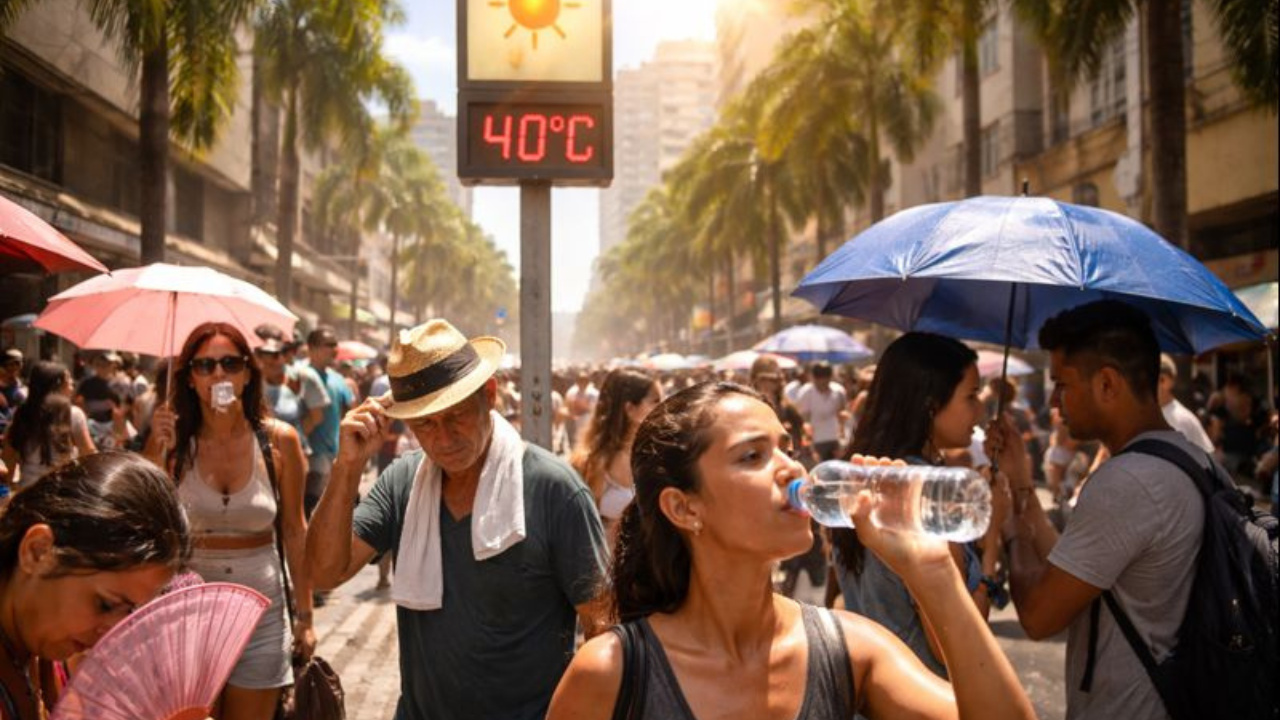


Experts Warn: Heat Wave and Extreme Heat Increase Health Risks and Require Care to Avoid Hyperthermia.
The heat wave affecting various regions of the country and the world has put health authorities on alert due to the increased health risks associated with extreme heat.
The phenomenon primarily occurs during the hottest months of the year, affects people of all ages, and can lead to severe conditions such as dehydration, hyperthermia, and, in extreme cases, death.
Doctors emphasize that the impact of heat on the body depends on individual, environmental, and behavioral factors.
-
Green Roofs on Homes Gain Popularity for Reducing Heat, Noise, and Rain Impact in Brazil

-
Brazilian promises his children to save a river, creates an eco-barrier in his backyard, has already removed more than 40 tons of trash from the water, and even inspires the idea in other states of the country.

-
How a Brazilian company created a system that transforms broken pallets of any brand into new assets, recycles 80 tons of plastic per month, and found a profitable solution to a problem that challenges industries across the country.
-
Invasive bullfrog capable of devouring other amphibians and laying up to 20,000 eggs is found in Florianópolis, raising an alert about the threat to native fauna.




According to cardiologist Cristiane Zambolim from Hospital Alemão Oswaldo Cruz, the intense rise in temperature compromises the balance of the human body, especially when there is inadequate hydration or when the body is subjected to excessive exertion.
Extreme Heat Causes Symptoms That Should Not Be Ignored
During periods of extreme heat, the body begins to show clear signs of thermal overload.
Among the main symptoms associated with the heat wave are increased heart rate, malaise, lethargy, dry mouth, and drowsiness.
Additionally, a drop in blood pressure can cause dizziness and fainting, raising the risk of accidents.
In more severe situations, the lack of temperature control can trigger seizures and loss of consciousness, constituting a medical emergency.
Therefore, recognizing these signs early is essential to reduce health risks during prolonged periods of high temperatures.
When Heat Can Become Fatal
Recent scientific studies show that heat waves are already causing direct impacts on global mortality.
A report published in October in the scientific journal The Lancet pointed out that in 2023, heat-related deaths among people over 65 increased by 167% compared to 1990.
On the other hand, research published in December by the journal Science Advances revealed a concerning statistic: in Mexico, 75% of heat-related deaths occurred among people under 35, particularly in the 18 to 35 age group.
These numbers show that health risks are not restricted only to the elderly, requiring attention from the entire population.
Hyperthermia: The Dangerous Limit of Body Temperature
According to Cristiane Zambolim, heat can lead to death depending on individual conditions.
“The extremes of age are more susceptible [to heat risks]. So, when body temperature reaches 104 ºF, it can be fatal,” she says.
This abnormal rise in body temperature is called hyperthermia.
The condition occurs when the body loses the ability to dissipate heat effectively, compromising vital functions.
Hyperthermia is directly associated with the combination of high temperatures and high humidity, a common scenario during intense heat waves.
Humidity and Physical Exertion Increase Risks
According to the specialist, hot and humid environments make it difficult for the body to exchange heat with the external environment.
“When the temperature is hot and humid, the exchange of heat between the body and the environment is more difficult. Thus, a person cannot, for example, have the sweat reflex, which helps cool the internal temperature,” she explains.
Furthermore, intense physical activities under extreme heat, combined with dehydration, significantly raise health risks.
In these situations, the body is pushed beyond its capacity to maintain homeostasis, that is, the thermal balance required to keep the internal temperature at up to 99.5 ºF.
Prevention Is Essential During the Heat Wave
In light of this scenario, experts emphasize that prevention is the primary strategy to cope with the effects of the heat wave.
Constant hydration, reducing physical activities during the hottest hours, and seeking ventilated or air-conditioned environments are fundamental measures.
Meanwhile, more vulnerable groups, such as children, the elderly, and people with chronic illnesses, should receive special attention.
Thus, adopting simple care can make a difference and avoid serious complications associated with extreme heat, dehydration, and hyperthermia.