






 Portuguese
  Spanish


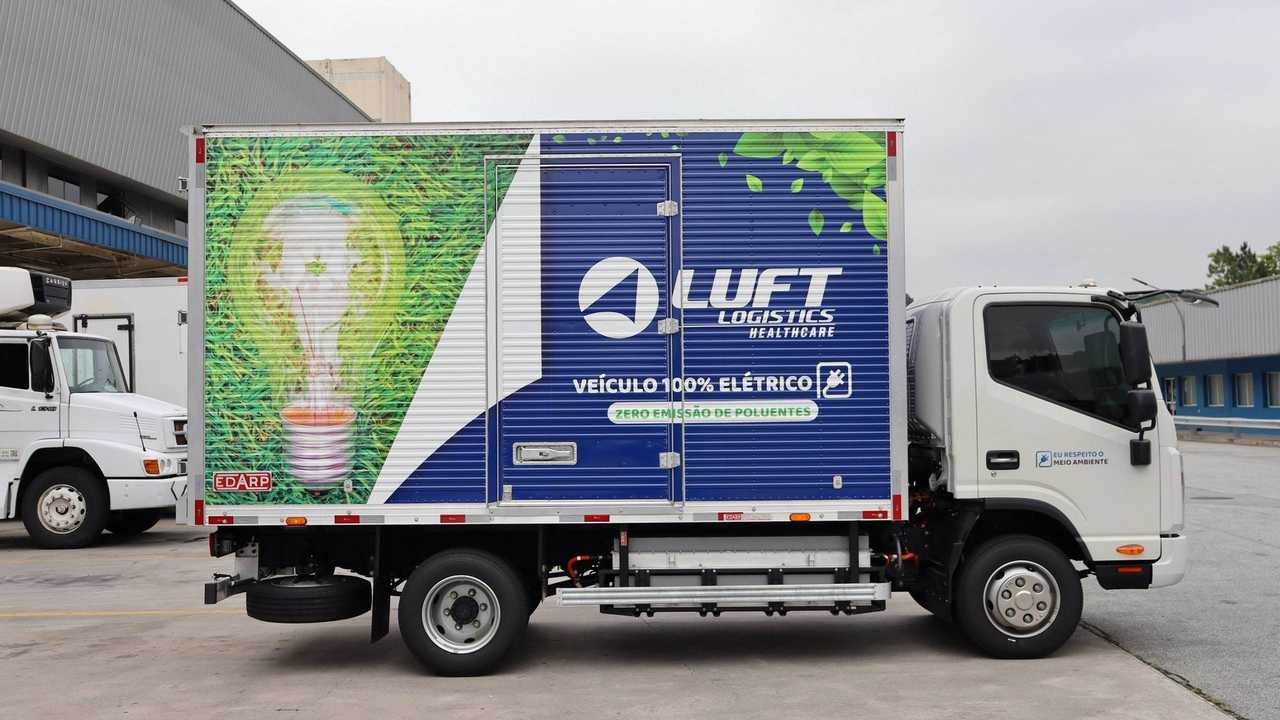
More and more companies are adopting new transportation vehicles, and the use of electric trucks is becoming a reality in the national scenario here in Brazil.
The big news is that the operator Luft Logistics has started operating its first electric truck. Measures adopted in the company’s ESG (Environmental, Social and Governance) program, which includes Luft Healthcare’s fleet – dedicated to the wellness sector – in collaboration with the French pharmaceutical and dermocosmetic laboratory Expanscience.
Get to Know How the Electric Truck Used by the Company Will Be
The first electric truck in the Luft Healthcare fleet is a JAC iEV1200T model driven by the driver Edna Leite for urban operations in São Paulo and the metropolitan area.
The electric truck is equipped with a 177 horsepower motor and 122.4 kg/min of torque, and its battery has a maximum capacity of 97 kWh, enabling it to travel 200 kilometers on a single charge. The zero-emission truck operates freely and can carry 4 tons of net cargo. According to the manufacturer, its electricity consumption is approximately R$ 25.00 per 100 km (48 kWh per 100 km).
-
Toyota Launches First 100% Electric Car in Brazil: bZ4X with 343 HP, All-Wheel Drive, 361 km Range, Priced at $419,990 BRL, Limited to 99 Units

-
Chinese SUV Achieves 24.4 km/l, Outperforms Toyota Yaris Cross in Real-World Tests with 224 hp Hybrid System, Offers 51-Liter Tank for Greater Range, and Costs Up to R$ 5,000 Less.

-
Uber Black Revamps Fleet, Drops Ten Car Models and Sets Deadline for Electric BYD Dolphin
-
Chinese Giant Uses Metal Structures and Cranes to Deliver Over 700 Electric Cars to Brazil


With no transmission, radiator, air filter, oil filter, fuel filter, exhaust system, belts, fuel injectors, or fuel injection pump, etc., the maintenance cost of Luft’s electric trucks is six times lower than that of regular trucks. Trucks with equivalent internal combustion engines.
While diesel trucks emit 30 tons of CO2 per year, the JAC iEV1200T electric truck does not emit greenhouse gases because it does not consume any type of fossil fuel. Its charging station is installed at the Luft Healthcare headquarters in Itapevi (SP).
How Does the Electric Truck Work?
An electric truck is a vehicle powered by electrical energy stored in batteries. They are responsible for traction – not by the explosion of a conventional diesel engine. It is important to note that other features require their own batteries, such as headlights. Conventional vehicles use batteries to power the starter motor. However, their durability usually lasts only a few years. On the other hand, electric truck batteries need to stand out for their durability and high capacity.
The technology necessary to achieve these goals makes electric trucks more expensive. They cost about three times more than similar diesel-powered models. But the operating costs of these vehicles have yielded significant savings: these costs have been reduced by about 65%.
Thus, it is possible to recover the investment in an average period of seven years. In addition, the truck produces less noise because it is powered by electricity. Even the vibrations are reduced – all contributing to the driver’s comfort.
Europe is at the forefront regarding electric trucks. The continent has already proven how beneficial they are by not emitting pollutants and providing a financial advantage. In Brazil, on the other hand, this market still has much to develop.





Be the first to react!