






 Portuguese
  Spanish
  5 min of reading
  0 comments


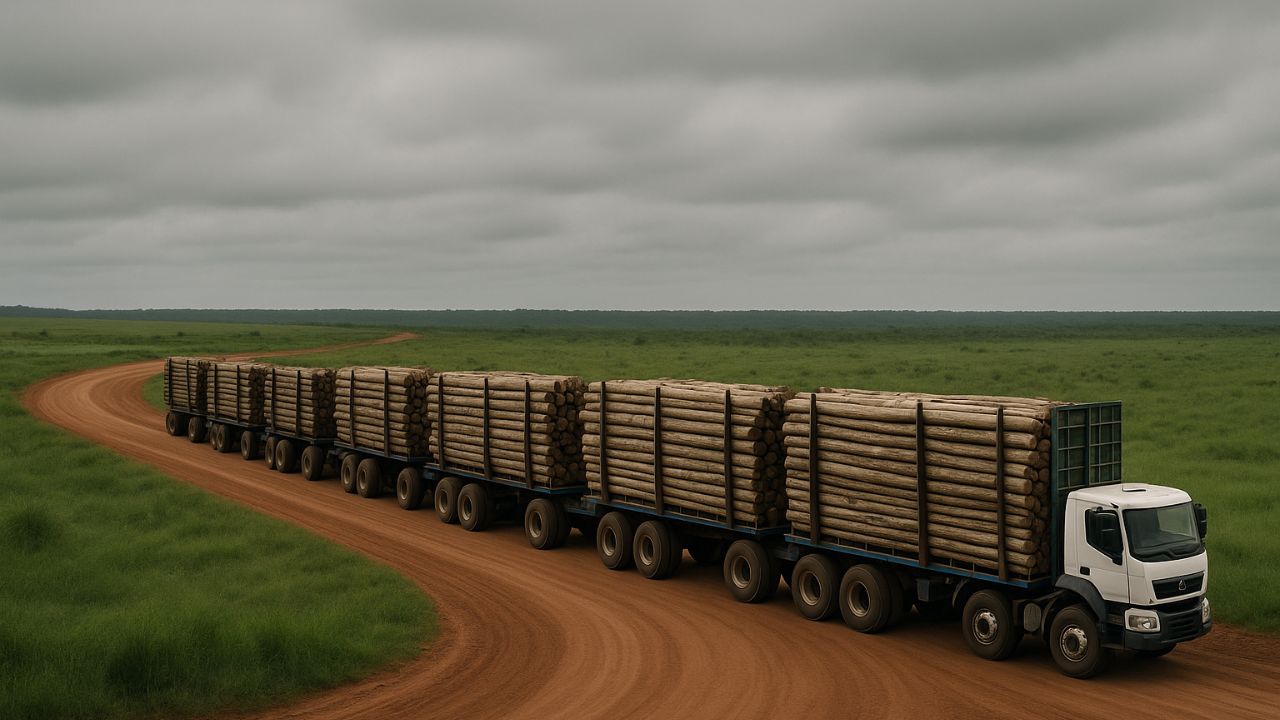
Know In Detail The Road Trains, Bitrenzons And Other Combinations Of Freight Vehicles (CVs) That Move The National Economy, Their Dimensions, Capacities, The Challenges They Face And The Routes They Dominate.
Road transport is crucial for Brazil, moving most of the goods. In this context, the largest freight vehicles in Brazil, such as road trains and bitrenzons, are essential. These Combinations of Freight Vehicles (CVs) optimize logistics in a country of continental dimensions. Understanding their characteristics, challenges, and routes is fundamental.
The Role Of Combinations Of Freight Vehicles (CVs)
The road transport of goods is the backbone of the Brazilian economy. It is responsible for moving the vast majority of goods in the country. About 62% of all cargo volume in Brazil is transported by highways. This percentage rises to 85% if we exclude minerals and fuels.
In a scenario where road transport generates over R$ 40 billion, the capacity of the vehicles is a key player. The largest heavy vehicles are titans that meet logistical demands. Configurations such as road trains and bitrenzons are crucial. They optimize the transport of large volumes over long distances. Maximizing load per vehicle reduces trips and logistics costs.
-
The Ford Ranger plug-in hybrid, the same rugged pickup that handles 800 mm of water, becomes a plug-in pickup with a flex-fuel ethanol engine and is chosen as the International Pickup of 2026.

-
New 0km electric car costs less than R$ 50,000 with an 18 hp engine, carries up to 6 people, travels over 100 km per charge, recharges in a regular outlet, and surprises by dispensing with airbags and limiting speed to 50 km/h in Mexico.
-
Pressure from residents forces a U.S. energy utility to suspend negotiations with a data center that could require 500 megawatts by 2032 and demand new lines, reinforcements in the power grid, and large infrastructure investments.

-
New Honda HooRide 125 scooter debuts in China with ADV styling, 17-inch wheels, TFT panel, Smart Key, and fuel consumption of up to 47.17 km/l, aiming to resemble an urban X-ADV with a 125 engine, CVT transmission, and an economical proposal for cities.


Detailing The Large Freight Vehicles (CVs)
Various large CVs mark the Brazilian road scenario. They are designed for maximum efficiency in transport. Road trains, bitrenzons, tritrens, and special CVs for sugarcane stand out.
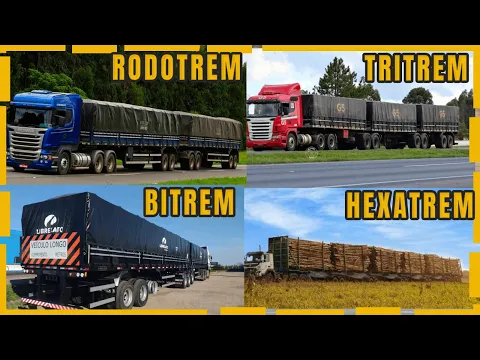
The road train is an imposing configuration and one of the largest freight vehicles. It consists of a mechanical horse pulling two semi-trailers. An intermediate vehicle, the “dolly“, connects the semi-trailers. To operate with 74 tons of Gross Combined Weight (GCW), it requires a 6×4 mechanical horse.
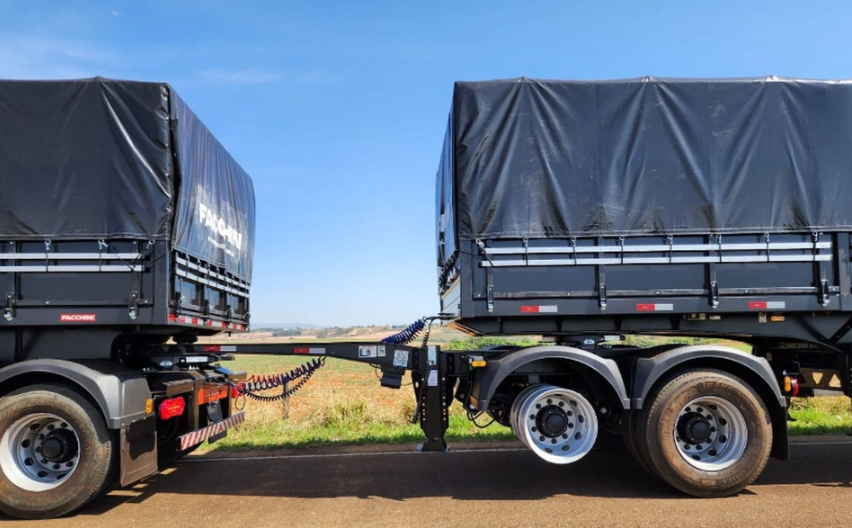
The most common configuration is the 9-axle road train. Its GCW is up to 74 tons. The length varies between 25 and 30 meters. It is used to transport grains, minerals, and steel products. Its circulation requires Special Transit Authorization (STA). Manufacturers such as Randon, Facchini, and Librelato produce road trains.
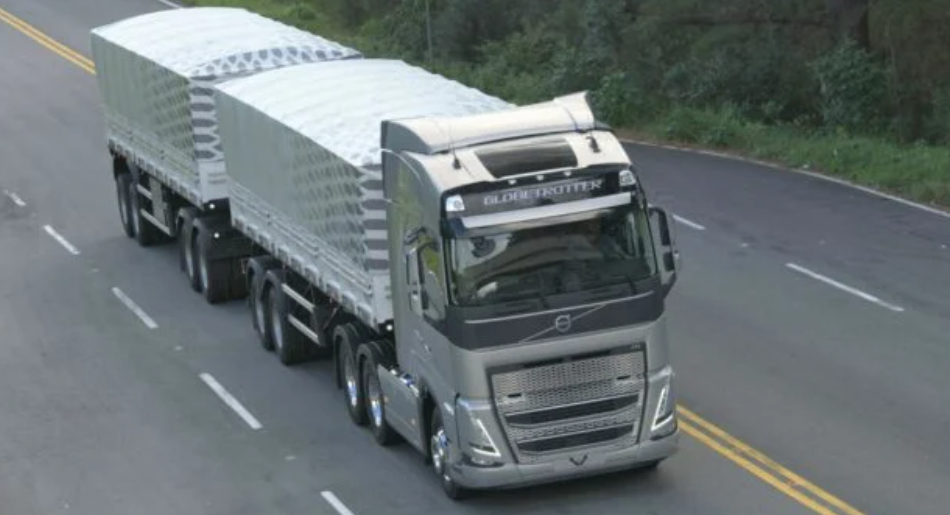
The bitrenzão, or super bitrem, is another high-capacity CV. It differs from the road train in the coupling. The first semi-trailer has a second fifth wheel to couple the second semi-trailer, dispensing with the dolly.
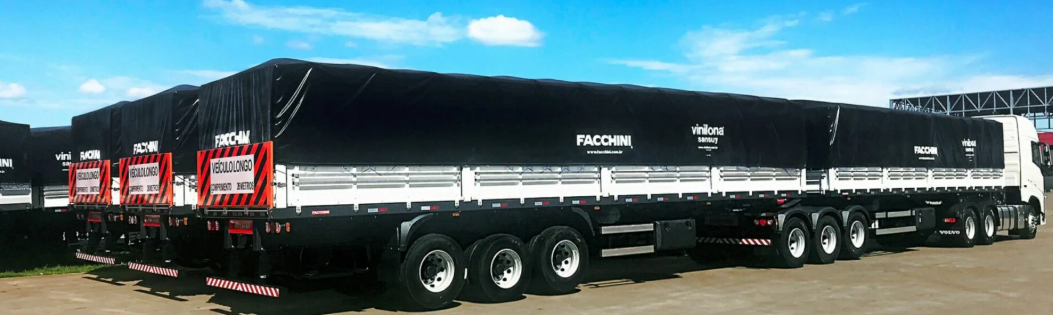
The 9-axle bitrenzão also has a GCW of up to 74 tons. Its length can reach 30 meters. The typical configuration is a 6×4 mechanical horse and two 3-axle semi-trailers. Its applications are similar to those of the road train. It also requires STA. Randon offers the 9-Axle Grain Bitrem. It is important to distinguish it from the common 7-axle bitrem, which has a GCW of up to 57 tons.
The tritren is less common, but is also one of the largest freight vehicles. It consists of a mechanical horse pulling three semi-trailers. It allows reaching 74 tons of GCW. It requires a mechanical horse with a minimum power of 6 HP per ton.
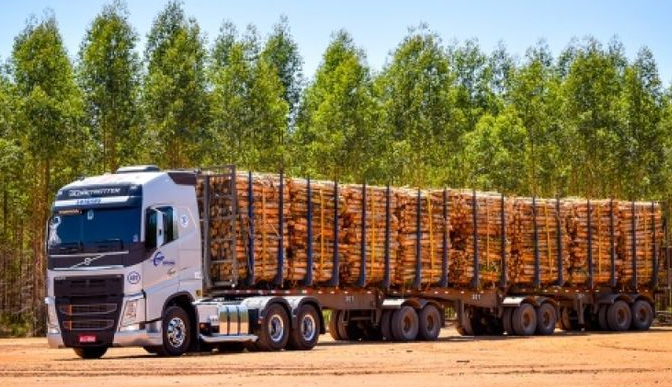
Its main application is in forestry transport, especially logs. Manufacturers such as Facchini and Randon list tritrens in their products.
A special category of CV was regulated for the sugar and alcohol sector. These are compositions with GCW between 74.1 and 91 tons. The CONTRAN Resolution No. 872/2021 establishes its requirements.
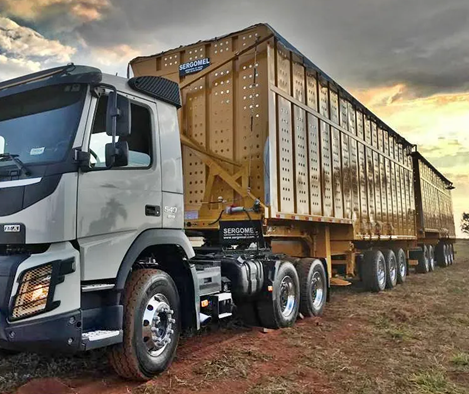
The typical configuration has 11 axles. It consists of a 6×4 tractor truck, 3-axle semi-trailer, and 5-axle trailer. The length varies between 28 and 30 meters. It requires exclusive use for sugarcane transport and strict STA.
The Journey Of The Largest Freight Vehicles In Brazil
The operation of the largest freight vehicles in Brazil faces significant obstacles. Road infrastructure and safety are critical points. Their routes concentrate on strategic logistics corridors.
The quality of the Brazilian road network is a critical factor. The 2024 CNT Highway Survey showed that a substantial part of the network is in poor conditions. Only 33% were considered “Excellent” or “Good“. Overloading worsens the wear of the pavements.
The geometric design of the roads, such as curve radii and ramps, is also a challenge. The availability of Rest and Service Points (RSPs) is vital. Safety in operation is central, with risks such as lateral overturning and rear amplification. Specialized driver training is essential. Safety and monitoring technologies, such as telemetry, help mitigate risks.
The largest freight vehicles are more present on strategic routes. The transport of grains (soy, corn) in the Midwest to ports heavily depends on these CVs. The MT-130, “Grain Route”, is an example.
The sugar and alcohol sector in the South-Central region heavily utilizes specialized CVs. About 95% of the harvested sugarcane is transported by highways to the mills. The pulp and paper industry also depends on forest bitrenzons and tritrens. In Mato Grosso do Sul, each pulp mill may receive about 300 eucalyptus bitrenzons daily. The transport of minerals also uses CVs, mainly from the mine to the transshipment point.
The Regulations And The Future Of The Road Giants

The circulation and specifications of the largest heavy freight vehicles are governed by a complex legal framework. At the same time, the sector seeks innovations for greater efficiency and sustainability.
The National Traffic Council (CONTRAN) and the National Traffic Secretariat (SENATRAN) establish the norms. The CONTRAN Resolution No. 882/2021 defines general limits on weights and dimensions. Specific resolutions, such as No. 872/2021 for sugarcane CVs, detail requirements for larger configurations.
The Special Transit Authorization (STA) is essential for CVs that exceed weight and dimensional limits. The process of obtaining the STA from the DNIT can be complex, especially for the largest freight vehicles.
Manufacturers invest in research to optimize the CVs. The use of light and resistant materials aims to reduce tare and increase payload. The aerodynamic design seeks to reduce fuel consumption.
The search for alternatives to diesel is a trend. Electric motors and natural gas/biomethane are in development. For heavy trucks, electrification faces challenges of autonomy and infrastructure. Regulation, such as CONTRAN Resolution No. 1,015/2024, is already adapting to new engines.





Be the first to react!