Portuguese
  Spanish


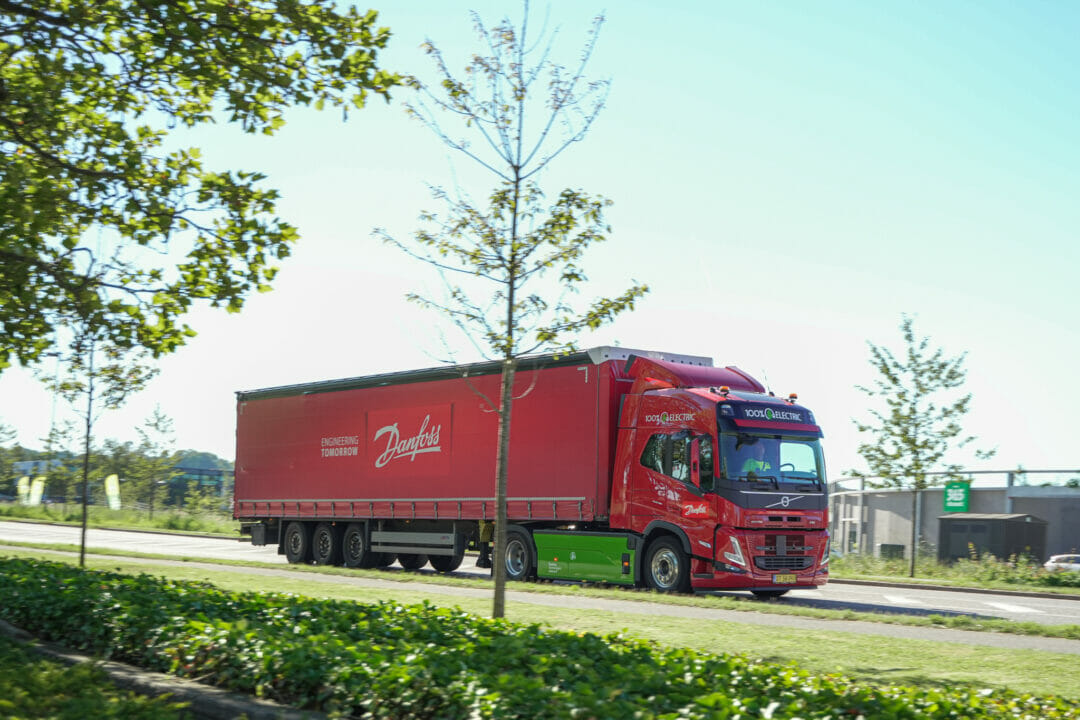

Volvo And Danfoss Announce Electric Fleet For Denmark, Reducing Emissions And Leading The Automotive Sector.
Danfoss and Volvo are breaking paradigms with the introduction of a fleet of electric trucks operating 24 hours a day to meet transportation demands in Denmark. This advancement promises not only to facilitate logistics but also to significantly reduce carbon emissions.
Combating The Impact Of Carbon
In 2020, heavy trucks emitted an impressive 1,776 Mt CO2, according to data from the International Energy Agency. Given this reality, the initiative from Volvo and Danfoss is more than necessary: it is visionary.
These electric trucks, or “e-trucks”, are not only sustainable but also efficient. One of them will operate continuously five days a week, showing the world the viability of such technology. Once the project is fully implemented, Danfoss expects a reduction in emissions of up to 15%. The benefits do not stop there, as there will also be a significant decrease in noise pollution.
-
End of an era in Brazil: beloved sedan by Brazilians is discontinued despite having a 2.0 engine with 151 hp, CVT transmission, 466-liter trunk, and up to 650 km of range.

-
New Law Proposal in Brazil Could Heavily Penalize Drivers: Dangerous Overtaking May Become a Serious Offense with Fines Increased Tenfold and a 12-Month License Suspension; Update on 2026 Progress

-
Electric Revolution: Watts W125 Motorcycle Offers 160 km Range, 90 km/h Speed, and Affordable Price Starting at $3,000
-
General Motors Replaces Over a Thousand Workers with 50 Cobots at Electric Vehicle Plant, UAW Union Criticizes Move Amid Industry’s Automation Push


Torben Christensen from Danfoss states, “The transition to electric vehicles aligns with our vision of carbon neutrality by 2030. With Volvo’s e-trucks, we accelerate our journey towards a greener future. We want to show the world that despite the challenges, electrifying transport is possible and crucial.”
Setting New Goals
Volvo’s ambitions do not end with this collaboration. The automaker aims for half of all its trucks sold to be electric by 2030. An ambitious goal, but necessary for a sustainable future.
Joakim Nilsson from Volvo reinforces, “The partnership with Danfoss is proof that collaboration between sectors can bring revolutionary innovations. It is gratifying to have Danfoss as a partner in this journey towards sustainability.”
Charging And Technology: Hands-On
The trucks will be equipped with custom superchargers, allowing for quick charging of about 15 minutes during loading and unloading operations. The company GodEnergi will provide all the charging infrastructure. Thanks to this technology, the trucks will operate continuously, needing longer charges only during the weekends.
Additionally, Danfoss Editron will provide innovative systems to ensure quick and efficient overnight charging, while Semikron Danfoss will handle the traction inverters, solidifying the collaboration between the two giants.
About Danfoss
A leader in advanced technologies, Danfoss aims for a better and more efficient tomorrow. With a rich history dating back to 1933, the company is now present in over 100 countries, developing innovative solutions for a constantly evolving world. More details can be found at Danfoss.
Source: Press à Porter Image Management – Felipe Rariz