






 Portuguese
  Spanish


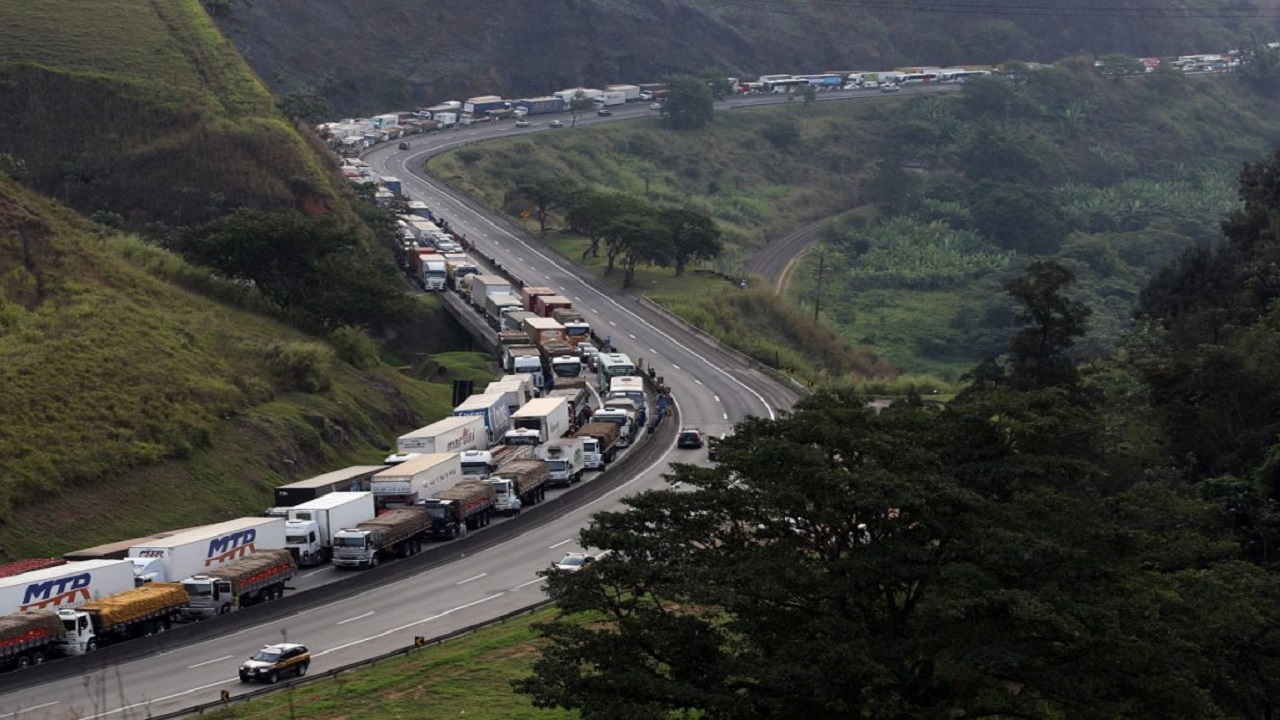

Truck Drivers Protest In Front Of Fuel Distributors And Block The Passage Of Other Trucks, Causing Fuel Stations In Joinville And Adjacent Regions To Run Out Of Gasoline
Trucks parked on the shoulders of highways and at fuel stations are increasing in Santa Catarina, due to the truck drivers’ strike that began on Tuesday (7) and the adherence has caused large concentrations in Joinville. The estimate is that 200 to 300 trucks are parked. The truck drivers are also blocking distributors, impacting the fuel stations that are already out of gasoline.
Also Read
Joinville Already Has Fuel Stations Without Gasoline


In the north of the state, problems with fuel shortages have already begun. One of the distributors in Guaramirim has been blocked by truck drivers since the morning of Wednesday (8). According to Sindipetro, some trucks managed to enter the distributors but were prevented from leaving the facility to deliver the product to the fuel stations.
The distributor itself confirmed that only 14 trucks were loaded, while the average is 60 to 70 trucks. Additionally, some fuel stations in Joinville, Rio Negrinho, and Schroeder are already out of gasoline.
-
Brazil to Issue “Panda Bonds” in China, Aiming to Raise Up to 5 Billion Yuan at Lower Interest Rates Than Dollar Debt
-
NATO Faces Internal Tensions as U.S. Pushes for Increased Defense Spending, Targeting 5% of GDP by 2035, with Warnings for Countries Near 2% Level

-
Brazil to Introduce B16 Diesel with Increased Soybean Oil Content for Trucks by 2026
-
Brazil’s July Bolsa Família Payments May Include Extra $150 and $50 for Families with Children, Pregnant Women, and Updated CadÚnico Registration


According to Pamela Alessandra Bento, manager of Sindipetro, fuel stations may experience supply issues and explains that usually stations receive trucks daily, and without the resupply of gasoline on Wednesday, they will have to operate with their stock, and if the truck drivers’ strike at the distributors continues, Joinville and adjacent regions will run out of fuel.
Only The Northern Region Is Not Experiencing Gasoline Shortages
Despite everything, according to the state unions, so far, only the northern region of the state is not experiencing problems. In Itajaí, there are no issues according to Sincombustíveis.
The executive secretary of the union, César Ferreira Junior, stated that so far none of the fuel station owners have complained about the truck drivers’ strike. It is still unclear how the situation will unfold throughout the day or the week.
As there is nothing official, it is not possible for the unions to comment, but the secretary stated that when there is an abnormality, everyone will be alerted. In the West, the situation is similar. According to the Union of Workers in Companies That Resell Fuels and Derivatives of Petroleum (Sitercomoc), there is no information about gasoline shortages due to the truck drivers’ strike in front of the distributors.
Other Unions Report Normalcy at Fuel Stations
The Union of Retail Trade of Mineral Fuels of Florianópolis (Sindópolis) claims that, for now, there are no inconveniences and that in the region, the truck drivers have been leaving the distributors normally.
The Union of Transport and Logistics Companies in the State of SC (Setcesc) states that it is monitoring the blockade points, but it is too early to say anything regarding possible fuel supply issues.
The administrative manager of the union states that he operates with a more negative outlook for the weekend release, but does not believe there will be a fuel shortage at stations in the state. He emphasized that it is difficult for there to be a supply problem, as the issue is not penalizing the population.







