Portuguese
  Spanish


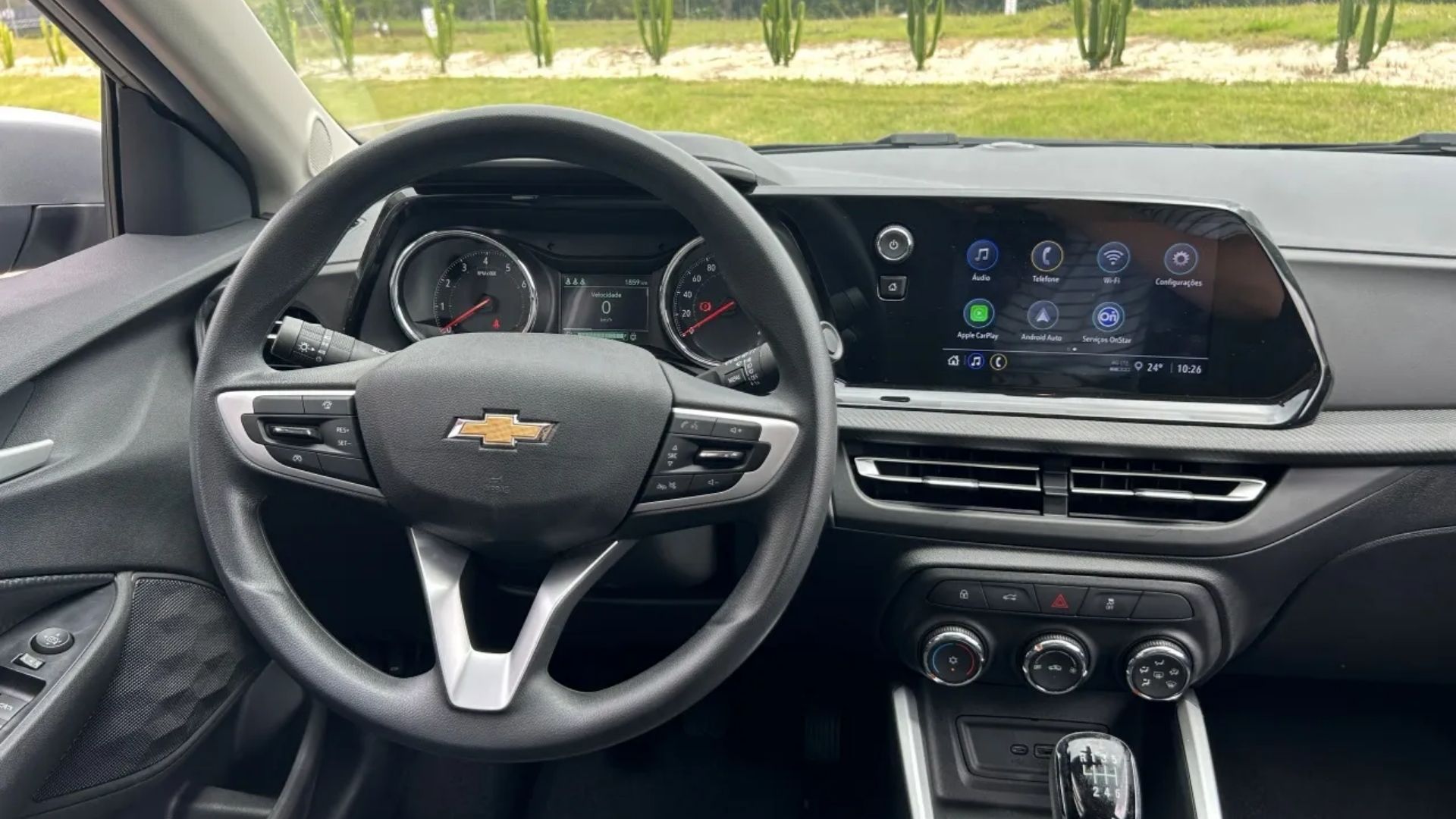


Choosing Your First Car Involves Fuel Efficiency, Maintenance, and Everyday Predictability
Balance between efficient consumption, simple mechanics, and predictable costs keeps Chevrolet’s compact at the center of decisions for those seeking their first car, assessing fuel, maintenance, and daily use with a focus on financial control.
Those looking for their first car and trying to balance budget and predictability often look beyond the purchase price.
In the entry segment, the Chevrolet Onix and Onix Plus with 1.0 naturally aspirated engine appear with consumption figures that catch attention and, above all, with a maintenance routine that is easier to plan, according to official energy efficiency data and information from the brand’s own service revisions.
-
Sales of Brazil’s Cheapest Electric Car Halted Before First Deliveries: E-Motors Suspends Emova Easy Due to Import Tax Increase and Rising Freight Costs

-
Nissan Discontinues Qashqai SUV Amid Cost-Cutting, Chinese Competition, and Product Line Review

-
BYD Patents Revolutionary System Using Computer Vision to Detect Animals Under Cars Before Starting, Preventing Tragedies

-
Study Reveals Why Cars Are More Expensive to Produce and Buy in Brazil Compared to Mexico, Highlighting Taxes, Logistics, and Industrial Costs as Key Factors.




In the case of the Onix Plus 1.0 sedan with a six-speed manual transmission, the consumption reaches 17.4 km/l on the highway with gasoline, according to the table from the Brazilian Vehicle Labeling Program of Inmetro.
In urban use, the same model records 13.5 km/l with gasoline, while the figures with ethanol are 9.3 km/l in the city and 12.0 km/l on the highway.
The Onix 1.0 manual hatch also presents similar figures. According to Inmetro, it achieves 16.9 km/l on the highway with gasoline and 13.8 km/l in the city, as well as 9.6 km/l in urban cycles and 11.9 km/l on highways when fueled with ethanol.
Fuel Consumption of the Chevrolet Onix and Differences Between Hatch and Sedan

The 17.4 km/l frequently mentioned in comparisons is associated with the Onix Plus 1.0 aspirated, measured within the official Inmetro standard.
On the other hand, the Onix hatch shows a slightly lower average on the highway, marking 16.9 km/l with gasoline, a small but relevant difference for those covering long distances frequently.
Even so, the data indicate a common behavior among combustion cars.
Urban consumption tends to be lower than highway consumption, influenced by heavy traffic, short trips, and constant use of air conditioning.
In contrast, trips at constant speed usually favor higher averages.
1.0 Naturally Aspirated Engine of the Onix and Power Figures

In addition to fuel consumption, the simple mechanics of the 1.0 naturally aspirated engine helps explain the model’s appeal.
In the flex configuration, the engine delivers 82 hp with ethanol and 78 hp with gasoline, with torque of 10.6 kgfm and 9.6 kgfm, respectively.
This set works in partnership with a six-speed manual transmission.
The combination is usually associated with predictable driving and more controlled maintenance costs, without relying on more complex technical solutions.
Maintenance Costs and Predictability as Decisive Factors
When it comes to keeping the car within budget, fuel represents only part of the equation.
Periodic revisions, wear parts, and labor also contribute to total expenses over time, especially for those still organizing their financial lives.
In this context, Chevrolet offers an official service for checking revisions.

The tool allows users to view included items and schedule services, with the information that replacement parts and labor for the contracted revision are already included in the disclosed value.
If additional items arise after the checklist, the estimate is provided before execution, helping to reduce uncertainties.
Another consideration is the availability of parts and the service structure.
The manufacturer highlights the work of authorized network technicians and the availability of genuine parts, factors that contribute to standardizing repairs and minimizing vehicle downtime.
Comparison with Peugeot and the Logic Behind the Choice
The term “Peugeot substitute” frequently arises in market conversations, but it does not always indicate a direct swap between models.
In many cases, it reflects the profile of consumers who previously considered compacts from other brands and now prioritize high-volume cars.
In this context, a wide network and more predictable daily costs gain relevance.


Onix and Onix Plus fit this profile by combining three central points.
Fuel certified by Inmetro, a well-known aspirated engine in the segment, and a revision structure that the manufacturer itself communicates as scheduled and consultable.
Nonetheless, the purchase decision is not limited to average consumption figures. Experts often recommend analyzing the maintenance history, as well as the condition of tires and brakes.
Insurance and tax costs also vary according to the driver profile and region.
For the first car, what usually strains the budget are the recurring expenses that were not in the planning.
Given this scenario, when evaluating an entry-level model, what matters more to you: reducing monthly fuel costs or having more predictable maintenance over time?