






 Portuguese
  Spanish


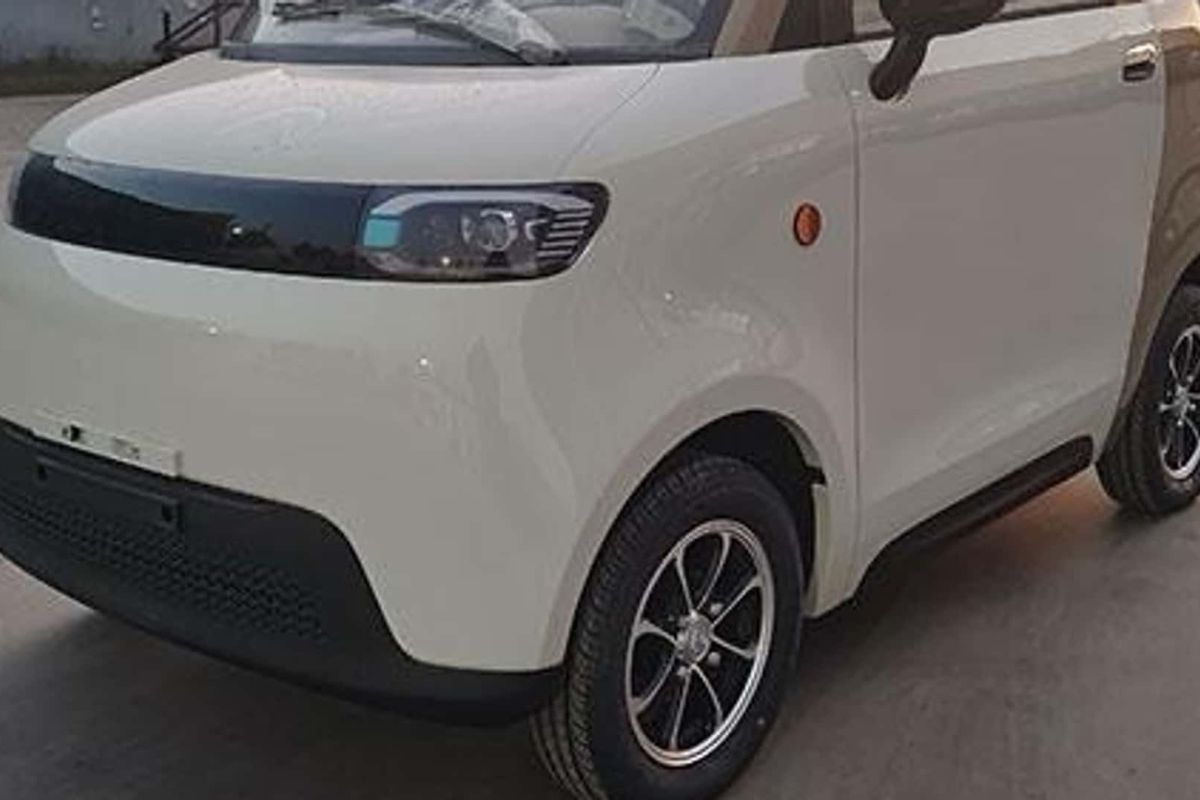


With an estimated price between R$ 47,000 and R$ 49,000, the Chinese electric car Aima A05 arrives in 2026 as a compact electric minicar, an urban electric car focused on short trips and a cheap electric vehicle for up to three people with a range of sixty kilometers per charge for daily use in the cities.
In November 2025, the manufacturer Aima confirmed that its Chinese electric car A05 will be launched in Brazil starting in March 2026, with an estimated price between R$ 47,000 and R$ 49,000. If the price is maintained, the model should rank among the cheapest electric vehicles in the country, even more accessible than some premium scooters already sold in the market.
The strategy is to position the Chinese electric car as a closed and air-conditioned alternative for short urban trips, targeting those who today rely on motorcycles, tricycles, and small electrics to get to work, study, or run daily errands. With a top speed of 45 kilometers per hour and a claimed range of 55 to 60 kilometers per charge, the A05 tries to carve out a niche between cheap individual transport and traditional compact cars.
What Is Already Known About the Chinese Electric Car Aima A05

According to Aima itself, the A05 arrives in Brazil with a proposal similar to that of the Citroën Ami in the European market.
-
Volkswagen to Cut Production by 1 Million Cars by 2030, Reducing Jobs and Platforms, Focusing on More Profitable Models

-
Toyota Launches First 100% Electric Car in Brazil: bZ4X with 343 HP, All-Wheel Drive, 361 km Range, Priced at $419,990 BRL, Limited to 99 Units

-
Chinese SUV Achieves 24.4 km/l, Outperforms Toyota Yaris Cross in Real-World Tests with 224 hp Hybrid System, Offers 51-Liter Tank for Greater Range, and Costs Up to R$ 5,000 Less.
-
Uber Black Revamps Fleet, Drops Ten Car Models and Sets Deadline for Electric BYD Dolphin


It is a Chinese electric car of reduced dimensions, designed specifically for urban areas and short trips, focusing on practicality and mechanical simplicity.
The model will be sold available for immediate delivery at launch, according to the brand, with an estimated price between R$ 47,000 and R$ 49,000.
The intention is to capture consumers looking for more comfort and protection than a motorcycle or electric scooter, but who still do not want to take on the costs of a conventional combustion car or a larger electric vehicle.
Aima has been operating in Brazil for about eight years with bicycles, scooters, and electric motorcycles and is now trying to take a step further by bringing a Chinese electric car to the urban microcar segment.
The company bets on the pent-up demand for cheaper electric vehicles, in contrast to the high average ticket of most models circulating in the country.
Dimensions, Capacity, and Technical Data of the A05
The A05 is an extremely compact minicar.
In the specifications released, the Chinese electric car has 2.61 meters in length, 1.40 meters in width, and 1.64 meters in height, weighing 825 kilograms including the battery.
The declared capacity is three occupants, with a payload of up to 400 kilograms, a volume that already considers passengers and potential light luggage.
Among the main technical data reported by Aima are:
• Asynchronous electric motor of 3.2 kilowatts, equivalent to about 4.3 horsepower
• Lithium battery of 72 volts and 100 amp-hour, with about 7 kilowatt-hours of capacity
• Maximum speed limited to 45 kilometers per hour
• Declared range between 55 and 60 kilometers per charge
• Estimated charging time between eight and ten hours on a conventional outlet
• Tires 135 70 R12, compatible with the reduced size of the vehicle
In the suspension, the Chinese electric car uses a MacPherson-type scheme in the front and trailing arm in the rear, a simple and well-known solution in the industry.
The setup reinforces its urban vocation, with no promises of performance on roads or fast-flowing thoroughfares.
Practical Use and Speed Limitations in Cities
The main open question is not in the technical sheet, but in regulatory framing.
With a maximum speed of 45 kilometers per hour, the A05 still does not have confirmation of approval to circulate on all Brazilian roads.
This limitation may place the Chinese electric car in a sort of gray area of traffic.
In practice, use may be restricted to neighborhoods, urban centers, and low-speed roads, such as some central areas, residential zones, or gated communities.
On avenues where the average flow comfortably exceeds 50 or 60 kilometers per hour, the minicar tends to become a traffic bottleneck, impacting safety and flow.
The situation resembles that of European electric minicars, which in several countries have specific circulation rules, limits on authorized roads, and even differentiated licensing requirements.
In the Brazilian case, it will still be necessary to observe how traffic authorities and manufacturers will address the framing of the Chinese electric car into existing categories or if there will be a need for any regulatory adjustment.
Target Audience and Potential Impact on the Urban Market
Based on the price package, dimensions, and performance, the A05 targets a well-defined audience.
Aima cites consumers who make short and daily trips, interested in practicality and low operational cost. This includes young people looking for their first vehicle to families intending to keep a larger car for trips and use the Chinese electric car as an auxiliary urban solution.
With a price below R$ 50,000 and charging cost on a common outlet, the A05 has the potential to compete directly with motorcycles and higher-displacement scooters, especially for those concerned with climate protection and basic safety regarding the external environment.
The enclosed cabin, albeit simple, offers more physical barrier than a motorcycle on rainy days, cold, or extreme heat.
At the same time, the Chinese electric car does not compete on equal footing with combustion compact hatchbacks, which deliver higher speeds, greater range, and more interior space.
The direct impact tends to occur in niches: light delivery fleets in very dense areas, small neighborhood businesses, urban services in designated perimeters, and users who drive only a few kilometers daily on predictable routes.
What Could Decide the Future of the Aima A05 in Brazil
The commercial performance of the A05 depends on three main factors.
The first is the full and clear approval for circulation, which will define whether the Chinese electric car can access most urban roads or will be confined to specific sections.
Any stricter restriction significantly reduces the potential audience.
The second is the perception of cost-benefit relative to other mobility solutions. Although the price is lower than other electric vehicles, R$ 47,000 to R$ 49,000 is not trivial for the average Brazilian income.
The model will have to convince that the combination of cheap charging, easy maintenance, and comfort superior to that of a motorcycle justifies the investment.
The third factor is Aima’s after-sales structure, which until now has focused on two-wheeled electric vehicles.
For a Chinese electric car to gain traction, it will be necessary to demonstrate a robust network, availability of parts, and capacity to provide service in the event of mechanical or electrical failures, especially outside of large centers.
If the approval favors use in broad urban areas and the price remains in the announced range, do you think a Chinese electric car limited to 45 kilometers per hour and sixty kilometers of range could really replace motorcycles and scooters in daily commuting in large Brazilian cities?







Aproveita pra limitar o trânsito nas cidades a 45km/h! Vai ser ótimo pra diminuir acidentes. Quem trava trânsito é excesso de carros nas ruas e desobediência ao código.
Não. Por se tratar de um carro. Não tem como andar nos corredores das motos e ou a Faixa Azul. Além da velocidade máxima ser baixa. Fará com que os donos sempre andem no máximo que o carro pode andar. Não creio que seja viável tecnicamente falando. Só se for para rodar em condomínios fechados com limitação da velocidade máxima. Para usar aqui em Sampa. Não seria uma opção razoável. Iria travar o tráfego. Devido a limitação de velocidade máxima.