Portuguese
  Spanish



Cars Forgotten by Honda, Nissan, Kia, Peugeot and Renault Offer Good Performance, Comfort, and Technology, But Are Ignored by Consumers Amidst Strong Competition.
When it comes to buying a new car, many Brazilians end up choosing well-established models, repeating market patterns and leaving competitive options aside. This behavior helps explain why some forgotten cars, despite being well-equipped and technically sound, sell poorly in their categories.
This phenomenon has become evident across different segments, from compact hatches to SUVs, revealing that quality does not always translate into commercial success.
What these cars have in common is not a lack of attributes, but rather difficulty in standing out in a market dominated by strong names, trends, and emotional decisions.
-
End of an era in Brazil: beloved sedan by Brazilians is discontinued despite having a 2.0 engine with 151 hp, CVT transmission, 466-liter trunk, and up to 650 km of range.

-
New Law Proposal in Brazil Could Heavily Penalize Drivers: Dangerous Overtaking May Become a Serious Offense with Fines Increased Tenfold and a 12-Month License Suspension; Update on 2026 Progress

-
Electric Revolution: Watts W125 Motorcycle Offers 160 km Range, 90 km/h Speed, and Affordable Price Starting at $3,000
-
General Motors Replaces Over a Thousand Workers with 50 Cobots at Electric Vehicle Plant, UAW Union Criticizes Move Amid Industry’s Automation Push



Why Do Forgotten Cars Continue to Be Outside Best-Seller Lists?
Forgotten cars often suffer from factors that go beyond just their technical specifications.
Perceived price, brand strength, positioning, and even the model’s design directly influence the purchasing decision.
Additionally, the rise of SUVs has changed consumer behavior.
Many buyers have migrated to this type of vehicle even when hatches and sedans offer more rationality for daily use.
In this scenario, some good models end up invisible in dealerships.
5 Cars Forgotten by Brazilians
Honda City Hatch: Efficiency Without Emotional Appeal
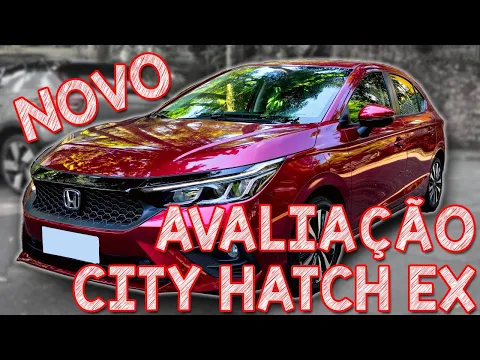
Among the forgotten cars, the Honda City hatch is a clear example.
The model features a 1.5 flex engine with 126 hp paired with a CVT transmission, a combination known for driving comfort and mechanical reliability.
Even with a robust safety package, including six airbags and driver assistance systems, the hatch fails to attract the same interest as cheaper rivals or compact SUVs.
For many consumers, the asking price weighs more than the quality of the offering. Prices for the Honda City range from R$ 117,500 to R$ 149,800.

Nissan Versa: Plenty of Space That Few Value
The Nissan Versa takes a different path among the forgotten cars.
The sedan stands out for its roomy interior and generous 466-liter trunk, features that make a difference for family use.
Additionally, the model offers uncommon items in the segment, such as a 360° camera view and Zero Gravity seats designed to reduce fatigue on long trips.
Still, the Nissan Versa ends up losing ground to competitors who invest more in visual appeal and aggressive marketing.
The Nissan Versa is offered in price ranges that start from approximately R$ 114,290 to R$ 138,645.
Kia Stonic: Technology Ahead of Its Time
In the world of compact SUVs, the Kia Stonic draws attention for a detail that many overlook: the 48V semi-hybrid system.
This technology assists the combustion engine, improving fuel efficiency and reducing emissions.
With 120 hp and a good level of equipment, the Kia Stonic delivers a balanced package.
However, it faces more popular competitors with greater presence on the streets.
This easily places it on the list of forgotten cars, despite its technical differential.
The Kia Stonic is priced around R$ 154,990.

Peugeot 2008: Style That Does Not Convert Into Sales
The Peugeot 2008 bets on striking design and modern technology.
Equipped with a 1.0 turbo flex engine with 130 hp and a semi-hybrid system, the SUV offers good performance and efficiency.
Even so, its sales in 2025 were below those of direct rivals, showing that style and innovation do not always guarantee a leading position in the market.
The 2008 ends up being remembered more for its looks than for the consistent mechanical package it offers.
The 2025 Peugeot 2008 starts at around R$ 119,990 for base versions, reaching around R$ 149,990.
Renault Kardian: Promise Still Under Construction
Closing the list of forgotten cars, the Renault Kardian arrived with the mission of competing in the entry-level SUV segment.
With a 1.0 turbo flex engine of up to 125 hp and an option for a dual-clutch automated transmission, the model presents a modern proposal.
Items such as six airbags, LED headlights, and a multimedia center help to compose the package.
Nonetheless, the Kardian is still seeking to establish its image against already established competitors.
Prices for the Kardian start at around R$ 108,890 and can increase with trim upgrades.
What Do These Forgotten Cars Reveal About the Brazilian Market?
The presence of these forgotten cars shows that the Brazilian automotive market is guided less by logic and more by perception.
Good products can remain on the margins when they do not align with the immediate desires of consumers.
For those who research carefully and look beyond sales rankings, these models can represent smart choices, offering comfort, technology, and performance without adhering to the obvious.
In a scenario of high prices and intense competition, looking at forgotten cars may just be the differentiator at the time of purchase.
With information from Auto+