Portuguese
  Spanish


Chloe And Matthieu Witvoet Dived Into Cape Verde Heading To The Caribbean On A Three-Month Crossing With Five Million Strokes, Uniting Courage, Resilience, And A Global Message About Ocean Conservation
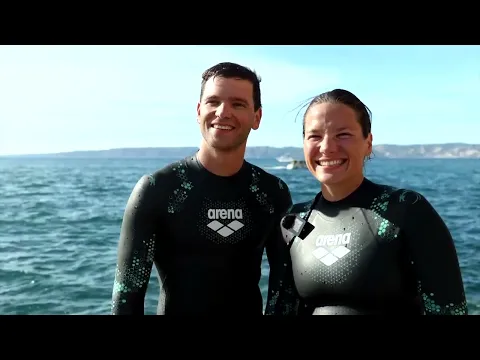
Last Friday, the French swimming couple Chloe and Matthieu Witvoet, aged 29 and 31, began one of the boldest crossings in recent history. They entered the sea from the city of Mindelo, Cape Verde, aiming to swim across the Atlantic Ocean from one side to the other.
Yes, the goal is exactly that: to cross the ocean using only strokes.
Five days into the journey, the couple remains steadfast in the challenge, which is expected to last around three months until they reach the island of Guadeloupe in the Caribbean.
-
Son of Poor Farmers Fled Home Four Times Seeking Work, Founded Hyundai, and Transformed It into a Global Industrial Giant in Over 190 Countries

-
13-Year-Old Raises Funds to Build Well, Transforming Lives in Cambodian Community Lacking Clean Water

-
Man with Metal Detector Finds Medieval Silver Seal in England, Uncovers 2,000-Year-Old Roman Gem with ‘Richard’s Secret’

-
Thailand Converts 8 Tons of PET Bottles into 3,500 School Backpacks, Showcasing Circular Economy with Over 40 Factories Involved





The final destination is almost 4,000 kilometers from the starting point, and every meter covered represents a mix of overcoming obstacles and resilience.
If they succeed, Chloe and Matthieu will inscribe their names in history.
Two Records And One Crossing
If they complete the route, the French couple will achieve two feats at once: the longest relay swim ever recorded and the longest female crossing in open water.
The duo did not arrive unprepared. Since 2019, when they crossed the Strait of Gibraltar between Spain and Morocco, they have been accumulating experiences in long-distance swimming.
In 2020, they swam the entire Seine River in France. Two years later, they swam from Marseille to Barcelona.
“What we do is ultra-marathon swimming,” Chloe explained, just before diving into the Atlantic wearing a special suit that protects her from the cold and from contact with live algae and other marine life.
The Relay In The Middle Of The Ocean
During the crossing, the two have the constant support of a boat that accompanies them. It is there that they take breaks for meals and rest.
The scheme is simple but exhausting: when one swimmer leaves the water, the other enters.
At night, the boat drifts, moving only with the currents. Also on board are four crew members, including a nurse to handle any emergencies.
It is a relay of courage, discipline, and a lot of physical endurance.

Millions Of Strokes To The Caribbean
The estimate is that the couple needs to make about five million strokes to complete the course. Each swims in six-hour shifts per day, facing winds, currents, and the unpredictability of the ocean.
But Chloe and Matthieu assure that they are ready. “Last European summer, we swam between four and five hours a day. It’s more or less what we will do now,” Chloe shared on social media.
She also wants to reach a personal milestone: to be the record-holder for the longest female crossing ever made in open water.
More Than Records, A Message
Despite their sporting ambition, the couple emphasizes that the true goal of the expedition goes beyond numbers.
They want to draw attention to the importance of ocean preservation and deliver an educational message to children.
The project gained momentum because it takes place just days before COP 30, the United Nations Conference on Climate Change, which will be held in Belém, Pará. Among the event’s themes is precisely ocean conservation.
More than 60,000 students have already received educational kits on biodiversity and ocean pollution. The proposal is for them to discuss these topics in classrooms while following, in real-time, Chloe and Matthieu’s progress across the Atlantic.
“If we do not complete the crossing but manage to raise awareness among children, it will have been worth it,” said Chloe before diving towards the Caribbean.
Crossings That Defy Logic
Even if they succeed, the French will not be the first to swim across the Atlantic. In 1998, fellow Frenchman Benoit Lecomte completed the crossing from the United States to France in 72 days, with the aid of a support boat — a sporting landmark at the time.
However, the Witvoet crossing carries something symbolic. It is a journey that combines physical endurance, environmental purpose, and educational engagement.
Curious Adventures Across The Atlantic
The ocean has already been the backdrop for similarly unusual feats. One of the most curious occurred in 2000 when two young Italians decided to cross from the Canary Islands to Martinique in the Caribbean using cars converted into rafts.
They called themselves “autonavigators” and spent weeks adrift, facing discomfort and moments of sheer panic. Against all odds, they reached their destination and made headlines worldwide.
Strokes For A Better Planet
The crossing by Chloe and Matthieu Witvoet is still ongoing, but it has already sparked admiration and curiosity.
Each stroke is followed by thousands of people around the world, inspired by the couple’s courage and message.
Because, more than a quest for records, what really drives them is the idea that every dive can create a wave — not just in the sea, but also in the consciousness of those who believe there is still time to take care of the planet.
With information from Nossa.uol.