






 Portuguese
  Spanish


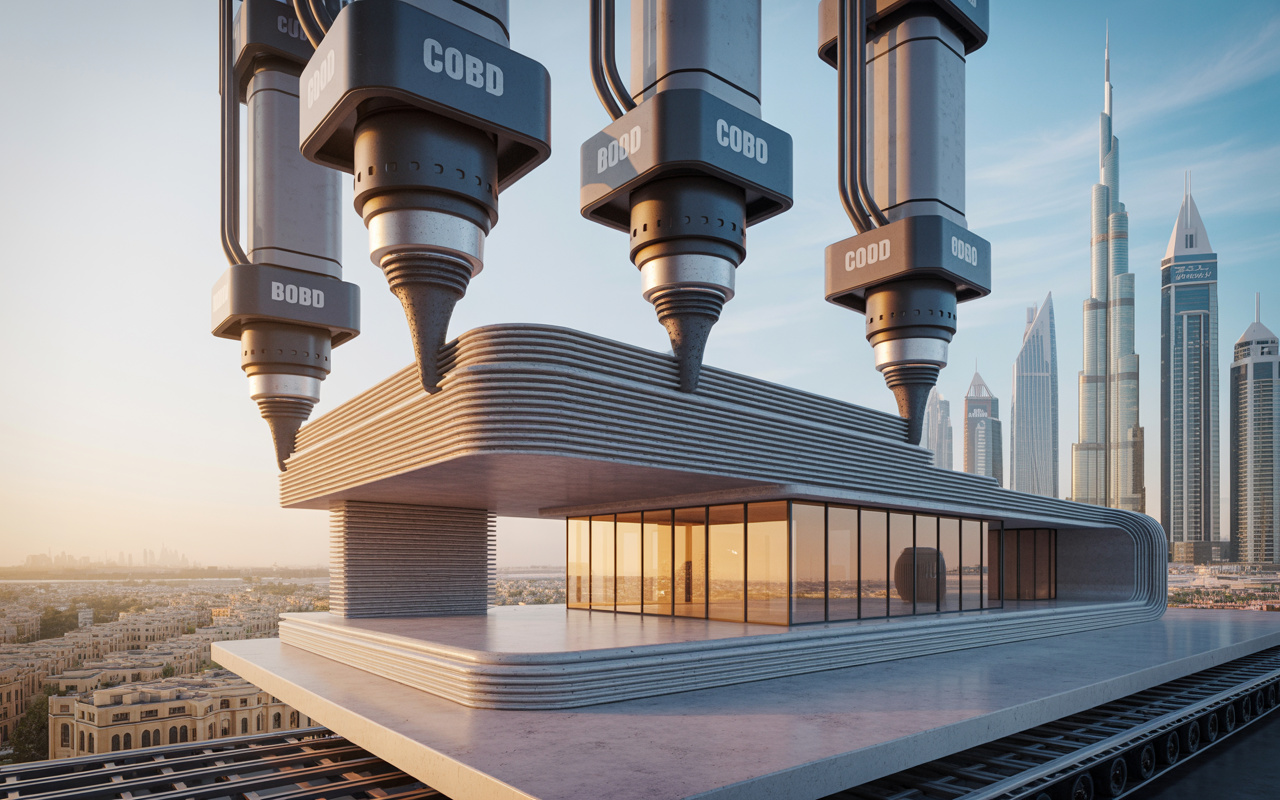

3D Printing Robots Erect Livable Houses in Up to 48 Hours with Special Concrete and the COBOD BOD2 System, Changing Construction in Europe and Dubai.
When it comes to “3D printing,” most people still imagine small plastic parts, medical prosthetics, or components manufactured in laboratories. However, according to reports from BBC, The Guardian, and official statements from COBOD International — a Danish company that is a global leader in 3D printing for construction — this technology is already being scaled for livable buildings in Europe, the Middle East, and North America. The transition has shifted from being an experiment to becoming a recognized sector: houses, schools, administrative buildings, corporate headquarters, and even entire neighborhoods are being planned with this approach.
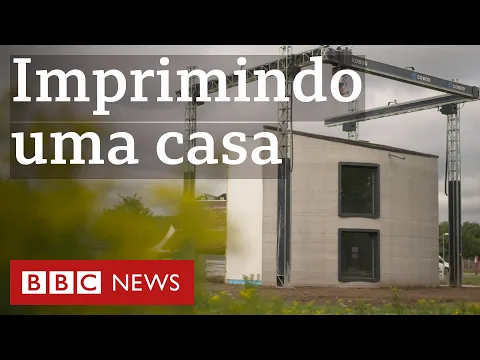
This technological leap did not happen in a vacuum. It is the result of a rare combination: large robotic arms, specially formulated concrete, precision software, and adapted construction logistics, all orchestrated by COBOD’s BOD2 system, which centralized the concept of “structure printing” worldwide. Starting in 2018, when the first livable projects were unveiled, record times began to emerge: walls and internal divisions raised in up to 48 hours, without wooden forms, metal bracing, and with waste close to zero.
How 3D Printing Works for a House
Instead of a worker shaping walls brick by brick, a robotic arm moves around the perimeter of the site following a BIM/CAD digital file. This robot has an extruder nozzle connected to a special concrete mixer. The material — a type of high thixotropic extrudable concrete — comes out in layers, solidifying quickly and allowing new layers to be added without collapsing.
-
Couple Transforms Suffolk’s Last 1891 Windmill into Luxurious Four-Story Home with Zinc Observation Room in England

-
Father and Son Build 97 cm Thick Circular Stone House in Brazil, Inspired by Scottish Architecture, Creating a New Agrotourism Hub
-
Sweden Removes 200-Ton Concrete Gallery to Restore Pjältån River’s Natural Flow in Europe’s Largest Aquatic Restoration Project

-
Key Infrastructure Projects for Brazil’s Next President: Expanding Railways to Cut Transport Costs, Reduce Truck Traffic, Create Jobs, and Boost Industries Nationwide


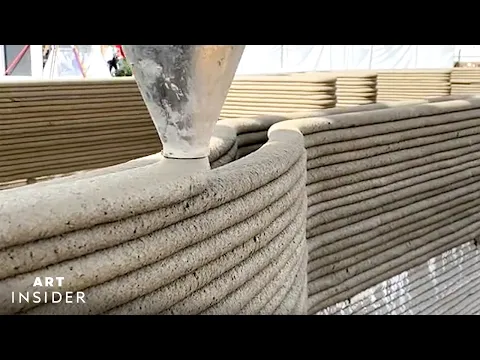

This eliminates forms, conventional pillars, and intermediate steps. The walls form internal cavities that can be filled with thermal insulation, reinforcements, or passage of conduits. What previously required a large crew, saws, scaffolding, hammers, forms, and significant waste, now requires software + logistics + technical supervision.
What is BOD2 and Why Did It Become a Global Benchmark
The BOD2 is COBOD International’s 3D printing system, based in Copenhagen. It consists of metal tracks, an extruder arm, software, and control panels. Its function is to transform digital architectural models into real walls. There are three points that explain why it became the standard:
- Scale — it can print single-story houses, multi-story buildings, and administrative buildings;
- Speed — up to 10 tons of concrete printed per hour, depending on the project;
- Dual Industry — works with both reduced CO2 (alternative concretes) and traditional compositions.
This system has not been restricted to Denmark. It has been acquired by construction companies in Germany, Belgium, Austria, Saudi Arabia, United Arab Emirates (Dubai), India, and the USA. What was once a “prototype” has become a exported product.
Where is it Working in Practice
Germany – PERI Group (2019–2024)
PERI, one of the largest formwork and engineering companies in Europe, acquired a stake in COBOD and began printing houses in Rhineland-Palatinate and Bavaria. According to company statements, livable two-story projects were printed with BOD2 and approved in conjunction with local authorities. CO₂ emissions were reduced, wood consumption for forms drastically fell, and construction time was shortened.
Dubai – Offices and Administrative Buildings (2020–2023)
Dubai has become a global showcase. The government has set goals for 25% of new buildings to have printed components by 2030, encouraging companies to use 3D printing. Entire administrative buildings have been printed with BOD2, showcasing the logistical and urban side of this technology: reducing waste, speeding up schedules, and enabling geometries that were previously unfeasible with traditional molds.
Denmark – Houses and Industrial Demonstrators (Since 2018)
In Denmark, COBOD has worked with universities, construction companies, and technology institutes to standardize the use of extrudable concretes and validate strength, durability, and structural analysis. This country has been the laboratory that generated international credibility.
Construction Speed: What are the “48 Hours”
When it is said that a house is “printed in 48 hours,” it does not mean complete construction, but rather that structural walls + internal partitions can be executed within that timeframe, something impossible to reproduce in traditional masonry with the same level of precision. In practice, the schedule tends to follow this logic:
- 0h–48h: printing of external and internal walls
- After 48h: installation of windows, doors, slab/roof, plumbing, electrical, finishes, and facades
In other words, the gain is in structure, precisely the slowest stage of conventional construction. In terms of impact, this changes:
- Wood consumption (almost zero forms)
- Construction time (weeks condensed into days)
- Cutting waste (there is no saw or manual shaping)
- Dimensional precision (comes from software, not from the mason)
- Work safety (less height, less physical effort)
What Type of Concrete is Used
Regular concrete cannot be used pure, as it flows and does not hold its shape after extrusion. For 3D printing, the material needs to have high thixotropy (keeps shape after extrusion), accelerated curing, good pumping, and controlled granulation.
Several European universities and manufacturers are working on formulations with mineral additions, supplementary cementitious materials (SCMs), and water-reducing additives, resulting in concrete that sets quickly, allowing successive layers to be added without collapsing.
There are also studies using fly ash, steel slags, and limestone, reducing the CO₂ footprint and making 3D construction compatible with European climate policies.
Regulatory Issues: The Invisible Obstacle
Every innovation in construction ultimately encounters the same dilemma: technical standards + occupancy permits + insurance + urban codes. In Europe, the process has advanced because countries already have:
- Structural Eurocodes
- Material certification
- Standardization of thermal analysis
- Fire safety standards
This has allowed printed projects to receive true occupancy permits, something important for distinguishing “proof of concept” from “real construction.” Dubai, on the other hand, adopted an inverse approach: it regulated first to then accelerate the market, providing predictability to companies.
Why This Technology Generates So Many Debates in the Sector
There are three main reasons:
- Labor and Workforce Chain: 3D printing reduces carpentry, bracing, and masonry, changing the distribution of jobs to areas of software, operation, and logistics.
- Geometry and Customization: A printed house can have curved walls, niches, variable thicknesses, and internal passages, something difficult and expensive in traditional construction.
- Actual Environmental Impact: If 3D printing utilizes concretes with SCMs, the environmental gain is significant. If it uses regular concrete, the environmental advantage falls to waste reduction and wood reduction, but it is still better than conventional methods in dense urban building sites.
Are We Facing the Beginning of “Industrial Construction”?
It is too early to say that traditional houses will disappear. However, the industrial logic is already in place:
- Robots print walls
- Operators install frames
- Technicians carry out electrical and plumbing work
- Architects export the digital project
- Deliveries occur in weeks, not months
This is exactly what attracts real estate companies and governments interested in affordable housing, temporary units, modular schools, and administrative warehouses. Dubai has public adoption goals. Germany has completed works. Denmark exports technology. And the USA is already using COBOD for construction in states like Texas and California. What seemed “exotic” in 2016 is part of a strategic market in 2026.


