






 Portuguese
  Spanish
  3 min of reading
  0 comments


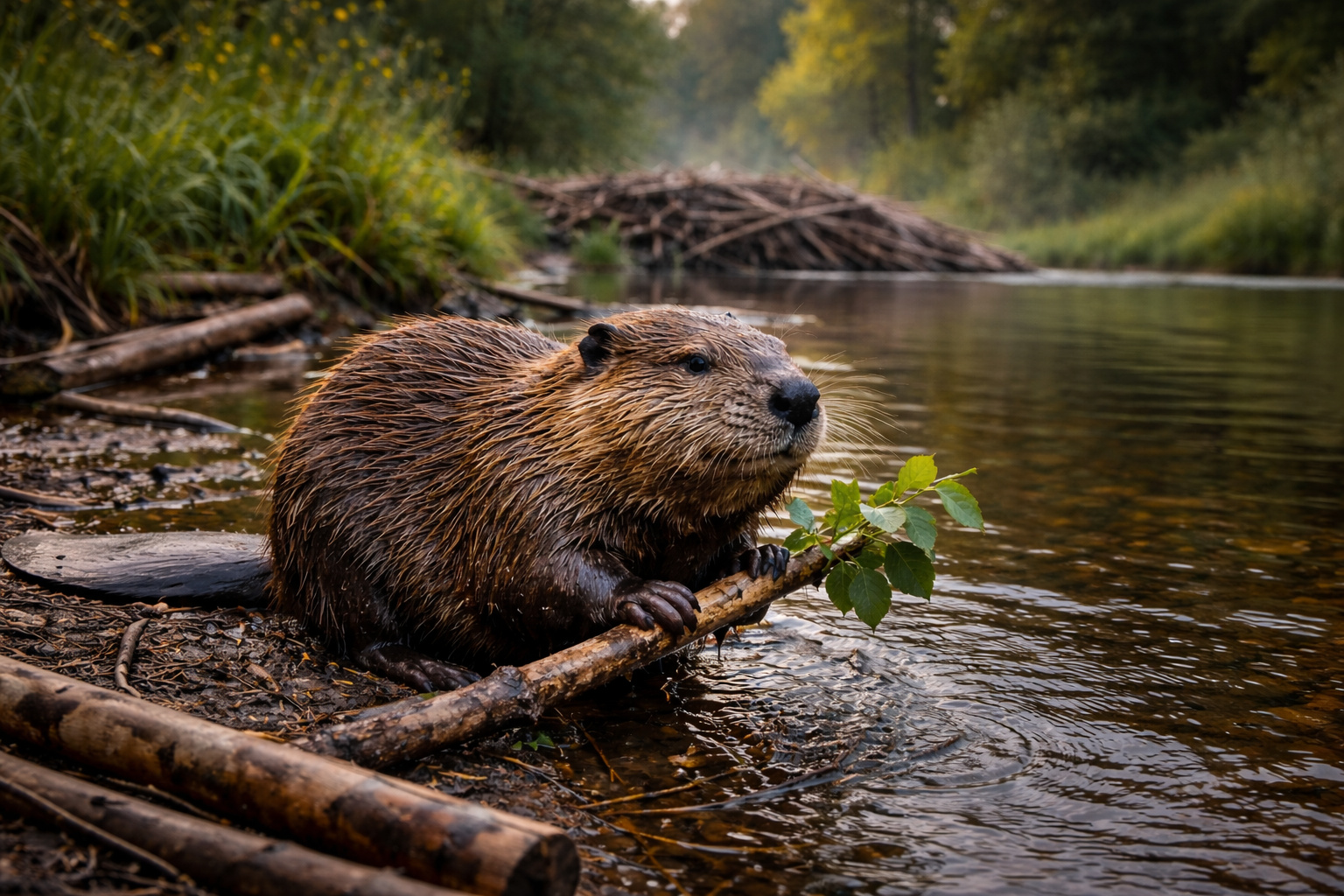
Unprecedented Record Made in 2025 Reveals the Return of the European Beaver to Rivers in Eastern England and Reinforces Decades of Environmental Conservation Policies in the United Kingdom
After nearly five centuries of absence, British wildlife has surprised once again. In early 2025, residents of Norfolk in eastern England reported the presence of a wild beaver along the banks of a local river, ending a period of disappearance that lasted since the 16th century.
According to information published by The Guardian, the sighting marks the first confirmed record of the animal in the region in about 500 years, quickly sparking the interest of residents, scientists, and environmental conservation specialists.
Historically, hunters wiped out the European beaver from most of England between 1500 and 1550. During that time, the exploitation of fur, meat, and glands used in perfumery and medicine led to the regional disappearance of the species for centuries.
-
Workers removed old panels from a Scottish lighthouse and found a hidden bottle with a message from 1892, names of engineers, lighthouse keepers, and details of a lens used to guide ships.

-
Your child may be gifted and you don’t even suspect it: experts warn that even low grades and disinterest in school may hide high abilities behind boredom.

-
An old telephone booth was removed during construction at an English station and ended up revealing tunnels under platform 4, with hidden rooms connected to the railway logistics of another era.
-
The SP government considers demolishing a 40-meter bridge after a 21-year-old was launched without a rope in a radical jump; the federal structure has been abandoned for 30 years and had already been the subject of warnings.




Environmental Record Confirms Historical Return of the Species
The confirmation occurred through environmental monitoring cameras installed in a protected area. The images, captured in January 2025, show the beaver dragging logs and starting to build a shelter along the banks of the Wensum River.
The record took place within the Pensthorpe Nature Reserve in Norfolk, a reserve dedicated to protecting wildlife and restoring aquatic habitats. Experts highlight that the observed behavior demonstrates active adaptation to the environment, indicating favorable conditions for the species’ permanence.
Origin of the Beaver Still Under Technical Analysis
Despite the confirmation, experts are still investigating the exact origin of the animal. Conservationists explain that the beaver may have migrated from regions where controlled reintroduction programs have advanced in recent decades.
At the same time, technicians are also assessing the possibility of human interference, although so far, they have not identified conclusive evidence. Meanwhile, environmental teams continuously and discreetly monitor the area to ensure the animal’s safety.
Reintroduction Projects Transformed the Landscape in the United Kingdom
The reappearance of the beaver in Norfolk comes after decades of conservation initiatives, intensified since the 2000s. Regions like Scotland, southern England, Devon, Somerset, and Cornwall have received scientific programs aimed at reintroducing the species.
These projects recognize the beaver as a keystone species, essential for the recovery of degraded aquatic ecosystems. According to biodiversity specialists, the results of these efforts are now beginning to become visible.
Legal Protection Since 2022 Boosted the Return of the Species
In 2022, England adopted a decisive framework by granting legal protection to the European beaver. Since then, the legislation prohibits any form of capture, removal, or intentional disturbance of the animal.
This legal change strengthened the gradual expansion of the species in rivers and wetlands, creating a safer environment for its survival and adaptation.
Environmental Benefits Reinforce the Importance of the Reappearance
Beavers act as natural engineers. By building dams and ponds, they improve water quality, increase biodiversity, reduce flood risk, and create habitats for various aquatic and terrestrial species.
Therefore, the return of the beaver to Norfolk represents a concrete sign of environmental recovery, showing that public policies, legal protection, and scientific monitoring can successfully return species to their natural habitat.
In light of this scenario, the question arises: Will the United Kingdom manage to turn this historical return into a lasting model of coexistence between environmental conservation and human activities?





-

-

2 people reacted to this.