






 Portuguese
  Spanish
  3 min of reading
  0 comments


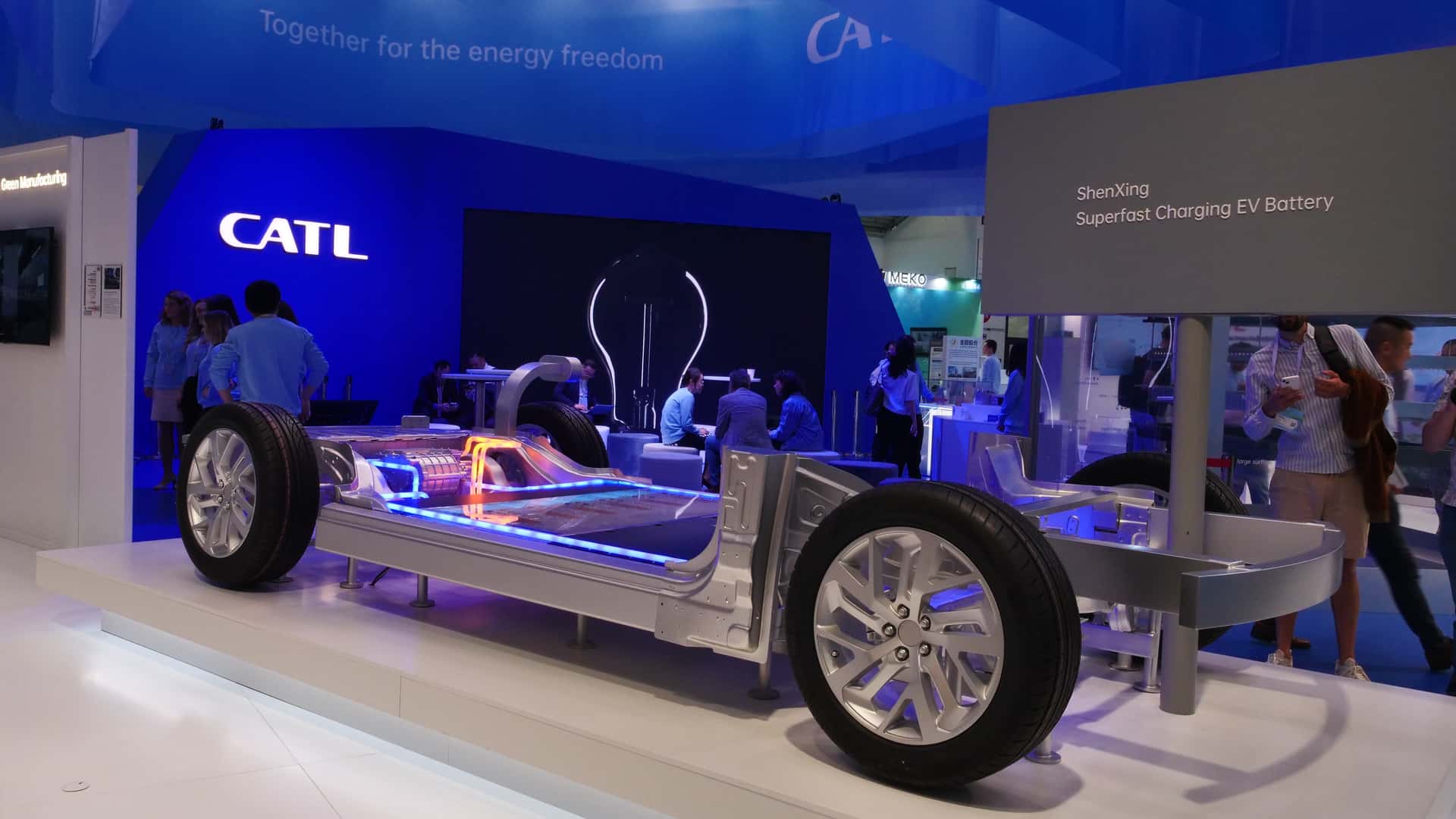
The Skate Platform for Electric Vehicles Successfully Completed the Testing Phase, Proving Its Efficiency and Safety for the Transportation of People and Goods in a Sustainable and Innovative Way. With This, the Technology Promises to Revolutionize Urban Transport and Contribute to Reducing Pollutant Emissions.
With Clear Benefits, the Skate chassis Faces the Difficulty of Finding Interest from a Few Automotive Companies. Amid the Trend of Electric Vehicles, Manufacturers Are Constantly Seeking Ways to Launch Modular Platforms for Pure Electric Vehicles. However, These Companies Encounter Obstacles When Trying to Pay for External Skate Chassis Suppliers, Who Have firm Control Over the ‘Soul’ and the ‘Body’ of Vehicles.
Company CATL Presents Innovative Technology at Munich Motor Show 2023
As a Producer of Batteries, the Company CATL Has Significant Advantages in the Development of the Skate Chassis. According to Wu Kai, the skate chassis Adopts the CTC (Cell To Chassis) Battery Technology. In Early 2023, CATL Established a Partnership with Nezha Automobile to Collaborate on the Development of the Integrated Intelligent Chassis and Plans to Launch the First Model by the End of 2024. In Addition, the Company Also Entered into a Cooperation Agreement with Vietnam’s Vinfast. **These Partnerships Are Strategic for Advancing the Technology of Skate Chassis.**
According to Wu Kai, the Key Feature of the Skateboard Chassis Is the Ability to Separate and Decouple the Upper and Lower Bodies, Allowing for Independent Movement and Control. The Upper Body Serves as the Car’s ‘Brain’, an Intelligent Space, While the Chassis Acts as the ‘Cerebellum’, Housing the Power Systems and Motor Units.
-
New 0km electric car costs less than R$ 50,000 with an 18 hp engine, carries up to 6 people, travels over 100 km per charge, recharges in a regular outlet, and surprises by dispensing with airbags and limiting speed to 50 km/h in Mexico.

-
Pressure from residents forces a U.S. energy utility to suspend negotiations with a data center that could require 500 megawatts by 2032 and demand new lines, reinforcements in the power grid, and large infrastructure investments.

-
New Honda HooRide 125 scooter debuts in China with ADV styling, 17-inch wheels, TFT panel, Smart Key, and fuel consumption of up to 47.17 km/l, aiming to resemble an urban X-ADV with a 125 engine, CVT transmission, and an economical proposal for cities.

-
Volkswagen focuses on ethanol and tests a Saveiro 100% alcohol-powered with a recalibrated engine; the project may ensure tax reduction, targets corporate fleets, and revives technology that lost ground since the arrival of flex-fuel vehicles in 2003.


Wu Kai Envisions the Skateboard Chassis Becoming a Crucial Foundation for Future Industrial Ecology, Standardizing Six Main Interfaces: Mechanical, Electrical, Software, Communication, Data, and Services. This Would Enable Its Application in Various Vehicle Models, Such as Sedans, SUVs, MPVs, Online 2B Cars, Shared Cars, and Logistics Vehicles. **Furthermore, It Would Reduce the Development Time for a New Vehicle from the Current 3 to 4 Years to Just 1.5 Years.**
In Fact, the Idea of the Skate Chassis Was Proposed by General Motors Back in 2002. Broadly Speaking, the Skate Chassis Is a Structure That Allows for Complete Separation Between the Body, the Chassis, and the Powertrain. The Suspension and the Electric Modules of the Vehicle Are All Integrated into a Skate-Like Chassis. In Summary, the Upper Body Can Be Modified as Needed, and the Car Can Operate Even Without a Body.
As Reported by Chinese Media, the First Skate Chassis from CATL Will Be Implemented in a Class B Sedan. The Winter Tests in Heihe and Summer Tests in Turpan Have Already Been Completed, Demonstrating That the Range Exceeds 1,000 Kilometers. Additionally, It Is Possible to Increase the Range by 300 Kilometers with Just 5 Minutes of Charging.
The Skate Chassis Includes a High-Voltage System, a Low-Voltage System, a Steering and Braking System, and Is Also Equipped with a Chassis Pre-controller. The Expectation Is That Mass Production of the Chassis Will Begin in the Third Quarter of 2024.
There Is No Doubt That This Innovation Represents a Significant Advancement in the Development of Electric Vehicles and in Improving Energy Efficiency.
Skate Platform from CATL Successfully Completes Testing Phase
The World’s Largest Producer of Batteries for Electric Vehicles, CATL, Recently Announced That Its Skate Platform Has Successfully Completed the Testing Phase. The Main Features Include a Wide Range (Over 1,000 km), Low Consumption of 10.5 kWh/100km, and the Ability for Ultrahigh-Speed Charging.
At the 2023 International Automotive Electronics and Software Conference Dishui Lake Summit, the Chief Scientist of CATL New Energy Technology Co., Ltd., Wu Kai, Announced That the Company’s Skate Platform Successfully Passed Its Tests, Highlighting the Exceptional Performance of the Product. **These Results Represent a Significant Advancement in Battery Technology for Electric Vehicles.**
Source: Insideevs Uol




Be the first to react!