





 Portuguese
  English
  Spanish
  3 min of reading
  8 comments


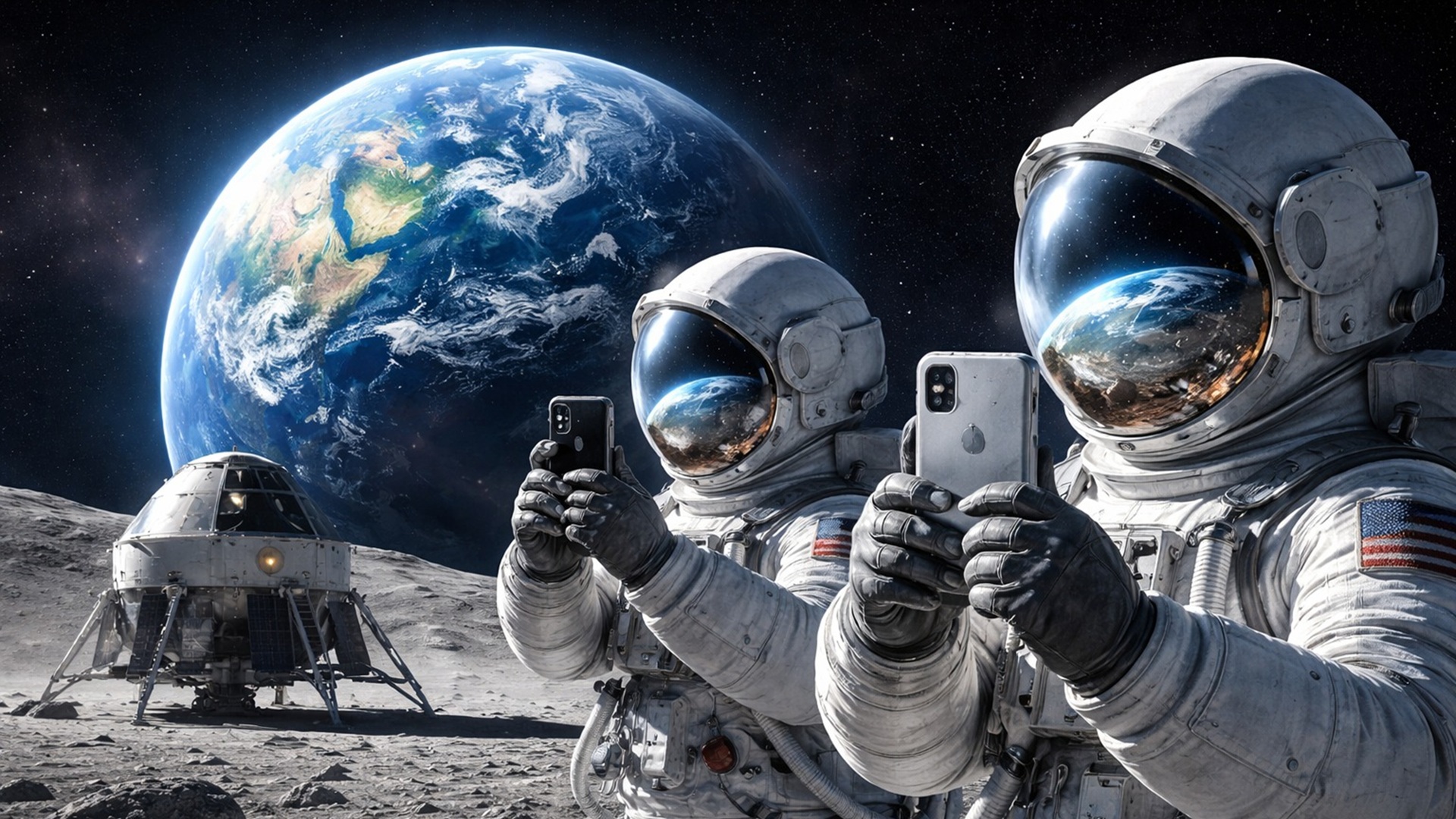


Unprecedented NASA Authorization Allows Astronauts to Bring Smartphones on Artemis II Mission, First Crewed Trip to the Moon Since 1972, Combining Professional Cameras and Personal Devices After Delay to March Caused by Hydrogen Leaks in the SLS System, Altering Historic Agency Protocols
The NASA Artemis II mission will take astronauts to the Moon for the first time since 1972, with Nikon D5 cameras and now authorized smartphones, after a delay to March due to hydrogen leaks in the SLS, expanding the visual record and communication of the Artemis II mission.
Unprecedented Authorization for Smartphones on Crewed Missions
The Artemis II mission marks the first time that smartphones will be allowed on the Moon. The NASA administrator, Jared Isaacman, stated that the rule that prohibited these devices has been revoked, allowing for personal recordings and image sharing.
The authorization also applies to missions in low Earth orbit. According to Isaacman, crews on the International Space Station will be able to bring smartphones, starting with Crew-12. This change represents an alteration in internal processes that previously prevented the use of these devices.
-
Brazilian Army reaches a new level by receiving the first 100% national EOD robot to disarm explosives and reduce risks in UN missions; this unprecedented technology will be used by the 6th Combat Engineering Battalion in high-complexity operations.

-
Forget the traditional washing machine: Xiaomi surprises and launches a mini version with a double drum, 95°C sterilization, smart sensor drying, separate washing for underwear, integration with HyperOS, and a price equivalent to R$ 1,100 in China.
-
Brazilian company with 23,000 employees seeks humanoid robots in China and Japan to replace repetitive tasks in 1,400 restaurants, as the advancement of automation and the possible end of the 6×1 schedule transform the food sector.
-
Man confronts NASA astronauts and says the Artemis 2 mission was “staged” “Stop lying”: video shows accusations against crew that spent more than 10 days in space on a mission followed live by millions of people worldwide


Artemis II Mission and the Delay to March
The NASA Artemis II mission has recently been delayed to March. The delay occurred after hydrogen leaks were detected during a wet dress rehearsal of the Space Launch System, the SLS, used by the agency.
Even with the delay, the planning continues to anticipate sending a crew to the Moon, ending a hiatus that began after the Apollo 17. The Artemis II mission will be the first crewed stage of NASA’s new lunar program.
Image Equipment and Visual Recording of the Mission
Before the rule change, NASA had already announced that the Artemis II mission crew would take Nikon D5 DSLR cameras aboard the Orion capsule, capable of capturing 4K video during the lunar flight.
With the inclusion of smartphones, the Artemis II mission significantly broadens the recording possibilities. The devices will be able to capture personal moments and images of the lunar environment, complementing the professional equipment already planned.
Historical Comparison with Apollo Missions
The last crewed mission to the Moon took place in 1972, long before the existence of the first smartphone. According to NASA, a current smartphone is millions of times more powerful than the guidance computer of the Apollo 11, used in the first lunar landing.
This comparison highlights the technological evolution between the Apollo missions and the Artemis II mission. Technologies now considered common, such as CMOS image sensors and GPS, were initially validated in earlier space programs.
Impact of the New Rule and Previous Experiences
Isaacman emphasized the speed with which the prohibition was reversed, stating that long-standing processes were challenged to qualify modern equipment on an accelerated schedule, something seen as beneficial for science and research in orbit and on the lunar surface.
The NASA administrator participated in private missions with SpaceX, which already allowed smartphones on board. He conducted a private spacewalk on the Polaris Dawn mission, an experience that influenced the rule change.
Unprecedented Documentation of the Lunar Mission
With the new policy, the Artemis II mission is likely to become one of the most documented lunar missions in history. The combination of professional cameras and smartphones will allow for technical and personal recordings, expanding visual access to the flight.
The Artemis II mission also symbolizes a closing of the technological cycle, taking to the Moon devices that incorporate advancements developed over decades of space research, now used to document a new phase of lunar exploration, even with slight adjustments to schedule and operational planning.








Os astronautas não vão pousar na superfície lunar, ficarão dentro da Artemis II,risco zero de super aquecer ou algo do tipo.
E quando acabar a bateria?
É só colocar na tomada para recarregar.
Não foi explicado como um smartphone vai suportar temperaturas absurdas na Lua, como + 200 graus Celsius e negativas extremas, sem explodir as baterias.
Oxi da mesma maneira que os humanos…
Se em 1969 o homem já consegui gravar com dispositivos naquela época por que não conseguiria projetar ou proteger um iPhone hoje em dia pra essa ocasião? Pensar um pouco reduz perguntas burras…
Não é para ser utilizado na superfície lunar. É para ser usado dentro da nave.
E quem vai descer na Lua seu burrão?
A Artemis 2 é uma missão **** e só vai orbitar o satélite .