






 Portuguese
  Spanish


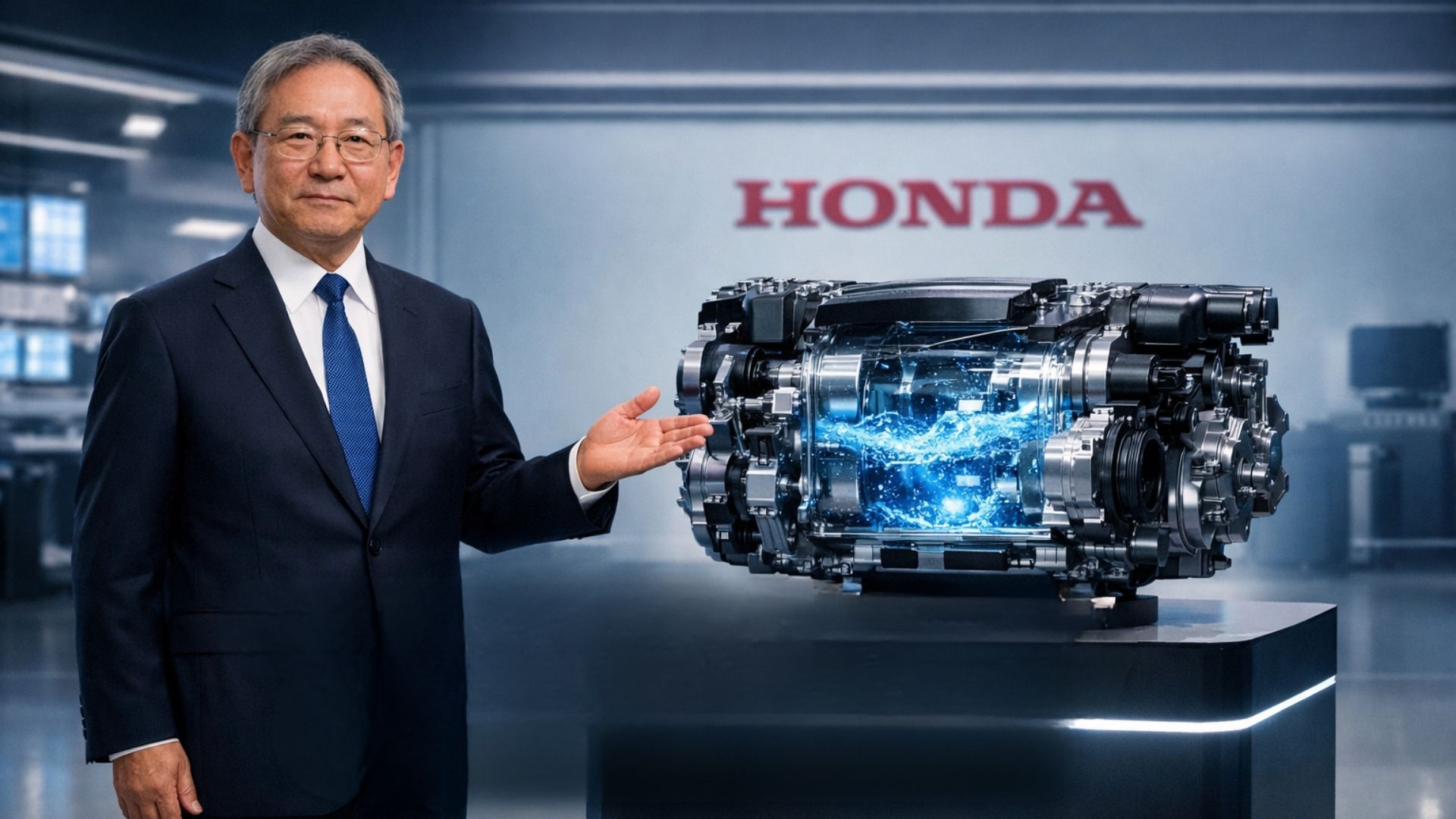


Experimental Technology Attributed to Honda, Presented in Video from the Mobility Channel, Describes an Engine Powered by Water Without Batteries or Stored Hydrogen, with Potential Impact on Electric Vehicles, Production Chains, and Regulatory Debates in the Global Automotive Sector.
An experimental technology attributed to Honda has reignited the global debate about the future of mobility by suggesting an engine that would use water as a primary input, without batteries, fossil fuels, or hydrogen tanks.
The information was originally presented by [full name of the unidentified author in the original material], from Mobility Channel, in a video that began circulating widely on social media and was reported on various digital platforms.
According to the channel, the supposed advancement was demonstrated discreetly at a Honda test facility in Saitama Prefecture, Japan.
-
A Brazilian city decided to purchase a piece of the Atlantic Forest with more than 153,000 square meters, and owners of preserved areas will be able to submit proposals to transform the forest into a conservation unit.

-
Brazilian siblings aged 11 and 7 read 240 books in just one year and caught attention on social media: while many children spend hours on screens, they turned their family’s routine into an example of reading, discipline, and curiosity.
-
The legendary oak that, according to the story, hid Robin Hood from the Sheriff of Nottingham, died at the impressive age of 1,200 years in England, and the first chilling sign of its end was that no leaves sprouted on the tree this spring.

-
While the world looks at forests, the UN warns that the Earth is also threatened by the silent degradation of natural grasslands and savannas, ecosystems that cover half of the planet, support billions of people, and can exacerbate water, food, and climate crises.


As reported in the video, engineers from the automaker showcased a functional prototype capable of generating hydrogen in real time from the separation of water molecules.
This hydrogen, according to the channel, would be used immediately in combustion, with vapor released as a byproduct.
Furthermore, according to Mobility Channel, the vehicle would not use traction batteries or pressurized hydrogen tanks.
The channel claims that the proposal would circumvent bottlenecks associated with large-scale electrification, such as dependence on strategic minerals and the need for high-power charging networks.
Discreet Demonstration and Repercussions in the Automotive Market

As described in the video, the presentation reportedly occurred without an official announcement and involved only a small group of technicians.
The channel’s author reports that after the demonstration, the topic began circulating among investors and analysts in the automotive sector.
According to Mobility Channel, this movement has caused fluctuations in the stocks of companies linked to electric mobility, including Tesla and battery manufacturers.
The video argues that the uncertainty is not only related to the performance of the prototype.
According to the channel, the main factor would be the potential impact on established production chains, especially those associated with lithium-ion batteries.
So far, however, there is no public confirmation of specific market value variations directly related to this episode.
There are also no official statements from the companies mentioned linking stock movements to the technology described.
Technical Functioning of the Called “Water Engine”
According to the explanation presented on the channel, the system would combine a reinforced internal combustion engine with a water separation device.
This process would use high-frequency vibrations and proprietary catalysts, as described in the video.
Hydrogen would be produced only at the moment of use.

According to Mobility Channel, this would avoid the need for storage and compression of the gas.
Oxygen, in turn, would be released or reused in the process.
The channel also states that the estimated consumption would be a few liters of water for every 100 kilometers traveled.
Also according to the video, the performance would be comparable to that of high-power electric vehicles.
Among the numbers mentioned are acceleration from 0 to 100 km/h in just over four seconds.
The range, as reported, could exceed 700 kilometers, depending on the reservoir volume.
Experts discussing the topic in academic and technical environments often highlight that the separation of water into hydrogen and oxygen requires a high amount of energy.
This factor, according to the scientific literature, historically limits the viability of such systems without a significant external energy source.
So far, Honda has not released technical data, peer-reviewed studies, or results from independent tests confirming the characteristics presented in the video.
Old Internal Project and Possible Recent Resumption
According to the author of Mobility Channel, the initiative originated from an internal program started back in the 2000s.
The project was informally named “Aquadrive,” according to the video.
According to the channel, the initiative had been shelved for strategic reasons.
The content states that the project was resumed in 2025.
This movement would have occurred in the context of growing criticism of the battery production chain.
The video also links the resumption to recent debates about safety and sustainability in the automotive sector.
Honda has a public history of investments in various technological pathways.

Among them are hybrid vehicles and hydrogen fuel cell systems, like the now-defunct Clarity.
However, there are no official announcements indicating a strategic shift toward engines based on the instant generation of hydrogen from water.
Potential Impacts and Regulatory Challenges
In the video, Mobility Channel argues that if the technology proves feasible on an industrial scale, there would be significant impacts on the automotive industry.
According to the channel, effects would also be felt in the mining, energy, and infrastructure sectors.
The author argues that water could begin to play a direct role in the energy matrix of transportation.
However, industry analysts often point out that such a transition would raise new regulatory challenges.
Among them is the possible pressure on water supply systems in already vulnerable regions.
Legal adaptations would also be required for a technology that does not clearly fit into existing vehicle categories.
Reaction from Automakers and Absence of Official Positioning
Another point highlighted in the video is the absence of public statements from industry executives.
Among the names mentioned is Elon Musk, CEO of Tesla.
According to Mobility Channel, the silence indicates caution in the face of a potential technological disruption.
So far, however, there are no verifiable records of changes in schedules or project suspensions by major automakers in direct response to the claims made.
In previous statements about similar rumors, Honda typically reaffirms its commitment to multiple mobility solutions.
These initiatives, according to the company, always depend on scientific validation, economic viability, and regulatory compliance.
Broadened Debate and Absence of Independent Evidence

Although the content released by Mobility Channel has expanded the debate on alternatives to battery-based electrification, the topic remains without independent verification.
The recent history of the automotive industry includes promising announcements that have not advanced to large-scale production.
This pattern is more common in proposals involving solutions that challenge known technical limitations.
Without public technical documentation, independent tests, or official positioning from Honda, the so-called “water engine” technology remains in the realm of unverified claims.
Still, the video’s repercussions highlight a real concern within the sector.
This is about the search for solutions that reduce costs, dependence on scarce resources, and environmental impacts.
In this scenario, the debate remains open regarding the real scope of the information released and its possible ramifications for global mobility.







