Portuguese
  Spanish


GWM Reports That 23% of Its Cars Are Sold Outside Business Hours Via Digital Platform — A Revolution in the Automotive Sales Model.
The automaker GWM is revolutionizing its sales model in Brazil: since the brand’s debut in the country, almost 1 in every 4 cars have been sold when dealerships are closed.
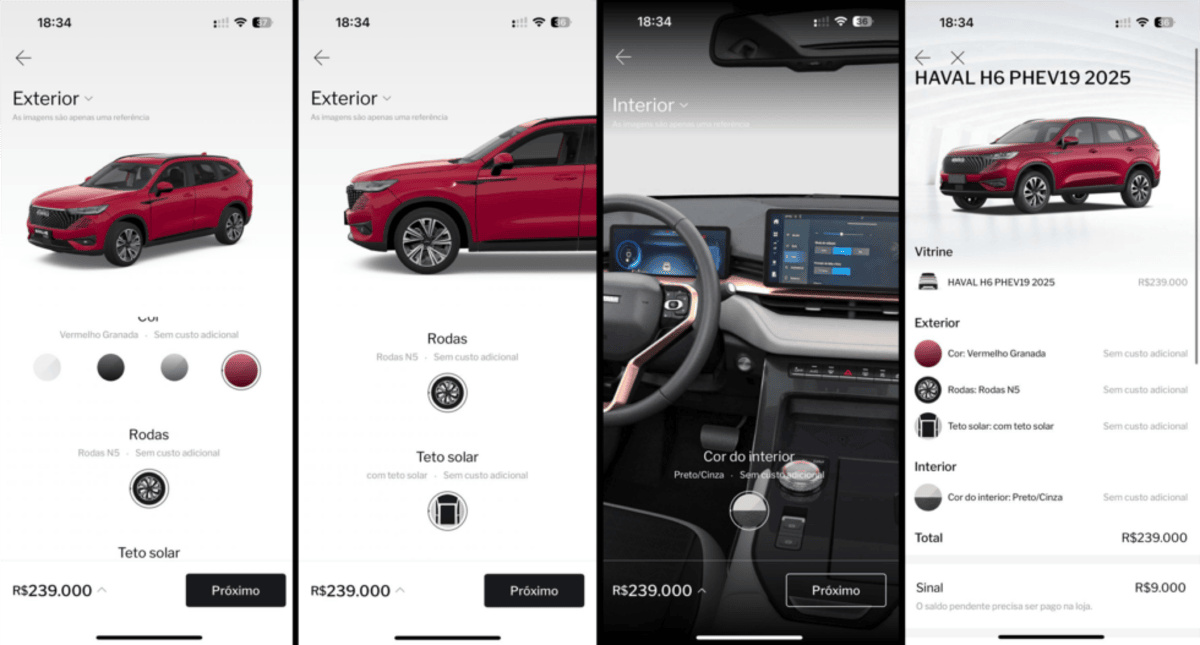
Diego Fernandes, COO of GWM Brazil, reports that this occurs on Sundays, holidays, or outside business hours, using only digital platforms like GWM’s website or Mercado Livre to ensure a single price nationwide.
This innovative format allows the customer to buy without visiting the store, and in exceptional cases, receive the vehicle at home.
-
2027 Toyota Corolla Cross Unveiled: New Design, Enhanced Fuel Efficiency, Reduced Maintenance Costs, Advanced Technology, Connected Services, and Up to 10-Year Warranty

-
Fiat Cronos Precision 2018: Affordable Sedan with Spacious Trunk and Reliable Maintenance
-
Volkswagen to Cut Production by 1 Million Cars by 2030, Reducing Jobs and Platforms, Focusing on More Profitable Models

-
Toyota Launches First 100% Electric Car in Brazil: bZ4X with 343 HP, All-Wheel Drive, 361 km Range, Priced at $419,990 BRL, Limited to 99 Units



This is a strategy that arises from adaptation to the digital age — and its practicality appeals to the modern consumer.
Digital Sales Model Transforms Experience With GWM
Since its arrival in the Brazilian market about two and a half years ago, GWM has intensified its digital sales.
The customer accesses the platform, pays a deposit of R$ 9,000, approves the financing, and chooses their preferred dealership to complete the process. This strategy allows the brand to maintain a national fixed price, avoiding regional variations.
Spontaneous Sales Anytime
According to GWM, 23% of sales occur outside business hours — during unconventional service times, such as weekends and holidays.
This means that consumers can complete the purchase of a car without direct contact with the dealership.
Zero-KM Car Delivery — More Comfort and Innovation
The brand also offers, in rare situations (about once every three months), delivery of the car to the customer’s home — the “zero-km car delivery”.
A technician accompanies the vehicle during transport, explaining all details.
This practice began at the end of the pandemic, while the store network was still being established.
Guaranteed Speed Between Order and Delivery
After the purchase through the website, the customer receives the car in 7 to 10 days.
To support this pace, GWM has around 35 regional distribution centers, which maintain models in various colors and stock adjusted according to local demand.
Mobile Workshop and Sales Points in Shopping Malls
In addition to digital sales, GWM invests in convenience after the purchase. The mobile workshop allows for inspections and small repairs wherever the customer is, without the need to travel to the store.
Furthermore, the brand maintains sales points in shopping centers, where the customer can test the car and then complete the purchase online.
GWM is consolidating a disruptive sales model in Brazil, using technology to serve customers quickly, safely, and conveniently.
By allowing 24/7 purchases via the website or Mercado Livre, ensuring uniform pricing across the country, offering home deliveries, and mobile service, the brand is reshaping the automotive experience.
This movement not only innovates but also demonstrates that, to win over the modern consumer, the future of automotive sales lies in digitalization and convenience.