






 Portuguese
  Spanish


While Starlink covers the world with thousands of tiny satellites in low orbit, the American company bets on the opposite path, few small and cheap satellites stationed over a region, custom-made to connect those whom fiber never reached
Astranis’ small satellites are bringing the internet to places that fiber optics will never reach, and at a cost that makes the space industry rethink everything. The American company builds satellites of about 400 kilograms, twenty times smaller than traditional communication satellites, which can cost up to 400 million dollars each, and already uses these devices to connect Alaska, Mexico, and the Philippines.
How does such a small satellite do the work of a giant? Because Astranis abandoned the logic of a huge satellite for everything and started manufacturing small devices, each dedicated to a single region. It’s cheaper, faster to build, and easier to replace, and this change of scale is what opens the account to connect markets that no operator served.
Small half-ton satellites, 20 times smaller
Size is the first big difference. According to Contrary Research, each Astranis satellite weighs about 400 kilograms, equivalent to one-twentieth the weight of a traditional geostationary satellite, a true dwarf compared to the colossi that occupy the same orbit.
-
General Motors Halts Self-Driving Car Service After $10 Billion Investment Following Pedestrian Incident in San Francisco

-
Scientists Discover Mysterious Black Fungus Thriving in Chernobyl for Nearly 40 Years, Challenging Extreme Radiation and Potentially Revolutionizing Space Missions

-
Antarctica’s Blood Falls: Scientists Uncover a 1.5-Million-Year-Old Isolated Ecosystem, Shedding Light on Potential Ice Changes
-
Mati Carbon Wins $50 Million Prize for Boosting Harvests and Capturing Carbon by Distributing Free Basalt Dust to Small Farmers in India and Africa




And smaller means much cheaper. According to Contrary Research, a conventional geostationary satellite can cost from 100 million to 400 million dollars to be manufactured and placed in space, while Astranis’ compact devices cost a fraction of that. Lowering the cost of a satellite is what transforms the internet in the middle of nowhere from an expensive dream into a viable business, and that’s exactly where the company bets.
An antenna that reprograms itself in space
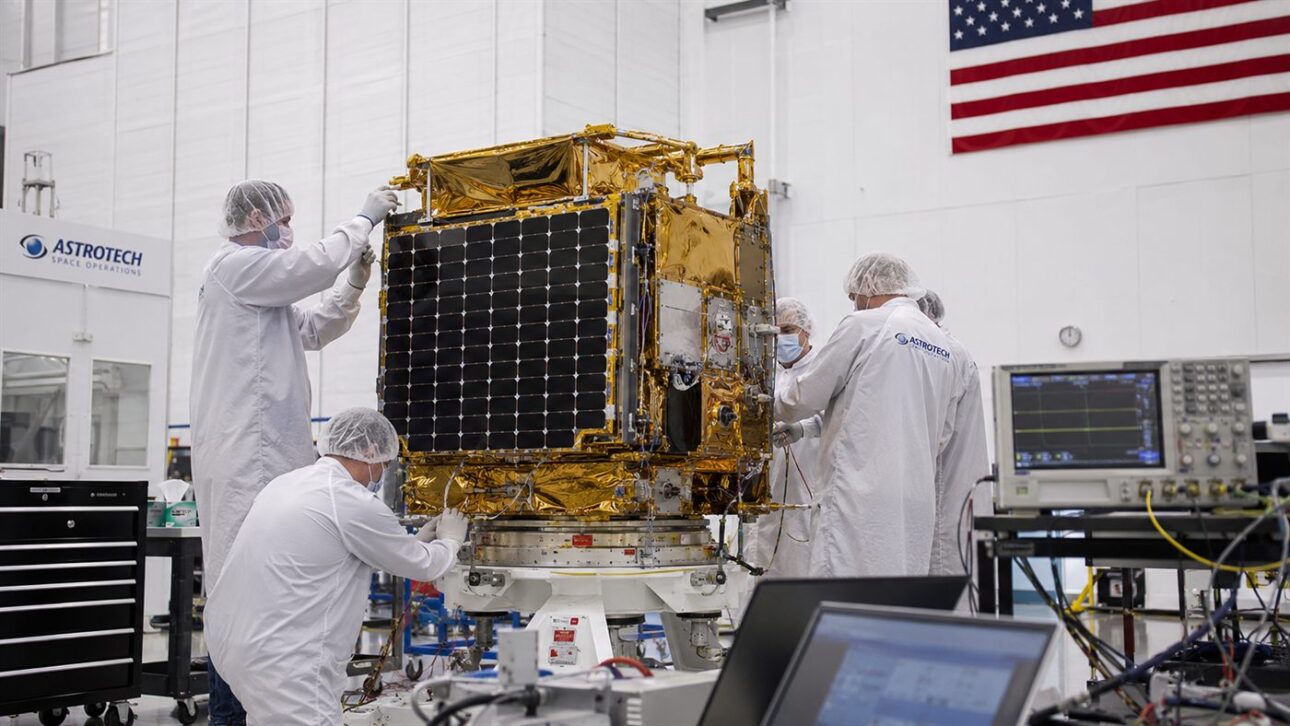
The trick is not just to shrink, but to make the satellite smart. According to TechCrunch, Astranis devices use a software-defined payload, capable of reallocating bandwidth and power where there is more demand, and the new generation, called Omega, delivers up to 50 gigabits per second.
Mobility is another uncommon feature. According to Contrary Research, the satellites combine chemical propulsion and an electric ion engine, which allows each device to be repositioned up to thirty times over its lifespan, something rare in geostationary orbit. A satellite that reprograms itself and still moves in the sky is almost a flying server, adjustable to the client below it.
Internet for those whom fiber never reached
The measure of success is in the contracts already signed. According to Contrary Research, Astranis serves Alaska through Pacific Dataport, aims to connect up to five million people in Mexico with Apco Networks and two million in the Philippines with Orbits Corp, in addition to partnerships with Thaicom in Asia and Chunghwa Telecom in Taiwan.
The common denominator is places poorly served by cable. Islands, mountains, forests, and remote regions are extremely expensive to cover with fiber, and that is exactly where a dedicated satellite makes sense. Bringing broadband to where cable will never reach is a huge and ignored market, and Astranis has turned it into its main business by selling satellite internet tailored to each region.
Satellite as a service, tailored by region

The business model is as innovative as the device. According to TechCrunch, Astranis sells satellite as a service, meaning it places a dedicated device over a specific client’s region, such as a local operator or an energy company, instead of selling generic capacity from a shared fleet.
This changes the relationship with the client. Instead of competing for space on a network that serves the whole world, the buyer gets a satellite of their own, pointed at their market, with all the bandwidth at their disposal. It’s the difference between renting a spot in a crowded stadium and having your own private field, and for many regional operators, this is worth gold.
Why small satellites in GEO, and not the Starlink cloud
Astranis’ bet goes against the sector’s star. Elon Musk’s Starlink covers the planet with thousands of tiny satellites in low orbit, flying by and taking turns to provide signal anywhere. Astranis does the opposite: a few small satellites stationary in geostationary orbit, each fixed over a region.
Each approach has its strength. The low orbit cloud covers the globe but requires thousands of devices and a colossal cost. Astranis’ fixed satellite serves a specific area well with a single cheap device, ideal for a country or an isolated state. It’s not Starlink versus Astranis, it’s global coverage versus tailored service, and there’s a market for both models.
753 million raised and the new Omega generation
The money follows the ambition. According to Contrary Research, Astranis has already raised about 753 million dollars in various investment rounds, including a 200 million raise in mid-2024, fuel to accelerate satellite production.
The future lies with the Omega line. According to TechCrunch, this new generation was designed to deliver up to 50 gigabits per second and scale manufacturing, with the company planning to launch several satellites per year. Moving from unique devices to a space assembly line is the game-changer, because it’s the scale that decides if the cheap satellite becomes a commodity or remains an exception.
Who’s in charge and the philosophy of small targets
Leading the company is John Gedmark, CEO and co-founder of Astranis, who sees small satellites not only as an economy but also as a strategic advantage. According to TechCrunch, he sums up the philosophy by saying that the sector needs to migrate to a more resilient architecture, without the big and easy targets of the past.
The idea has military and commercial logic. Spreading capacity across many small devices is harder to knock down and easier to replace than relying on a single giant satellite. Exchanging a huge target for several small ones is resilience disguised as economy, and that’s why even governments are paying attention to the model.
What this bet represents
Astranis shows that there is more than one way to connect the world, and that the answer is not always to fill the sky with thousands of satellites. By betting on small, cheap, and dedicated devices, the company tackles a real problem, that of regions that cables will never reach, with an economy that changes the equation. If it manages to scale production, it can democratize access to space for operators that would never have their own satellite.
And you, do you think the future of the internet in the middle of nowhere lies in small, dedicated satellites like those from Astranis, or in the giant low-orbit cloud of Starlink? Share in the comments which model you think is better.


