Portuguese
  Spanish


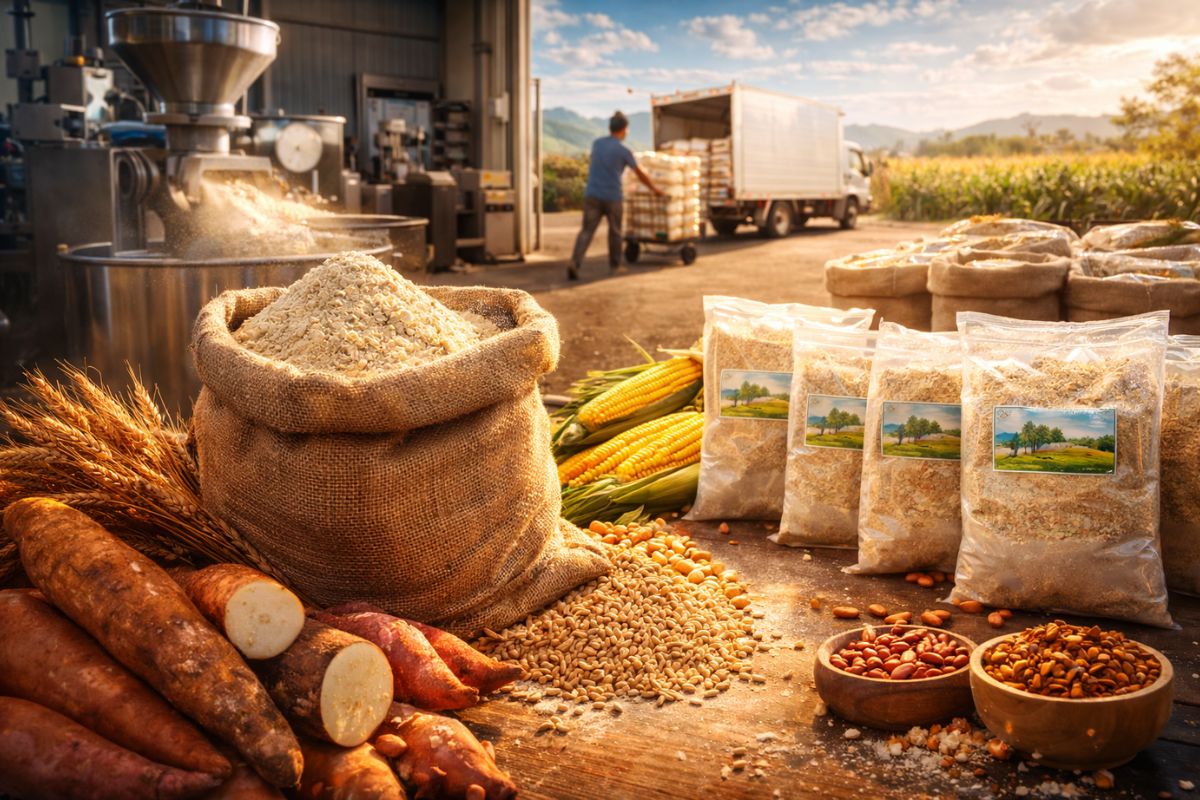

In Linga, the chemist João Machirica has been producing enriched flour since 2018, expanding presence in provincial capitals and aiming to bring the Flavors of the Field to the whole country and export
In April 2026, in Linga, the chemist João Machirica drew attention by producing enriched flour from local products as a practical response to chronic malnutrition and the need to promote healthier eating, with distribution already reaching several provincial capitals.
The Flavors of the Field project started in 2018 in a precarious and small-scale manner, but grew with increased demand. Today, the initiative produces more than 1,000 kg of flour per week, reaches markets in almost all provinces of the country, and is already appearing in supermarkets, while the next step is to seek export.
How enriched flour was born from products that were going to waste
The idea of Flavors of the Field emerged when João Machirica identified that many local products were going to waste in the areas due to lack of utilization. The solution was to transform this diversity into enriched flour, processing raw materials for consumption and reducing waste.
-
Unfinished 150-Year-Old Church in Brazil’s Bahia Stands Without a Roof After Railway Shifted Alagoinhas’ Center

-
Viking Textile Factory Unearthed in Denmark Reveals Ancient International Trade Links

-
Bruno Guimarães, 28, Misses Crucial Penalty Against Norway in World Cup After Replacing Vinicius Jr.
-
Inspired by a school lesson on Africa’s water crisis, a young boy raised money through chores to fund a well that transformed a Ugandan community.




The proposal is simple and straightforward: to value what already exists locally and convert it into flour with nutritional gain, creating a product that helps in the daily lives of those who need to improve the quality of their diet.
What ingredients are in the flour of Flavors of the Field
João Machirica states that he produces varieties of flour, with an emphasis on multi-mixture flours. Among the ingredients mentioned are mapira, mexoeira, nhemba beans, cassava, and other cereals.
The logic is to combine local products to enhance the nutritional value of the flour, expanding options for consumption and reinforcing the idea that food diversity can become a concrete solution.
From traditional mortars and sieves to larger production


In the beginning, in 2018, the flour processing was homemade, using rudimentary means. He reports the use of mortar, traditional sieves, and simple packaging methods, including deliveries in plastic.
With the increase in demand, João Machirica says he started looking at flour also from a nutritional and social perspective, understanding that consumption could generate benefits and justified expanding production.
The leap in scale and the new challenges of flour
The growth of the business brought challenges that go beyond producing more flour. The chemist states that he worked alone in the early years, but with the expansion, there arose a need to increase the number of people in production.
In addition to strengthening the team, he points out the importance of establishing partnerships to sustain the continuity of the project and maintain the capacity to meet greater demand.
Presence in provinces, supermarkets, and the export plan
The initiative already supplies on a provincial scale and is approaching national markets, with flour reaching supermarkets and reaching almost all provinces of the country, according to the producer himself.
Even with the advancement of distribution, the goal now is to take the next step and start exporting flour outside the country, expanding the reach of Sabores do Campo.
Do you think that initiatives like this enriched flour, made with local products, can effectively and continuously reduce malnutrition in the provinces?