Portuguese
  Spanish


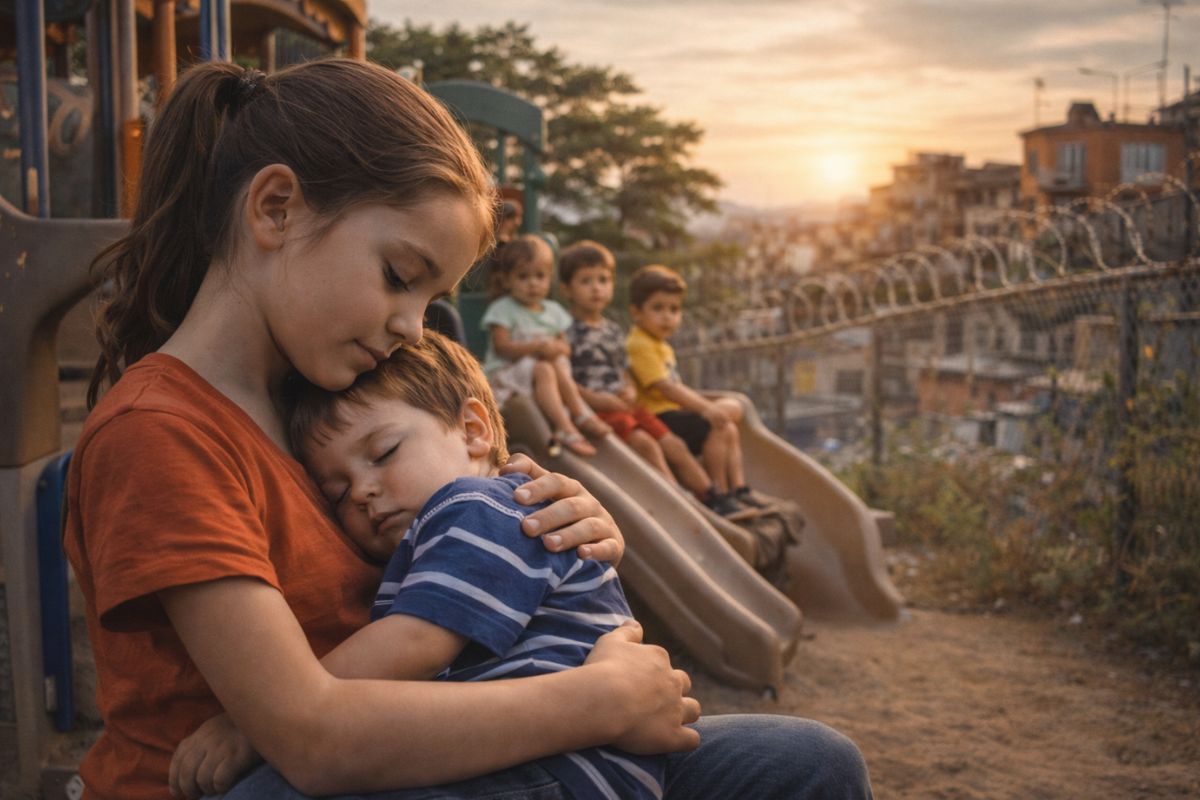


Study with 452 pairs of siblings shows that taking care of a baby trains the Theory of Mind and self-control from an early age. In Brazil, the fertility rate has fallen to 1.6 children per woman and sibling cohabitation is disappearing.
A four-year-old child interpreting the cries of their baby brother is unknowingly practicing what neuroscientists call the Theory of Mind: the ability to understand that another person feels, thinks, and desires things different from their own. A study published in Child Development followed 452 pairs of siblings aged 18 months to 4 years over 18 months and showed that this type of interaction produces gains in empathy that go beyond what interaction with adults offers.
The research was conducted by Marc Jambon from the University of Toronto, with teams from the University of Calgary, Université Laval, and Tel Aviv University.
What did the study find that surprised the researchers themselves?
The central finding was not that older siblings influence younger ones. That was already expected. What surprised was that younger siblings also develop the empathy of older ones. The influence is mutual and remained even after the researchers isolated the effect of parenting practices and the family’s socioeconomic level.
-
A Brazilian street cleaner built a machine to recycle PET bottles in the hinterlands of Paraíba, transforming the trash he swept from the streets into threads, brooms, and equipment sold even outside Brazil, and began earning about R$ 7,500 per month with his own invention.

-
In a city where every piece of land is worth gold, he began buying plots in the 1960s and built a real estate empire with over a thousand properties.

-
An artist sank over 500 life-sized human statues at the bottom of the Caribbean Sea, and what seemed like macabre art turned into a living reef covered with corals that attracts divers from all over the world.

-
A fossil kept for years in a small museum in Montreal concealed 450-million-year-old soft tissue, a discovery that has only happened once before in history.


The team recorded interactions between the siblings on video and, at the end, exposed the children to situations where an adult demonstrated pain or discomfort. Children with siblings responded with significantly more developed empathy than expected for their ages.
Two exceptions appeared. Younger male siblings did not generate significant changes in the empathy of older sisters. And the influence of older siblings on younger ones was stronger when the age difference was greater, suggesting that the “model and teacher” effect depends on a clear asymmetry of experience.
Why does this matter specifically for Brazil?
Because Brazil is losing this tool at a record speed.
The Brazilian fertility rate fell to 1.6 children per woman in the 2022 Census, the lowest in history. In 1960, it was 6.28. The average family size shrank from 3.62 people in 2008 to 3.07 in 2018. Births declined for the sixth consecutive year in 2024, falling to 2.4 million. The projection for 2030 is 1.5 children per woman.
In practice, an increasing proportion of Brazilian children are growing up without siblings. And without siblings, there is no opportunity to practice reading a baby’s non-verbal cues, delaying wants in favor of someone smaller, or experiencing the direct impact of care on another human being within the home.
This does not condemn only children to emotional deficits. Schools, daycare centers, and interactions with cousins can provide stimuli. But the daily intensity and the emotional bond of the sibling relationship are hard to replicate. It is everyday, involuntary, and emotionally charged. Exactly what makes it effective as emotional training.
What does science already know about siblings and emotional development?
Jambon’s study is not isolated. A review published in PubMed Central on sibling relationships in childhood and adolescence confirms that frequent cooperative interactions accelerate the development of Theory of Mind, because they create what experts call “mentalizing conversations,” moments when the child tries to understand what the other is thinking.
Warm relationships between siblings have been associated with higher levels of empathy from the age of 11 and a measurable reduction in egocentric behavior.
Empathy cannot be taught through theory. It is taught by caring for someone. And the most natural opportunity for this, which has existed throughout human history, is diminishing along with the size of Brazilian families. What do you think about this?