






 Portuguese
  Spanish


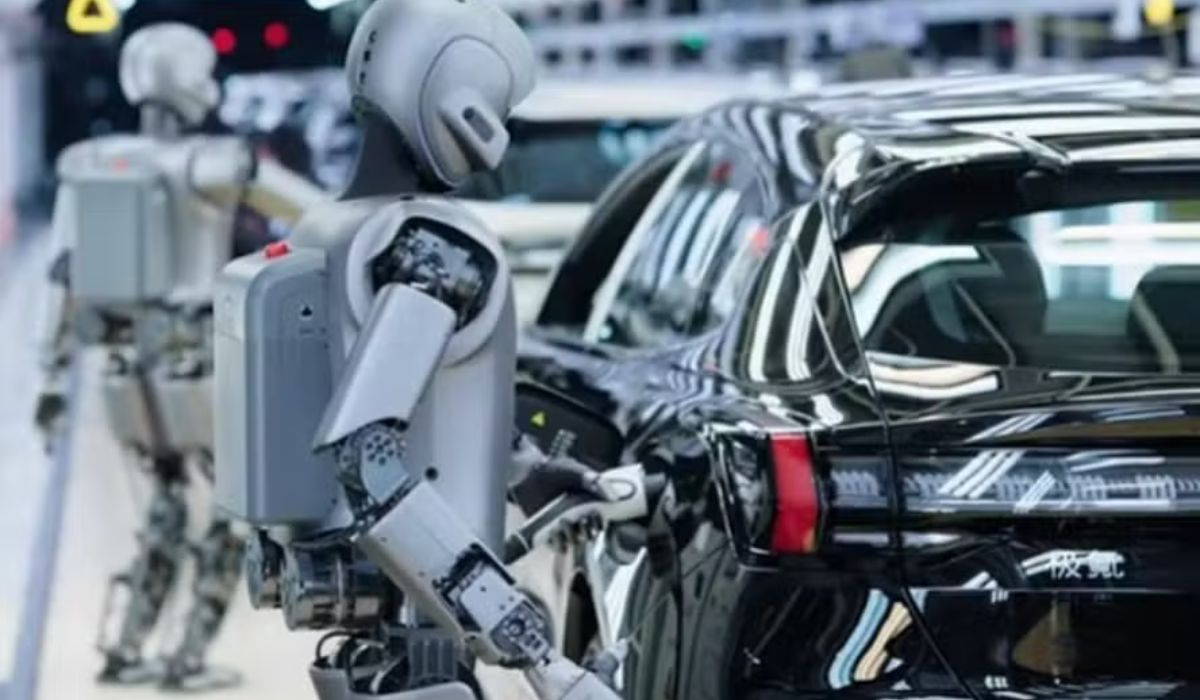


The Automotive Industry Approaches an Unprecedented Milestone, with Factories Capable of Operating Without Workers on the Assembly Line, Supported by Robots and Artificial Intelligence, in a Context of Technological Transformation, Global Competition for Efficiency, and Debate on Employment Impacts.
The automotive industry is moving towards a historic turning point: the possibility of producing a car from start to finish without the presence of human workers on the assembly line.
Experts consulted by the sector point out that, by 2030, at least one factory with this level of automation may start operations in China or the United States, supported by industrial robots, sensors, and artificial intelligence systems capable of executing and coordinating processes that are currently partially manual.
Over the past few decades, automation has consistently advanced in automakers.
-
Facing a housing shortage, Hong Kong uses prefabricated concrete modules to construct a 12-story public building with the help of massive cranes and trucks.

-
Brazilian City Innovates Waste Collection with Underground Vacuum System
-
Amsterdam Repurposes Retired Boats and Plants to Restore Contaminated Industrial Land Instead of Removing All Polluted Soil
-
Copenhagen Builds 92 Homes Using Reclaimed Materials from Demolished Carlsberg Brewery, Highlighting Each Material’s Origin


Robots have taken on tasks such as welding, painting, and moving large structures.
Still, final assembly stages, specific inspections, and handling of more complex components have continued to depend on human operators.
The recent advancement of robotics, combined with computer vision systems and software control, begins to reduce these technical barriers.
What Are Dark Factories in the Automotive Industry
This new industrial model has become known as a “dark factory.”
The term describes facilities capable of operating with minimal lighting, as there are no employees circulating on the factory floor.
In practice, the expression summarizes the idea of industrial plants designed to operate continuously, with human interventions limited to remote supervision, maintenance, and occasional adjustments.
According to analyses published by the international specialized press, China stands out as the most advanced country in this race, due to the scale of its automotive industry, high investment in automation, and strong presence in the electric vehicle market.
Nevertheless, the milestone “before 2030” appears as a projection of the sector, not as an officially announced timeline by any specific automaker.
Automation and Pressure for Efficiency in the Automotive Industry
For manufacturers, increased automation is directly linked to the pursuit of greater operational efficiency.
The reduction of disruptions, standardization of processes, and cost control are central factors in a moment of technological transition, marked by high investments in electrification, software, and new business models.
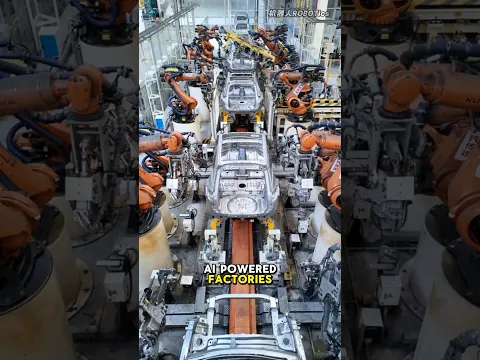

Consultancies following the sector highlight that advanced automation can accelerate development and production cycles by integrating data, digital simulations, and real-time control systems.
Accenture, for example, points out in public reports that this type of integration tends to reduce timelines and increase industrial predictability, although it notes that results vary according to the technological maturity of each company.
This movement also responds to a more unstable global environment, with supply chains pressured by logistics costs, trade disputes, and increasing regulatory demands.
In this context, automating has begun to be seen as a way to reduce operational vulnerabilities.
The United States Advances with Humanoid Robots in Factories
While China concentrates expectations, ongoing projects in the United States indicate that the competition is far from unilateral.
The Hyundai group announced plans to introduce humanoid robots in its new factory in Georgia starting in 2028, using equipment developed by Boston Dynamics initially for repetitive and higher-risk tasks.
The company presented the initiative as part of a strategy to integrate robotics and artificial intelligence applied to manufacturing.
At the same time, the announcement generated reactions in the labor field.
Trade union representatives in South Korea warned about possible impacts on employment and advocated for participation in decisions related to the adoption of humanoid robots in production.
These reactions help explain why many automakers adopt a gradual approach.
Instead of completely eliminating human presence, several plants expand automation islands and reinforce software integration, maintaining specialized teams to supervise critical processes.
Simplification of the Production Process as Strategy
Another relevant front in this debate is related to redesigning the production process itself.
Tesla, for example, popularized the use of large presses known as “megacastings,” capable of casting large structural sections of the vehicle into a single piece.
According to specialized reports, this strategy reduces the number of components and assembly steps, which facilitates automation.
By consolidating dozens of parts into a single component, the automaker decreases intermediate operations, inspections, and adjustments, elements that traditionally require human intervention.
This logic has attracted the attention of other manufacturers interested in making their lines more compatible with automated systems.
Cars Redesigned for Assembly by Robots
The transition to highly automated factories also affects car design.
For them to be assembled by robots, vehicles need to be conceived for metal claws, automatic positioners, and standardized fitting systems, instead of the dexterity and adaptation typical of human work.

Historically difficult components to automate, such as wiring harnesses, have been redesigned into more rigid modules or directly integrated into the car’s structure.
Industry experts point out that this reorganization reduces assembly complexity and increases process predictability, even though it limits certain traditional engineering solutions.
In this scenario, criteria such as operator ergonomics lose relevance, while aspects such as geometric tolerances, accessibility for robots, and inspection by sensors and cameras gain weight.
Impact on Employment and Social Challenges of Total Automation
Although total automation promises productivity gains, the social impact remains one of the main points of concern.
Industry analysts assess that some functions tend to migrate to areas such as maintenance, programming, and system supervision.
Still, there is consensus that demand for direct labor on the assembly line is expected to decrease.
The debate about this effect is already appearing concretely in countries leading the adoption of industrial robotics.
In the case of Hyundai, unions publicly linked the introduction of humanoids to the risk of job reductions, reinforcing the need for reskilling policies and dialogue between companies, workers, and governments.


