Portuguese
  Spanish


Japanese military expansion accelerates amid pressure from China, North Korea’s nuclear threats, and uncertainties about the United States. Government increases defense spending, reinforces presence near Taiwan, and breaks historical barriers of pacifism created after World War II.
Japan is undergoing a strategic transformation that is already considered the largest military expansion of the country since the end of World War II, driven by China’s advance in the Pacific, North Korea’s nuclear threats, and the growing rapprochement between Beijing, Moscow, and Pyongyang.
According to a report by DW Brasil, under the leadership of Prime Minister Sanae Takaichi, the first woman to lead the Japanese government, Tokyo has started to advocate for a more assertive security policy that is less dependent on the political limitations built after 1945.
Since 2022, the defense budget has been growing at an accelerated pace and is expected to reach the equivalent of 2% of GDP, a mark that will place Japan among the largest military investors on the planet in the coming years.
-
Scientists Develop Needle-Free Insulin That Penetrates Skin, Reduces Glucose in Animals Within an Hour, Paving the Way for Diabetes Patches and Creams for Humans

-
After 40 Years of Research, Powdered Coconut Water to Be Produced in Brazilian Biorefinery, Aiming to Revolutionize Health for Children, Elderly, and Hospital Patients
-
Queen Guitarist Brian May Collaborates with ESA Scientists to Study Asteroids Bennu and Ryugu Using 3D Simulations
-
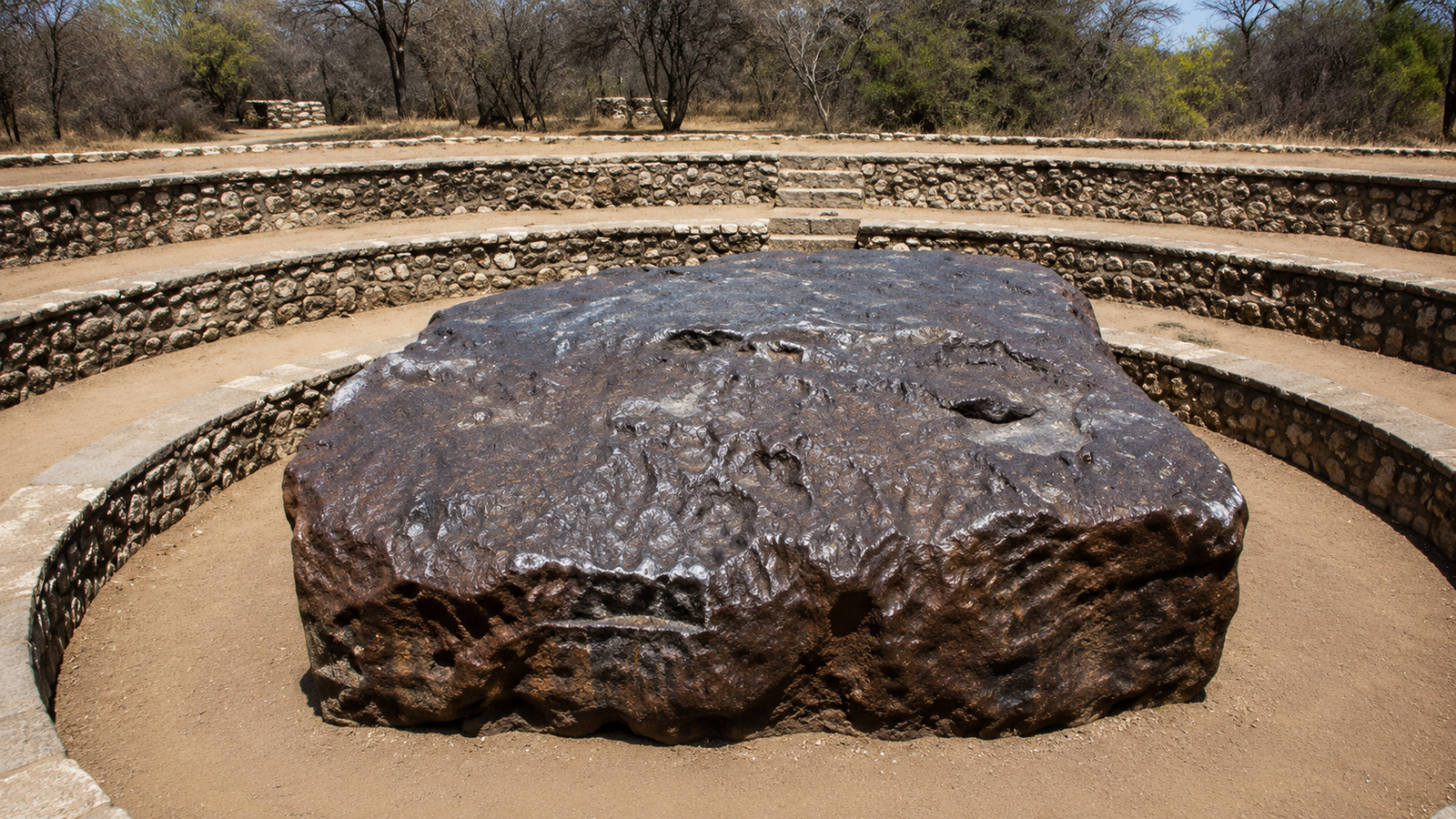
Largest Known Single-Piece Meteorite, Weighing 60 Tons, Puzzles Scientists with Its Intact Fall and Lack of Visible Crater


Although the government maintains that the measure seeks only to reinforce the country’s defensive capability, the change breaks decades of caution in a nation whose Constitution formally renounces the use of war as a political instrument.
Japan increases military presence near Taiwan
In the far west of Japan, the island of Yonaguni has become one of the most sensitive points of this new military strategy, mainly due to its proximity to Taiwan and its position considered strategic in the Pacific.
Separated by only 110 kilometers from the Taiwanese coast, the region is expected to receive medium-range air defense missiles and already houses important military structures, including radars and Self-Defense Forces bases.
For Japanese strategists, the archipelago located southwest of the country functions as a natural barrier between the East China Sea and the Pacific Ocean, an area disputed by different Asian powers.
Furthermore, the region is close to the Senkaku Islands, controlled by Tokyo but claimed by China and Taiwan, which use the names Diaoyu and Diaoyutai to refer to the territory.
In recent years, tension has increased because Beijing has expanded military exercises around Taiwan, conducting maneuvers interpreted by Western and Asian governments as possible simulations of a naval blockade.
Japanese government toughens stance against Beijing
Commenting on the scenario involving Taiwan, Takaichi stated that a potential Chinese military action could directly threaten Japan’s survival, raising the tone compared to the traditional Japanese diplomatic caution.
With this, the government began to admit the possibility of a military response if a crisis involving Taiwan affects Japanese territorial security or compromises strategic areas of the archipelago.
Beijing quickly reacted to the statements of the Japanese prime minister and resumed pressure on Japan’s economic sectors, as well as issuing warnings directed at Chinese tourists interested in traveling to the country.
At the same time, Chinese authorities reinforced public criticism of the Japanese stance, interpreted as a more explicit alignment with the United States’ strategy to contain Chinese advancement in Asia.
Experts in Japanese foreign policy assess that Tokyo has gradually abandoned the overly cautious stance on Taiwan and has begun to signal a willingness to act more firmly in a potential regional crisis.
Japanese military past still generates resistance
The expansion of Japanese military power continues to provoke discomfort in parts of Asia because the country carries a history marked by invasions, occupations, and violence during the first half of the 20th century.
Before 1945, the Japanese Empire occupied regions of China, colonized the Korean Peninsula, and advanced over territories in Southeast Asia during its military expansionist policy.
Later, during World War II, Japan allied with Nazi Germany and launched the attack on Pearl Harbor in 1941, leading the United States to enter the conflict directly.
The war ended only after the nuclear bombings of Hiroshima and Nagasaki in August 1945, episodes that left deep marks on the Japanese collective memory and redefined the country’s foreign policy.
After the surrender, Japan was demilitarized under the leadership of the United States and adopted the Article 9 of the Constitution, a clause that formally renounces war, although it allows self-defense actions.
Pacifist constitution faces increasing pressure
For decades, pacifism became a central part of Japanese identity, supporting a foreign policy based on diplomacy, international trade, and strong strategic alignment with Washington.
During this period, the country maintained Self-Defense Forces without mandatory military service and avoided assuming a more aggressive military leadership in Asia, even in the face of regional crises.
Now, however, this formula faces increasing pressures due to the dispute between the United States and China, as well as nuclear threats from North Korea.
As Japan hosts important American military bases, any conflict involving Taiwan or the Western Pacific would have the potential to directly affect Japanese territory.
In addition to ensuring strategic protection, the American military presence also increases the archipelago’s vulnerability, as US installations could become priority targets in a regional confrontation.
China, North Korea, and Russia pressure Tokyo
As China expands naval operations in the Western Pacific, Japanese military forces have started to advocate for a defense strategy capable of responding simultaneously to threats in different directions.
In recent years, Chinese aircraft carriers have intensified exercises near disputed areas, reinforcing the Japanese perception that Beijing seeks to expand its military projection capability in the region.
To the north, North Korea continues to conduct ballistic missile tests with nuclear capability, a scenario that has fueled permanent concern within the Japanese government for decades.
This strategic calculation is also influenced by the rapprochement between Russia, China, and North Korea, especially after the deepening of the war in Ukraine and global geopolitical tensions.
Part of Japanese society has begun to accept measures that would previously have been widely rejected, although there is still internal resistance to the advancement of rearmament and the expansion of the country’s military role.
Japan accelerates military spending and defense industry
Within this new strategic planning, Tokyo plans to increase investments in air defense, drones, satellites, cyber systems, and locally produced long-range missiles.
Simultaneously, the government relaxed rules related to the export of armaments, especially to allied countries and partners considered strategic within the current geopolitical dispute.
With the expansion of investments, companies linked to the military industry and technology sectors have begun to gain increasing space in the Japanese economy, including in areas of civilian and military use.
In May 2026, Japanese authorities began to advocate for greater participation of the financial system in financing the defense industry, a move seen as part of the structural strengthening of the sector.
Takaichi also supports changes to Article 9 of the Constitution, a long-standing goal of conservative groups linked to the political legacy of former Prime Minister Shinzo Abe.
Despite this, a constitutional amendment depends on broad parliamentary approval and a national referendum, which still represents a significant obstacle for the current government.
Relationship with Trump influences Japan’s strategy
Even as it seeks to expand its military autonomy, Japan continues to rely heavily on the strategic alliance with the United States to sustain its regional security policy.
Under Donald Trump, Washington resumed pressure on allies to increase military investments and reduce direct dependence on the American defense structure.
Following a strategy similar to that previously adopted by Shinzo Abe, Takaichi tries to maintain political proximity with Trump and avoid public friction between the two governments.
Besides the military aspect, Japan also strengthens economic ties with the United States as a way to consolidate a partnership considered essential in the face of the growing dispute with China.
Even so, sectors of Japanese politics show concern about the unpredictability of American foreign policy and the possibility of abrupt changes in Washington’s actions in the Indo-Pacific.
For this reason, Tokyo has expanded military and diplomatic cooperation with South Korea, the Philippines, Australia, the United Kingdom, and Italy, strengthening joint exercises and industrial agreements in the defense area.


Regional alliances gain weight in Japanese strategy
The rapprochement of Japan with South Korea and the Philippines has gained strategic relevance in recent years, although Japan’s imperial past still provokes distrust in part of the region.
During World War II, Japanese troops occupied Asian territories and left deep marks on countries that suffered violence, colonization, and military repression.
Despite this history, Seoul, Manila, and Tokyo have begun to expand security cooperation with direct support from the United States, mainly because of China’s military advancement.
In practice, Japan has not officially abandoned the pacifism built after 1945, but has begun to redefine its limits in the face of an increasingly unstable international scenario.
Today, the main change observed by experts is in Japan’s willingness to convert economic strength into military capability, a move that alters the strategic balance of one of the most sensitive regions on the planet.