Portuguese
  Spanish


Chinese automakers accelerate a global offensive inspired by the strategy that helped Toyota grow in Europe, now betting on cars created specifically for European consumers while expanding exports, challenging traditional brands, and transforming markets like the United Kingdom, Australia, and Latin America.
China has discovered a new formula to expand its global presence in the automotive sector: developing vehicles designed from the outset for foreign consumers, especially Europeans, repeating a strategy that helped Toyota consolidate its expansion on the continent with the Yaris, launched in 1999.
Chinese manufacturers are gradually abandoning the initial logic of merely exporting cars designed for the domestic market with minor adaptations.
Now, BYD, Chery, Changan, MG, Hongqi, and other brands are investing in models designed specifically for regional preferences.
-
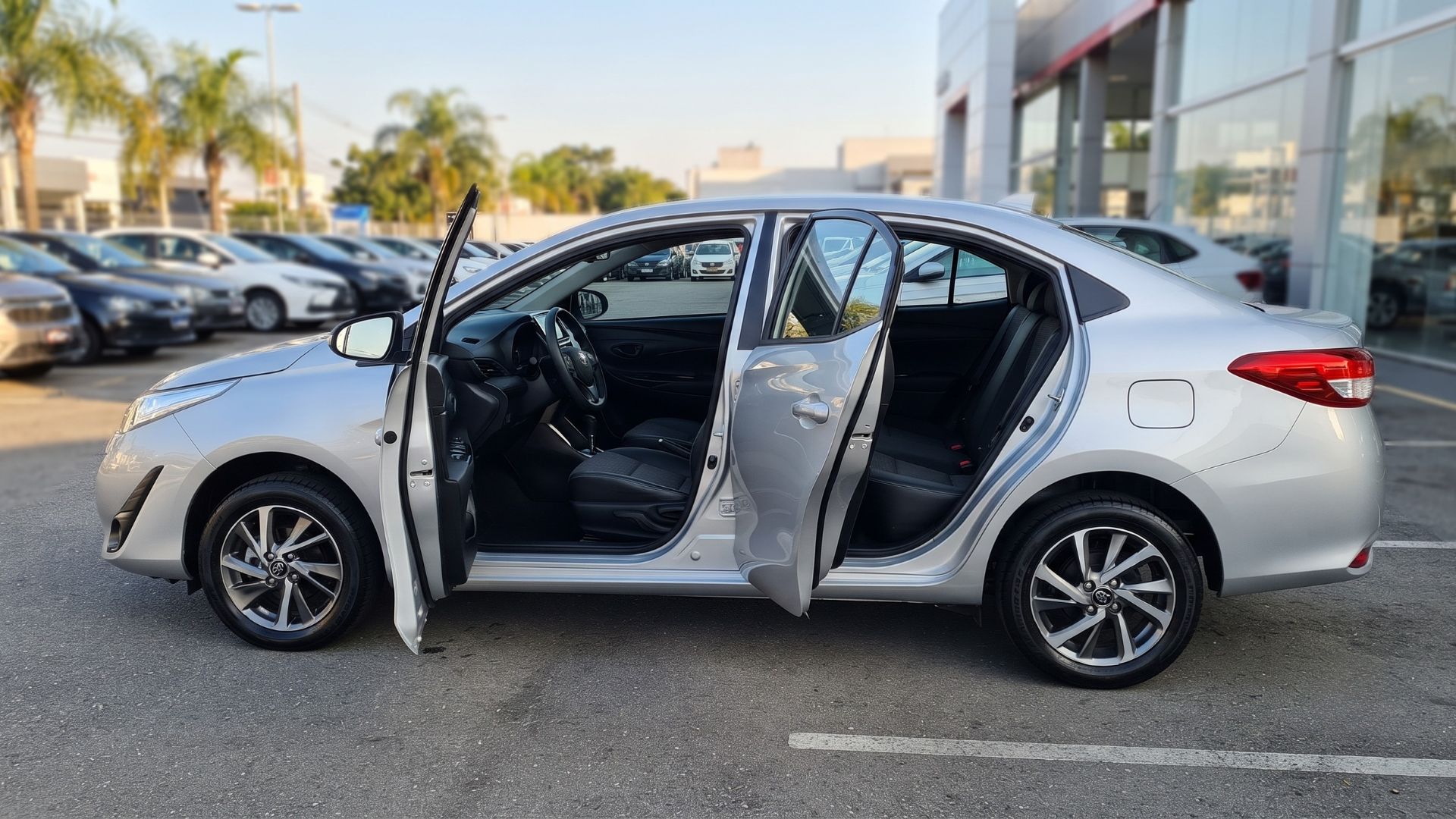
Automatic, economical, and known for reliability: with a 1.5 engine of up to 110 hp, CVT transmission, seven airbags, and fuel consumption of up to 15.9 km/l, this used hatchback appears as a rational alternative to Polo, HB20, and Onix; meet the Toyota Yaris XLS 2020.

-
He surpassed the Tera, Creta, and Tracker: With a TSI engine of up to 150 hp, 6-speed automatic transmission, and a 373-liter trunk, the Volkswagen T-Cross was the best-selling SUV in June, with 11,753 registrations.

-
It looks factory-made, but it came out of a workshop: a mechanic from Pernambuco builds a handcrafted “mini Toyota,” drives it through the streets, and the video goes viral on social media, leaving residents astonished.
-
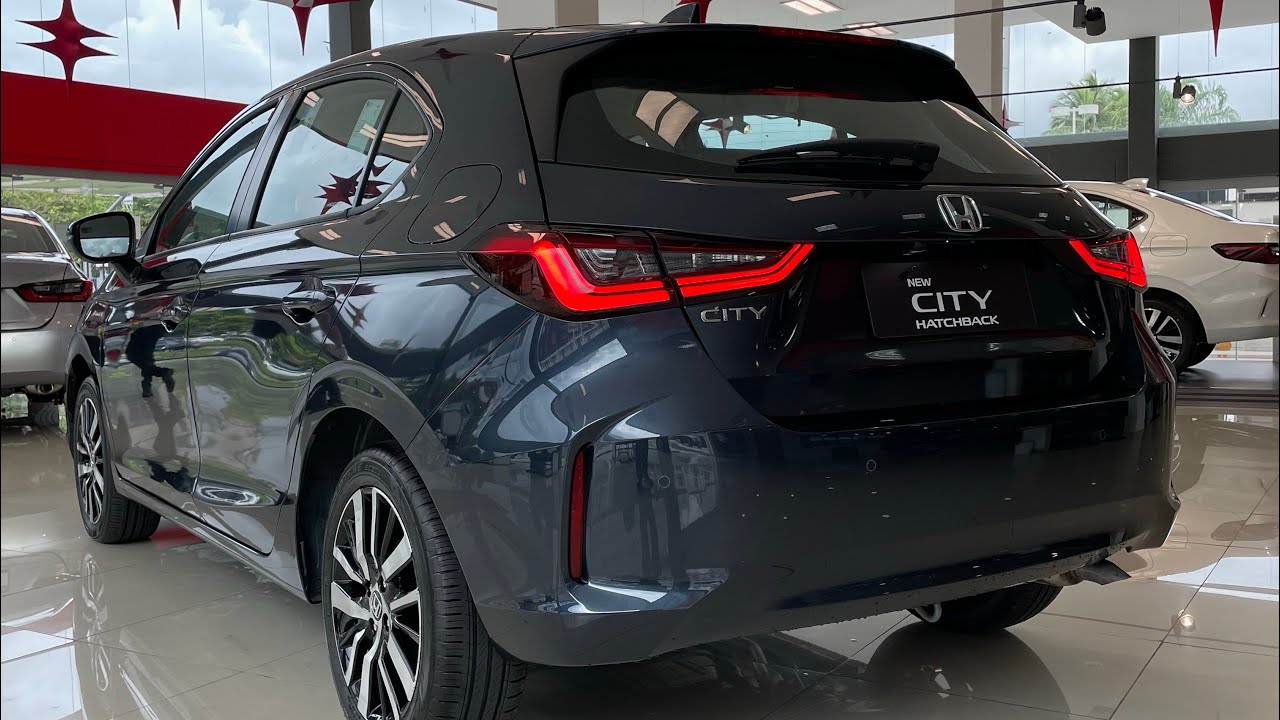
Hatch with sedan space and 1.0 car consumption: equipped with a 1.5 engine with 126 hp, CVT transmission with seven simulated gears, and consumption of up to 17.4 km/l, this used Honda delivers technology, comfort, and reliability; meet the 2022 Honda City Hatch Touring.


The shift comes amid strong pressure on margins within China, where a price war has dragged on for years, making profitability difficult in an extremely competitive sector.
With a saturated domestic market and over 100 manufacturers vying for space, exporting has ceased to be merely a growth plan and has become a central survival strategy.
International expansion has already altered the balance of the global industry.
China has surpassed Japan and established itself as the world’s largest vehicle exporter, driven by the growth in sales of electric, hybrid, and combustion models in emerging and developed markets.
Chinese automakers try to repeat the “Yaris effect” in Europe
The new phase of the Chinese offensive goes beyond competitive pricing and production volume.
Manufacturers have realized that aggressive discounts help enter new markets but do not guarantee loyalty in more demanding regions, such as Europe.
European consumers prioritize smaller cars, more discreet finishes, familiar ergonomics, and practical solutions for urban use, characteristics not always present in vehicles originally developed for the Chinese market.
The comparison with the Toyota Yaris gained traction precisely because of this strategy.
The Japanese hatchback was conceived in Europe for European consumers and ended up becoming one of the pillars of Toyota’s expansion on the continent.
Pedro Pacheco, a Gartner analyst, described the current movement of Chinese automakers as a possible “Yaris moment”, referring to the search for a car capable of unlocking regional scale and improving margins outside China.
Dan Hearsch, global co-leader of the automotive sector at AlixPartners, stated that models with global relevance function as a “Holy Grail” for manufacturers because they allow gaining scale without sacrificing profitability.
BYD bets on European hatchback to gain ground outside China
BYD appears among the most aggressive companies in this strategy.
The automaker developed the Dolphin G specifically for the European market, with a launch scheduled for June, according to Stella Li, executive vice president of the company.
The model targets an extremely relevant segment in Southern European countries.
According to Li, hatchbacks represent over 40% of new vehicle sales in parts of the region, although this type of car has little relevance in the Chinese market.
“If we don’t have the right car in this sector, we lose,” the executive stated when explaining the project’s importance.
This assessment reflects a problem faced by several Chinese manufacturers.
Even with strong advances in electric and hybrid vehicles, many companies still have portfolios excessively concentrated in SUVs, a category that dominates the Chinese market but does not always meet European preferences.
Cultural differences influence car design and technology
The challenge goes beyond vehicle size.
In China, manufacturers compete for attention with enormous screens, advanced digital features, flashy materials, and technological solutions aimed at a younger, more connected consumer.
This profile does not always match the average behavior of European or American buyers.
Alfonso Albaisa, Nissan’s senior vice president of global design, cited taste differences between markets when commenting that some Chinese models feature interiors with colors considered unusual outside Asia.
He mentioned, for example, purplish-pink options available in vehicles sold in China.
Francois Roudier, secretary-general of the International Organization of Motor Vehicle Manufacturers, also pointed out the generational contrast between markets.
According to him, features like in-car karaoke might attract younger Chinese consumers, but not necessarily European family-oriented buyers.
These differences help explain why so many Chinese manufacturers have started investing in regional design centers and international engineering teams.
At the Beijing Auto Show held at the end of April, Hongqi unveiled a “global SUV” designed for sale in 80 countries, although primarily developed for European urban use, according to head of design Giles Taylor.
Chery, MG, and Changan accelerate new global projects
Chery, China’s largest vehicle exporter, is also trying to reduce its reliance on SUVs.
In 2025, the company sold 2.8 million vehicles globally, of which 2.3 million belonged to the SUV category.
Ivan Dulanovic, head of design for Lepas, Chery’s new international brand, stated that the Lepas 2 hatchback is under development with a specific focus on Europe.
MG, controlled by SAIC, follows a similar line.
The manufacturer is preparing the MG2 for the European market, targeting urban consumers who prefer compact cars.
According to head of design Jozef Kaban, Europeans “don’t like huge cars,” summarizing one of the main challenges faced by Chinese automakers.
State-owned Changan is also working on a new line consisting of hatchbacks, compact SUVs, and pickup trucks aimed at Europe and other international markets.
Launches are planned from the end of 2027, according to Klaus Zyciora, the company’s head of design.
For him, global competition demands high investments and sufficient volume to ensure profitability.
Exports even change the vehicle launch order
The pressure for international growth is already beginning to alter the very logic of product launches within Chinese automakers.
In some cases, vehicles are now debuting outside China before reaching the domestic market.
Jetour, Chery’s SUV brand, developed its first pure electric vehicle, the compact TX, with a focus on the European consumer.
According to Ke Chuandeng, the brand’s international president, the upcoming F700 pickup truck also targets markets like Australia and Brazil.
The model is expected to be launched first in Mexico before arriving in China.
In Australia, Chery is also preparing a plug-in diesel hybrid pickup truck for this year.
Lucas Harris, the company’s local director, stated that the Australian market serves as a kind of extreme test for this type of vehicle.
“We are not gentle with our utes,” Harris declared, using the local term for pickup trucks. According to him, if the vehicle withstands Australian conditions, it will likely be able to handle any market.
Chinese market share grows rapidly in the UK and Europe
The latest figures show why international competition has gained such importance for Chinese automakers.
In the United Kingdom, Chinese brands doubled their market share in the first quarter, reaching 14.2% of the market.
In Europe, the share also advanced rapidly, increasing from 3.5% to 6%, according to data from consulting firm Inovev.
Despite the accelerated growth, analysts believe that competing solely on price may not be enough to sustain long-term progress.
Phil Dunne, director at Grant Thornton Stax, stated that Chinese manufacturers need to “level up” by creating vehicles truly aligned with European preferences.
This includes developing smaller, more practical cars that are less dependent on overly technological solutions.
The competition now enters a phase where competitive pricing alone no longer guarantees an automatic advantage.
Chinese manufacturers are trying to prove that they can understand local habits, urban patterns, and regional preferences without sacrificing the industrial scale that has transformed China into a global automotive powerhouse.