Portuguese
  Spanish


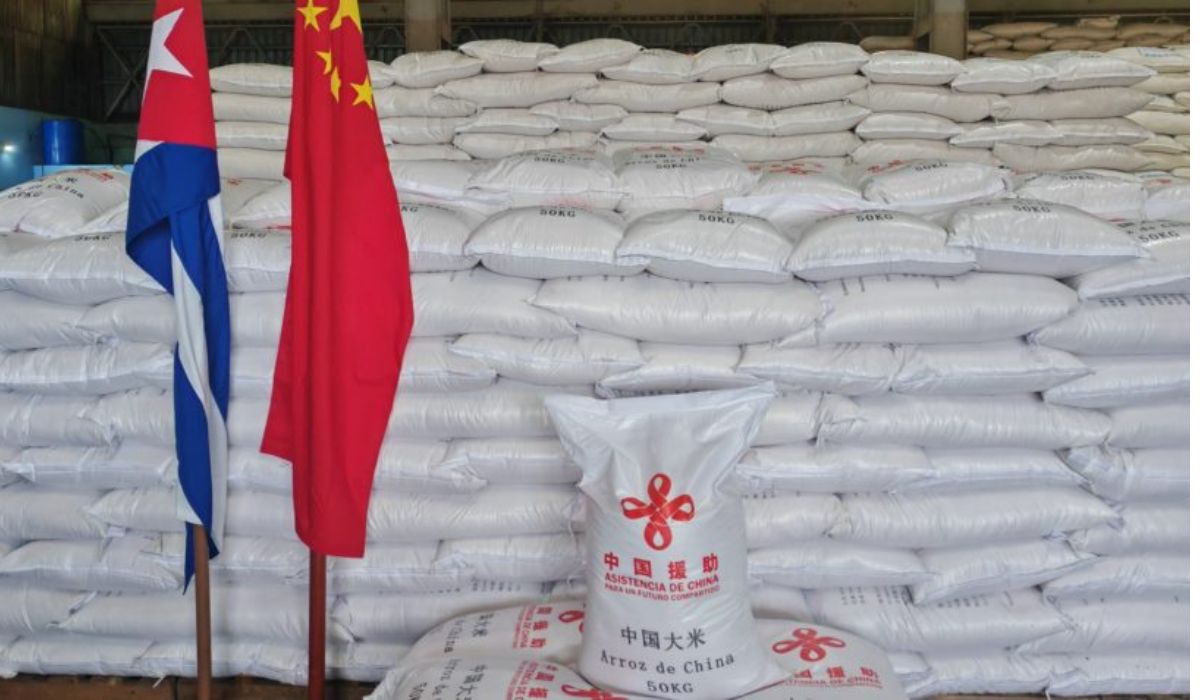


Chinese Rice Donation Arrives in Cuba Amid Diplomatic Tensions With the United States and Reinforces Bilateral Cooperation in the Context of Economic Restrictions, Changes in the Regional Context, and Debates on Food Supply on the Caribbean Island.
China has begun delivering a donation of 30,000 tons of rice to Cuba as part of an emergency food aid project.
The first shipments arrived on the island on Monday (Jan. 19, 2026) and Tuesday (Jan. 20, 2026), according to information published by Poder360.
The shipment occurs amid rising diplomatic tensions between Cuba and the United States following a U.S. operation in Venezuela on January 3, 2026, which resulted in the capture of Venezuelan President Nicolás Maduro.
-
European Parliament Approves Digital Euro, Aiming to Challenge Visa and Mastercard’s Dominance and Transform Payments Across Europe by 2029

-
Israel finds Hezbollah militarized tunnel over 200 meters long under village, with 4 missile launch shafts, 12 chambers, anti-tank missiles, drones, and weapons depots at a depth of 25 meters.

-
Ukraine launches largest drone attack on Moscow since 2022, Russia claims to have intercepted nearly 200 aircraft near the capital, Kapotnya refinery targeted again, and offensive reignites alert about war reaching the Russian energy heart just a few kilometers from the Kremlin.

-
Truck drivers, freight, and fines from 2022 take center stage in politics: Chamber approves MP with amnesty, mandatory tracking by CIOT, million-dollar penalties, and new minimum wage for those who spend more than 24 hours on the road.


The action was reported by international media and was echoed in the Brazilian press.
Rice Delivery and Official Ceremony in Havana

Cuban government officials and the Chinese ambassador to Cuba, Hua Xin, participated in the ceremony for the delivery of the first batch of rice, held in Havana on Monday (Jan. 19, 2026).
According to Poder360, the diplomat stated that the shipment represents the bilateral cooperation between the two countries during a time of economic difficulties faced by the island.
On the occasion, Hua Xin declared that “no blockade can extinguish the flame of hope and no difficulty can prevent progress” and added that China intends to continue supporting Cuba to face current challenges.
This statement was reported by media outlets that covered the official event.
U.S. Foreign Policy and Its Implications for Cuba
The Chinese donation comes as the U.S. government signals a stricter policy towards Cuba.
On the same day as the operation in Venezuela, U.S. President Donald Trump and Secretary of State Marco Rubio stated their intention to review and toughen Washington’s stance towards the Cuban government, as reported by Poder360.
In the following days, Trump declared that Cuba would no longer receive oil or financial resources from Venezuela and urged the island to seek an agreement with the United States.
The declarations were recorded by international agencies, such as Reuters, and had an impact in the international press.
Reports from the Wall Street Journal also indicated that members of the U.S. government are discussing measures to increase economic and diplomatic pressure on Cuba.
According to the newspaper, these discussions are taking place in a context of existing economic restrictions and internal difficulties faced by the Caribbean country.
Official Response from Havana to Washington’s Statements
In response to the statements from the U.S. government, the President of Cuba, Miguel Díaz-Canel, stated that there are no ongoing negotiations with Washington, except for technical contacts related to migration issues.
The statement was made after Trump publicly suggested the existence of conversations between the two governments.
Díaz-Canel also stated that Cuba remains willing to engage in dialogue with the United States, provided that any potential negotiation is based on what he termed sovereign equality, mutual respect, principles of International Law, and reciprocal benefit.
This position was reported by Poder360.
Food Supply and Economic Context in Cuba

The arrival of Chinese rice comes at a time when Cuba is facing difficulties in food supply.
Reports from both Brazilian and international media indicate that rice is one of the main items in the Cuban diet and that access to the product has been affected by financial limitations, logistical issues, and external trade restrictions.
By characterizing the initiative as emergency food aid, China links the donation to an immediate response to the island’s supply needs.
This framing also appears in reports detailing the schedule of deliveries and the distribution of the first batches.
Experts consulted by international media assess that actions of this nature have, in addition to a humanitarian aspect, a diplomatic component, occurring during a period of heightened tension between Havana and Washington.
The interpretation is that the support from allies may influence the regional scenario, although there is no consensus on long-term impacts.
With the first shipments already delivered, the expectation, according to Poder360, is that the shipments will continue in a phased manner over the coming weeks, according to the announced project plan.
The issue of food supply remains at the center of attention in Cuba, alongside diplomatic discussions involving the United States, China, and countries in the region.