Portuguese
  Spanish


Chinese automakers have been rapidly expanding their presence in Brazil, boosting exports and consolidating their share in the national automotive market. According to industry analyses, this advancement is accelerating the transformation of the industry, with investments in local production, greater competitiveness, and a direct impact on the dynamics between traditional manufacturers and new global players.
The Brazilian automotive market has been undergoing a significant transformation in recent years, mainly driven by the advancement of Chinese automakers. This movement, which was once viewed with caution, is now consolidated as one of the main structural changes in the industry in the country.
According to Veja magazine, companies from China have increased their exports to Brazil by more than 500%, consolidating their presence and gaining space among consumers and distributors. This growth reflects a well-defined strategy, based on competitiveness, technology, and global expansion.
The advancement of Chinese automakers in Brazil
In recent years, Chinese brands have ceased to be just low-cost alternatives and have begun to compete directly with traditional manufacturers. This advancement is linked to the technological evolution of these companies, which today offer vehicles with a high level of innovation and efficiency.
-
Hilux’s little sister: Toyota relaunches the Land Cruiser 70 in the 2027 lineup with over 40 years of production, a 2.8 turbo diesel engine with 201 hp and 51 kgfm, a six-speed automatic transmission, and a renewed retro look.

-
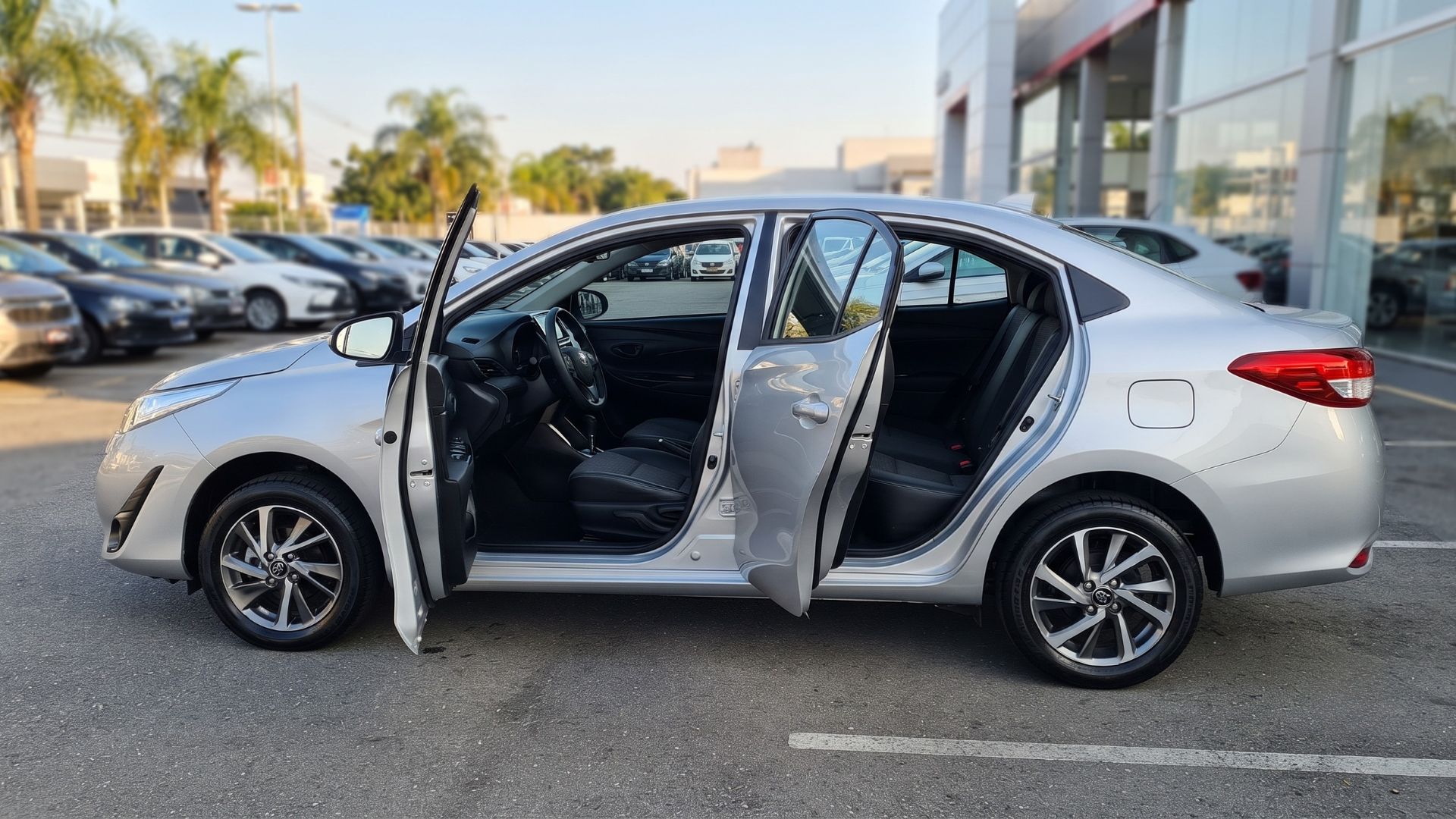
Automatic, economical, and known for reliability: with a 1.5 engine of up to 110 hp, CVT transmission, seven airbags, and fuel consumption of up to 15.9 km/l, this used hatchback appears as a rational alternative to Polo, HB20, and Onix; meet the Toyota Yaris XLS 2020.
-
He surpassed the Tera, Creta, and Tracker: With a TSI engine of up to 150 hp, 6-speed automatic transmission, and a 373-liter trunk, the Volkswagen T-Cross was the best-selling SUV in June, with 11,753 registrations.

-
It looks factory-made, but it came out of a workshop: a mechanic from Pernambuco builds a handcrafted “mini Toyota,” drives it through the streets, and the video goes viral on social media, leaving residents astonished.



According to Veja magazine, the growth of Chinese exports to Brazil shows how these automakers are expanding their influence in the national automotive market. Furthermore, the growing presence in dealerships indicates that Brazilian consumers have become more open to new brands.
This scenario is also the result of an aggressive entry strategy into the country, which combines competitive prices, modern design, and investments in technology.
Historical context of the Brazilian automotive industry
To understand this transformation, it is important to look at the sector’s past. Since the 1950s, Brazil has developed its automotive industry with a strong presence of European and North American automakers.
For decades, these companies dominated the market, establishing production and consumption standards. However, with globalization and technological advancement, new players began to emerge, especially from Asia.
In this context, China went from being a technology importer to one of the largest vehicle producers in the world. According to data from international automotive sector organizations, the country has become a global leader in car manufacturing, especially electric ones.
Growing exports and global strategy
The growth of Chinese exports to Brazil is not an isolated movement. It is part of a global strategy by the Asian country’s automakers, who seek to expand their operations to emerging markets.
According to Veja magazine, this more than 500% increase in exports demonstrates the strength of this strategy and the interest in the Brazilian market. Moreover, Brazil is seen as a strategic point in Latin America, both for the market size and growth potential.
At the same time, the competitiveness of Chinese automakers relies on lower production costs and strong investment in innovation.

Local production as the next step
Another important point of this transformation is the advancement of local production plans. Chinese automakers are not only exporting vehicles but also planning to set up factories in Brazil.
According to automotive sector analyses, this strategy aims to reduce logistical costs, increase competitiveness, and strengthen their presence in the country.
Furthermore, local production can generate jobs and stimulate the economy, creating a new cycle of industrial development.
This movement also shows that Brazil has ceased to be just a consumer market and has become seen as a strategic base for international operations.
Impacts on the market and competition
The entry of Chinese automakers has caused significant changes in the dynamics of the Brazilian automotive market. Traditional companies have begun to face more intense competition, which pressures prices and accelerates innovation.
According to industry experts, this competition tends to benefit the consumer, who now has more options and better purchasing conditions.
Furthermore, the presence of new brands stimulates the development of more advanced technologies, especially in the electric vehicle segment.
Technology and electrification as differentiators
One of the main differentiators of Chinese automakers is their investment in technology. Many of these companies lead the development of electric vehicles and sustainable solutions.
According to industry analyses, China is currently one of the main hubs of automotive innovation, with a strong focus on electrification and smart mobility.
This factor has a direct impact on Brazil, as the entry of these companies accelerates the transition to a more sustainable transportation model.


The future of the automotive market in Brazil
In this scenario, the future of the Brazilian automotive market tends to be marked by greater diversity of brands, more advanced technologies, and more balanced competition.
According to Veja magazine, the advancement of Chinese automakers is not just a temporary phenomenon, but part of a structural change in the global industry.
With this, Brazil positions itself as one of the main strategic markets for these companies, which should attract new investments in the coming years.
At the same time, consumers gain access to more modern, efficient, and affordable vehicles.
In this context, China’s presence in the Brazilian automotive sector not only redefines the market but also paves the way for a new phase of innovation, growth, and industrial transformation.