Portuguese
  Spanish


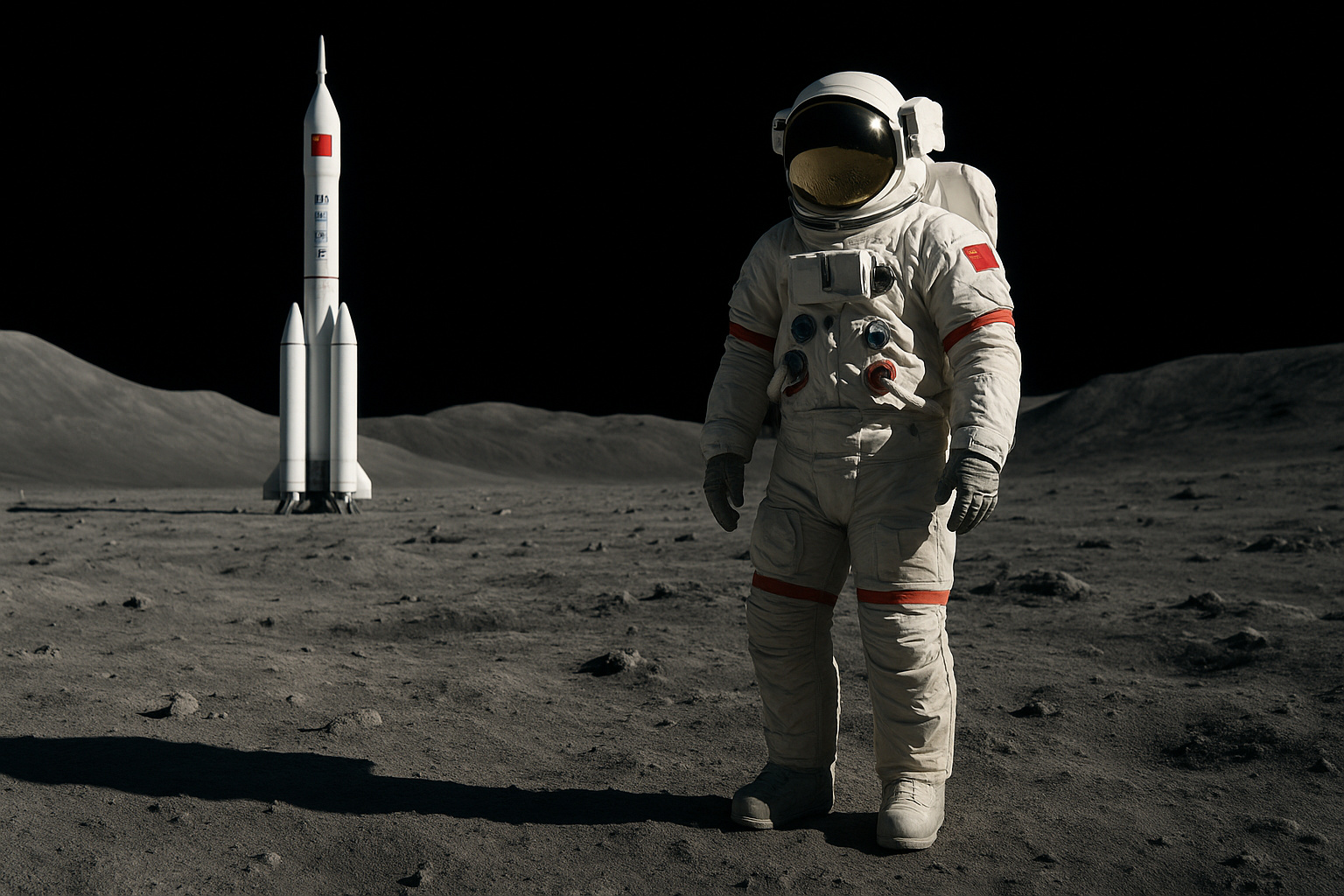

China Launches Space Mission With Its Youngest Astronaut and Four Rats in Unique Experiment That Marks New Advance in Astronomy.
China Achieves Historic Milestone in New Space Mission
China will achieve a historic milestone in Science and Astronomy this Friday (31), with the launch of the crewed mission Shenzhou-21, which will take the country’s youngest astronaut and four rats into space for unique experiments in orbit.
The launch will take place at 10:44 PM local time (12:44 PM in Brasília), from the Jiuquan Satellite Launch Center in the northwest of the country. The operation reinforces China’s ambition to establish its position among the world’s major space powers.
Young Astronaut Enters History
At just 32 years old, flight engineer Wu Fei will be the youngest astronaut in China’s history to participate in a space mission.
-
Brazilian Man Builds Homemade Welding Machine Using Parts from Old Microwaves, Achieving Over 100 Amperes

-
Canada Sinks Six Giant Balloons in Lake Ontario to Test Underwater Battery That Stores Compressed Air 60 Meters Deep

-
Astronauts Returning from Space Develop Early Cataracts Due to Eye Lens Radiation, Highlighting Risks for Future Mars Missions

-
Brastemp Unveils New Dishwasher with Smart Sensor, 14 Place Settings, Acquaspray Jet, 70°C Rinse, Water Efficiency, and Intelligent Drying


He will join the crew alongside commander Zhang Lu, a veteran who previously participated in Shenzhou-15 in 2022, and load specialist Zhang Hongzhang. Together, they will represent the new generation of space explorers in a stage deemed essential for advancing China’s space program.
According to Zhang Jingbo, spokesperson for the China Manned Space Agency (CMSA), the Shenzhou-21 mission reinforces the country’s commitment to expanding its scientific and technological frontiers.
Unique Experiments with Rodents in Orbit
In addition to the human crew, the mission will carry four rats — two males and two females — for the first Chinese experiments with rodents in orbit. The goal is to study the effects of microgravity on mammal bodies, which could provide valuable data for future long-duration missions.
These studies, according to specialists, will help better understand how the absence of gravity affects vital functions such as metabolism, reproduction, and the nervous system. Thus, China is advancing in a strategic area of Science and Astronomy, with direct impacts on medical and biological research.
Tiangong Space Station: China’s Pride
The Shenzhou-21 mission will head to the Tiangong Space Station, regarded as the greatest symbol of Chinese technological power. Since 2021, Tiangong has been continuously occupied by crews of three astronauts, alternating every six months.
The project is a fundamental part of the Chinese space program, which seeks to match traditional powers like the United States and Russia. Moreover, it represents a strategic advance in the global competition for scientific and technological leadership in space.
Towards the Moon: The New Chinese Frontier
China’s plans extend well beyond Earth orbit. The country has already confirmed it aims to send a crewed mission to the Moon by 2030 and, furthermore, to build a permanent base on the lunar surface.
According to the CMSA, this preparation will involve, over the next few years, a series of “crucial tests”. Thus, the focus will be on developing new spacesuits, advanced lunar landing systems, and life support technologies, allowing for increasingly longer stays in the lunar environment.
A Leap in the Global Space Race
With every new mission, China strengthens its prominence in global Science and Astronomy. The sending of the youngest astronaut, combined with the unique biological experiments, highlights not only its technical capability but also its growing scientific ambition.
While other powers invest in private programs or international partnerships, China, on the other hand, bets on technological self-sufficiency. This way, it advances strategically and steadily towards a greater goal: ensuring a lasting and sustainable presence beyond Earth.