






 Portuguese
  Spanish


China Has Started Building The Largest Hydroelectric Power Plant In The World, Located On The Yarlung Tsangpo River In Tibet. With An Estimated Capacity Three Times That Of The Three Gorges Dam, This Gigantic Project Is Already Causing Reactions In India And Bangladesh Due To Environmental Impact And Geopolitical Tensions In The Region.
China Is Beginning Construction On What Will Be The New Largest Hydroelectric Dam In The World.
The country has embarked on an ambitious energy project that promises to transform the global hydroelectric landscape.
On July 19, 2025, Chinese Premier Li Qiang attended the groundbreaking ceremony of the largest hydroelectric dam in the world, located in the city of Nyingchi, southeastern Tibet, near the border with India.
-
ChatGPT Alerts FBI to Prevent Planned Murder of 8-Year-Old in Brazil’s Espírito Santo

-
Scientists Discover 125-Million-Year-Old “Pregnant Fossil” with Preserved Embryos and Microscopic Larvae Inside Mollusk in England

-
17-Year-Old Justin Bernstein Develops Bacteria to Produce Glass on Arctic Ice to Reflect Sunlight, Wins $50,000 U.S. Scholarship

-
The 19-Meter Rocket-Helicopter: A Private Industry Prototype That Challenged Space Race Logic



With a massive capacity, the new plant will surpass the current Chinese giant, the Three Gorges Dam, in production by three times, already recognized as the largest in the world today.
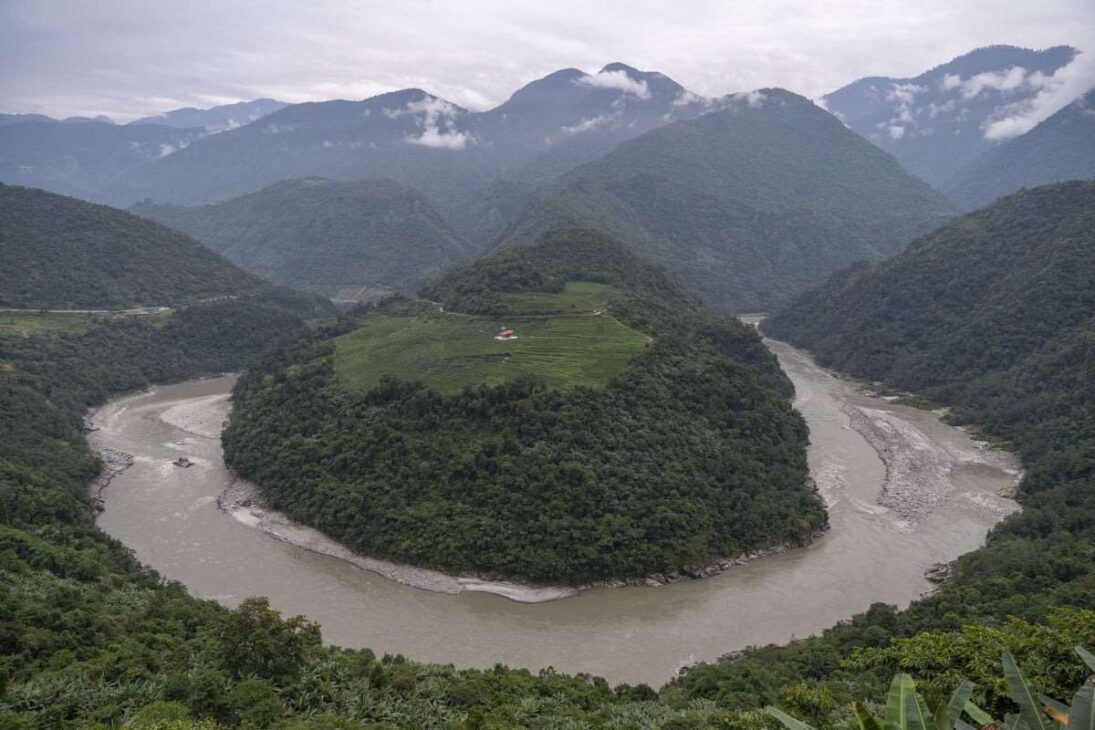
Hydroelectric Dam On The Yarlung Tsangpo River
The project will be built on the Yarlung Tsangpo River, which originates in the Tibetan Plateau and flows until it becomes the Brahmaputra River, crossing northeastern India and reaching Bangladesh.
Due to its strategic position, the venture concerns neighboring countries.
India and Bangladesh have expressed fears about downstream impacts, including possible changes in water availability, damage to agriculture, and environmental risks.
China, for its part, claims that the project underwent a detailed scientific assessment and will not harm ecosystems or the river’s natural flow.
Five Cascade Power Plants
The dam will be part of a network of five hydroelectric plants in cascade. This complex structure will require a total estimated investment of 1.2 trillion yuan, equivalent to about US$ 167 billion.
According to Chinese authorities, the energy produced will primarily be aimed at export, although it will also meet some local demands in Tibet.
In addition to energy generation, the project is presented as a measure for disaster prevention, climate change adaptation, and energy cooperation with countries in the region.
Reactions From India And Bangladesh
Despite Beijing’s assurances, India and Bangladesh remain concerned.
Authorities and analysts fear that China could use control over river flows as a political tool, causing intentional floods or droughts during periods of tension.
India has already responded by accelerating its own hydroelectric projects in Arunachal Pradesh, seeking to protect its water resources and reinforce its regional sovereignty.
Border disputes complicate the situation even further. While India considers Arunachal Pradesh part of its territory, China claims it as part of southern Tibet, rejecting India’s presence in the region.
New State-Owned Company Takes Over The Project
To facilitate and manage the operation, China has created a new state-owned company: China Yajiang Group. The company will be responsible for the construction, operation, and environmental oversight of the dam.
During the company’s inauguration ceremony, Vice Premier Zhang Guoqing highlighted the importance of technological innovation and ecological protection in the project.
Although the Chinese government presents the dam as a symbol of progress and sustainability, the project raises concerns in a region marked by geopolitical rivalries, sensitive environmental issues, and unresolved territorial disputes.
Information from SCMP.


Gente, pode fazer. Mas n6oide desobedecer a legislação ambiental e igual o governo anterior que aproveitou a pandemia para desmatar. ” Aproveitamos que que estão entretido com o COVID e deixamos a boiada passar” disse o ministro ambiental de Bolsonaro a época.
Você não entendeu, na China pooode. No Brasil não pode, a não ser que o Lula resolva fazer, assim como aconteceu com Belo Monte, com um impacto ambiental gigantesco.
Além de pegar 300 milhões de propina pra si e para o PT, como foi delatado pelo seu ministro Antônio Palocci na época.
A tropa da Marina Silva é as ONGs do Lules não vão lá fazer protestos.
Vai lá Marina , xi Gimpin tá te esperando.