Portuguese
  Spanish


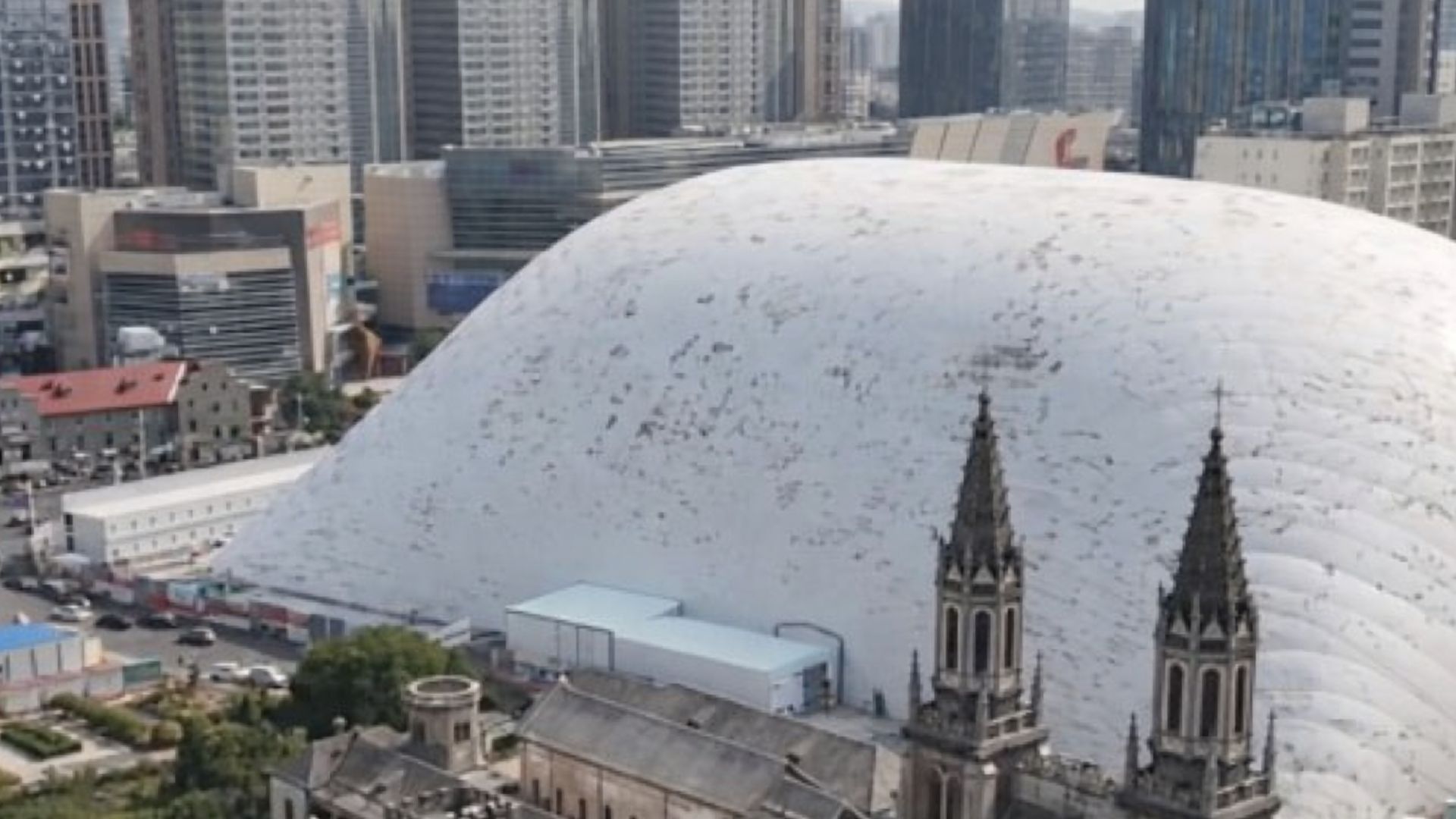


Inflatable bubble-shaped structures are being widely adopted on construction sites in China to reduce dust and noise by up to 90%, with domes reaching 50 meters in height, 20,000 square meters in area, and advanced monitoring systems.
Chinese cities have started using large inflatable bubble-shaped structures to cover construction sites, a technology developed to contain pollution generated by construction and reduce the impact on residents and visitors in areas near the sites.
Local reports indicate that these coverings are capable of reducing the amount of dust and the level of noise pollution produced by equipment by a range of from 80% to 90%, a significant result in the context of China’s densely populated cities.
The structures can reach up to 50 meters in height and occupy areas of up to 20,000 square meters, a dimension equivalent to almost three football fields, which allows accommodating large construction sites without interrupting the operation of the works during periods of use.
-
A fossil kept for years in a small museum in Montreal concealed 450-million-year-old soft tissue, a discovery that has only happened once before in history.

-
Engineers spend a decade building a $2.3 million bridge, but the project features a surreal curve, becomes a joke, and ends with seven suspended.

-
7-year-old boy acts without hesitation and saves his 1-year-old brother from drowning in the family pool in Texas: the boy’s courage impressed the sheriff and he may now receive an official police commendation.

-
The forgotten Atari stock that seemed like something out of a movie: millions of sealed cartridges were buried underground and were sold for very low prices.




On Wangfujing Street, an important tourist spot in the capital Beijing, one of these bubbles is being used in the construction of a bookstore, allowing tourist activity in the area to continue without significant interference from the noise and dirt generated by the active construction site.
The Chinese government has encouraged the use of inflatable domes in construction as part of a set of guidelines aimed at making civil construction more sustainable by 2030, aligning the sector with national goals for pollution reduction and improving the quality of life in cities.
Working Conditions and Embedded Technology

The bubbles are equipped with sensors that continuously monitor pressure and temperature levels inside the structures, data that serves to ensure the environment remains within safe parameters for workers operating on the site during work shifts.
Forced ventilation systems are installed in the domes to control dust concentration and ensure fresh air circulation inside, an important measure to protect the health of workers in activities involving cutting, drilling, and material handling in enclosed spaces.
The solution also offers protection for the construction site against adverse weather conditions, such as rain, strong winds, and snow, which can increase team productivity by reducing stoppages caused by meteorological factors that normally interrupt open-air activities.
Residents neighboring the bubble-covered sites report a noticeable reduction in daily impacts, such as dust accumulation on vehicles and facades, in addition to a decrease in heavy machinery noise, although some of these residents raise questions about internal working conditions.
Civil Construction and Chinese Environmental Goals


Civil construction is responsible for a significant portion of particulate matter emissions and noise pollution in large Chinese cities, a particularly serious problem in dense urban areas where construction sites coexist with residences, businesses, and areas of high pedestrian traffic.
The inflatable dome technology is part of a broader modernization movement in China’s construction sector, combining automation, the use of industrialized materials, and more rigorous environmental control to meet the growing demands of regulators and the urban population.
Similar site covering solutions have already been tested in other Asian and European countries on a smaller scale, but China stands out for the volume of adoption and the speed with which the technology has gained ground in projects of different sizes and types in the country’s major capitals.
The combination of smart sensors, controlled ventilation, and large inflatable structures represents an integrated approach to mitigating the impacts of construction without halting urban development, a growing challenge in countries that maintain high rates of construction and accelerated urbanization.
Urban planning specialists point out that the use of these domes could become a mandatory standard in large-scale construction projects in dense urban areas as environmental regulations become more restrictive, both in China and in other economies facing similar urban pollution challenges.