Portuguese
  Spanish


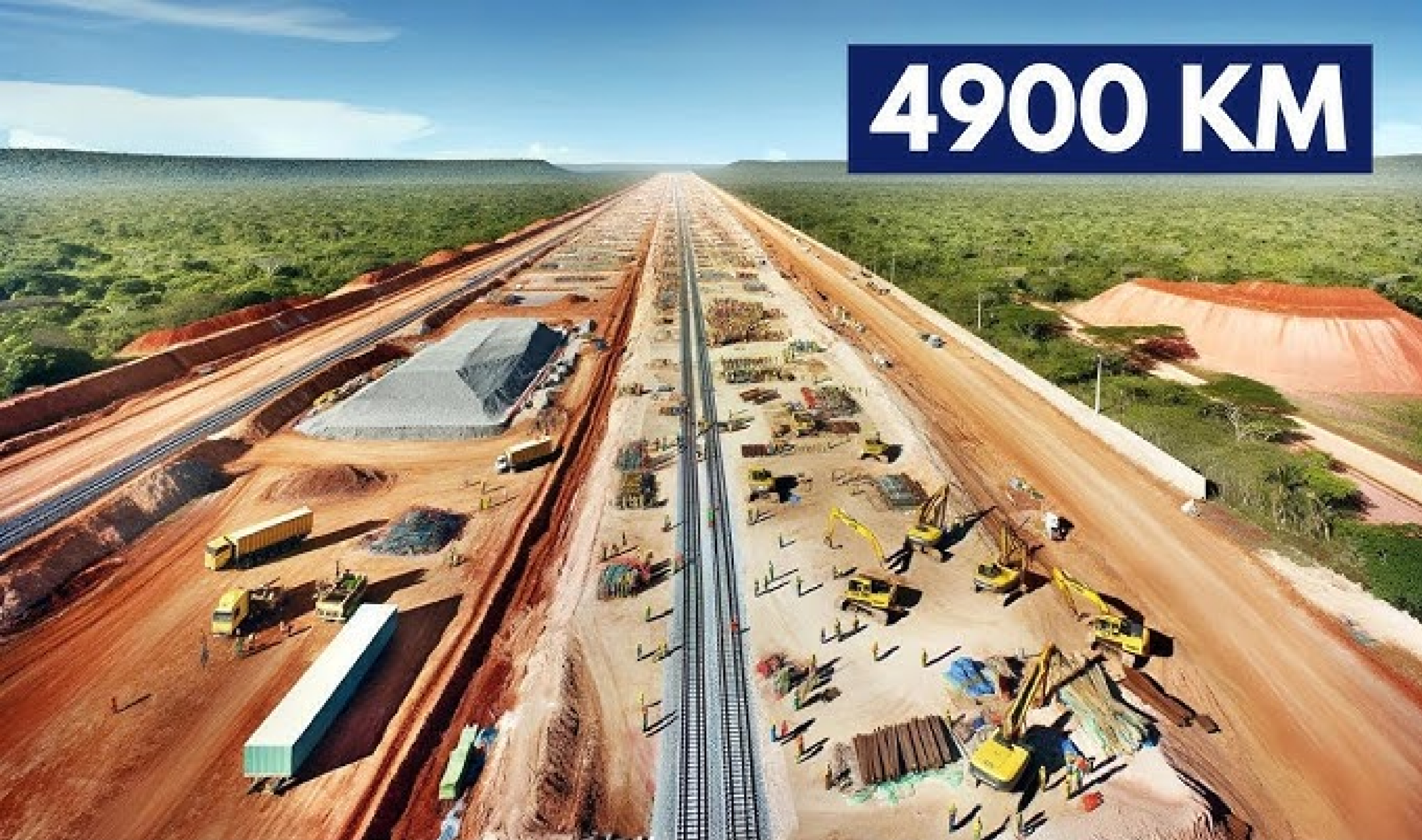


The Monumental Construction Will Transform Trade Between Asia and South America and Promises to Increase Demand for Various Inputs
China is about to make a monumental investment of US$ 100 billion in Brazil to build one of the largest transoceanic railways in the world. This ambitious project has the potential to profoundly transform trade between Asia and South America and reinforce China’s influence in the region. With a growing demand for essential commodities such as soybeans, iron ore, and copper, China seeks to consolidate its partnership with South America through a railway route that will connect Brazil to Peru, according to the site Elliteglobal/Negóciospelomundo.

The Transformative Impact of China’s Railway in Brazil
The new transoceanic railway is designed to create a direct route between Brazilian and Peruvian ports, offering a more efficient alternative to traditional maritime routes, such as the Panama Canal. This project promises to significantly reduce the time and cost of transporting goods, making trade between the two continents faster and more economical.
In addition to benefiting Brazil and Peru, the railway will also spur economic development across the entire South American region. Creating this route will not only facilitate direct access to South America’s natural resources, but may also open new markets and economic growth opportunities for the countries involved.
-
Latin America’s Largest Port Invests $400 Million in Rail System with Trains Up to 2.4 Kilometers Long
-
New Smart Radar Begins Issuing Fines to Solo Drivers in Carpool Lanes, Uses Cameras to Count Occupants, Changing Traffic Enforcement Rules on Busy European Roads

-
Why can the crane operator only obey the correct signalman on the construction site: among dozens of workers, a hand raised by the wrong person can confuse the maneuver and turn a load of tons into an immediate risk.
-
What changes with the new public transportation rules that can reduce pressure on fares and pave the way for zero fare in Brazil?



The Rise of China and the New Geopolitical Landscape
China’s growing influence in South America reflects a significant shift in the region’s geopolitical landscape. With strategic investments such as the construction of the transoceanic railway, China is positioning itself as an essential partner for South America’s economic development. This project will not only strengthen local economies and create new job opportunities, but also promote regional integration by improving transport connections.
The initiative reinforces China’s position as a global power and highlights its growing role in the international arena. With the dwindling influence of the United States in South America, China is seizing the opportunity to expand its presence and strengthen its relations with South American countries.
Transoceanic Railway in Brazil – Opportunities and Challenges
Although the project has transformative potential, it faces significant challenges. Crossing the Amazon Rainforest and the Andes Mountains presents considerable obstacles due to difficult terrain and sensitive ecosystems. In addition, negotiations between Brazil and Peru regarding the best route for the railway may cause construction delays.
However, these challenges also offer opportunities for innovation and cooperation. Overcoming the obstacles will require advanced technologies and detailed planning, along with a collaborative effort between governments and businesses to ensure the project’s sustainability and efficiency.